Manufacturer · Fashion & Home Accessories




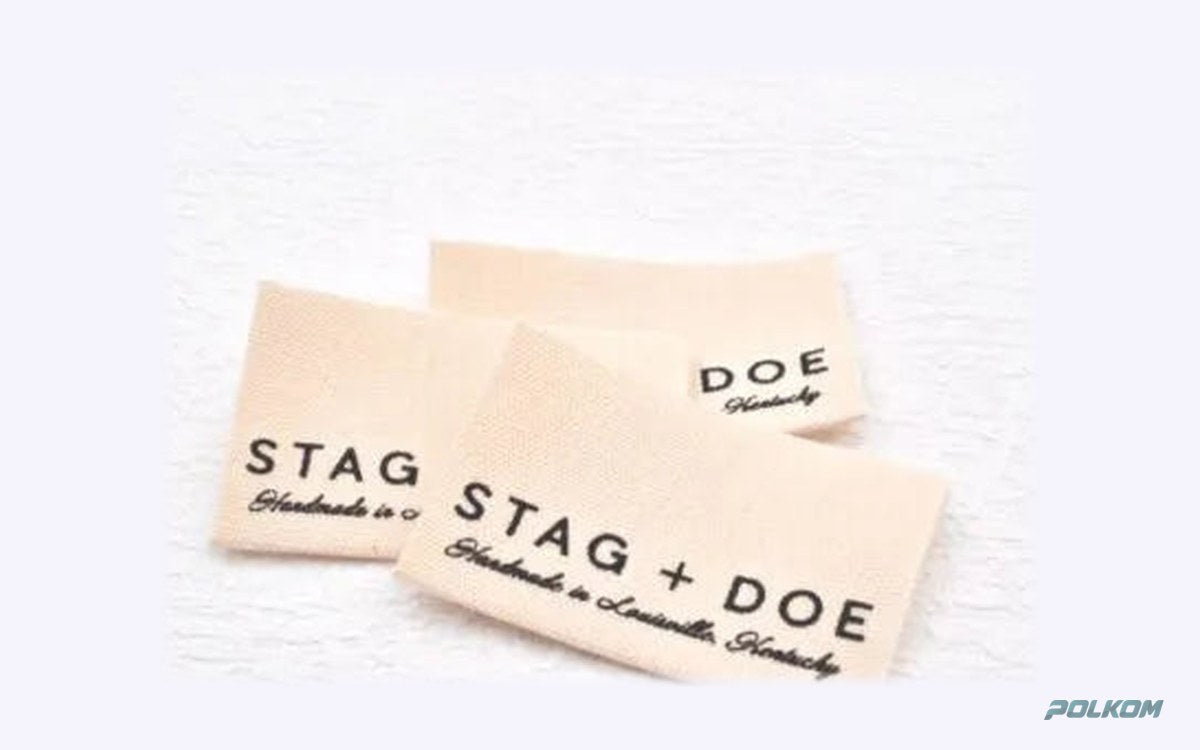
The most expensive clothing labelling mistakes are those discovered after sewing: a wrong or rounded composition, missing text in the language of the country of sale, a stiff label that scratches, print that fades after washing, and a size that does not suit the product. Each of them can mean relabelling, complaints or a problem at inspection. The good news is that almost all of them can be avoided with a clear specification and a sample before series production.
Clothing labelling mistakes: legal
1. Wrong or rounded composition
The composition must match the fabric specification, within the permitted manufacturing tolerances. A common mistake is to write the composition down "by eye" or copy it from a previous style. Solution: get the composition from the fabric supplier for each material and check it with every new batch.
2. Non-standard fibre names
Names such as "Lycra" or "polyester velvet" do not replace the standard names from Regulation (EU) No 1007/2011. Use "elastane", "polyester" and so on, and trade marks only next to the official name.
3. Missing local-language text
Garments sold in a given EU country must state the composition in that country's official language – in Bulgaria, for example, in Bulgarian. Imported goods with only an English label are a problem. Solution: an additional printed label with a translation.
4. Composition only on the hang tag
The hang tag is removed after purchase. The composition must be durable – on a label sewn into the seam.
5. Missing composition of the lining or filling
For products made of several parts with different compositions, the composition of each significant part is given, including the main lining.
6. Missing manufacturer details
Under the general product safety rules, the product or its packaging must bear the name or brand of the manufacturer, a contact address and a style identifier.
Mistakes when choosing the label
7. A stiff label at the neck
Metallic threads, thick taffeta and hot-cut edges at the neck of a T-shirt or underwear irritate the skin. Many buyers cut out such a label – and the brand with it. Solution: soft satin or fine damask, ultrasonic cutting or a fold that hides the edges.
8. Print that fades
Unsuitable ink or material makes a care and composition label illegible after a few washes. Solution: printing intended for textiles and a wash test at the maximum temperature on the label.
9. Unsuitable size
A label that is too large sticks out of the neckline; a care label that is too small leads to an illegible font. Solution: 1:1 printouts on the garment before ordering.
10. Logo without adaptation
Thin lines and small text from the website logo disappear on a woven label. Solution: a simplified version of the logo for small sizes. You will find more about the technical limitations under woven labels.
Mistakes in the process
11. Ordering without a sample
Skipping the sample saves a few days but risks the whole order. A wrong colour, a stiff material or a spelling mistake is discovered too late.
12. Labels ordered at the last minute
When the fabric has been cut and the labels are still missing, either sewing is delayed or compromises are made. Solution: include the labels in the collection schedule together with the fabric.
13. No proofreading
One wrong letter on a multilingual care label is multiplied across the whole run. Solution: two people check the proof, including the percentages and symbols.
14. Inconsistent placement
A care label in a different seam on different styles looks unprofessional and makes inspection harder. Solution: a standard for label positions in the tech pack.
15. Care symbols that do not suit the product
If the label recommends washing at 40 °C but the print or leather appliqué cannot take it, a complaint is inevitable. The symbols are chosen according to the most sensitive element. You will find details under care and composition labels.
Mistakes in importing and reselling
Retailers who import finished garments often make specific mistakes. The composition is translated automatically and contains inaccurate terms. The label with the translation is stuck onto the packaging instead of being sewn to the product. The importer's details are missing. The solution is a simple procedure: with each delivery, collect the original labels, prepare a table of translations and order printed labels in the local language for each article. Sew them next to the original label so that they are durable and accessible.
Checklist before series production
- The composition has been checked against the specification of each material.
- The fibre names are the standard ones, in the language of the country of sale.
- There are manufacturer details and a style identifier.
- The care symbols suit the most sensitive element.
- The sample has been sewn in, washed and approved.
- The size and position of the labels are recorded in the tech pack.
- The proof text has been checked by two people, including the percentages, languages and symbols.
- The quantities per article and size have been checked against the cutting plan, plus a reserve for rejects.
What one mistake costs
Relabelling finished goods requires unpicking, new labels and sewing – sewing operators' time, a new order and a delayed delivery. With complaints, returns and lost trust are added. Compared with that, a sample and careful proofreading are a small investment. You will find the full range for correct labelling in the clothing labels category.
Labels without surprises – Polkom
Polkom is a Bulgarian manufacturer of sewing accessories from Sofia with over 30 years of experience. We make woven, printed, care and composition, leather and cardboard labels to order, send a proof for checking and make fast samples before series production. We deliver throughout the EU. Send your specification via the inquiry form – we will help with the technical preparation. Minimum quantities depend on the article.