Manufacturer · Fashion Accessories



Cotton thread for organic clothing is chosen so that the whole garment – fabric, seams and trims – stays consistent in natural materials. Mercerised cotton thread matches organic cotton, linen and hemp in appearance, washing and ironing. If the collection is to be certified, the requirements for the thread are checked separately against the standard.
Why thread matters in a natural collection
Natural clothing brands usually explain the origin of the fabric in detail. The buyer, however, also sees the seams, feels them against the skin and notices when a shiny synthetic thread contrasts with matte linen. Thread is a small part of a garment's weight, but it is a visible detail that either supports or undermines the brand's message.
Cotton thread brings several practical benefits with natural fabrics:
- it shrinks and wears together with the fabric, so seams do not pucker after washing;
- it withstands high-temperature ironing, which linen and cotton require;
- it is soft against the skin – important for babywear, underwear and pyjamas;
- it has a matte, natural look that blends with organic fabrics;
- it takes the same dyes if the garment is dyed after sewing.
Cotton thread for organic clothing and certification
When a brand wants to label a product as organic under a standard such as GOTS (Global Organic Textile Standard), the requirements are not limited to the fabric. The standard also has rules for trims and sewing threads – which fibres are permitted, which chemicals and dyes may be used and how the supply chain is documented. The rules are updated, so always check the current version with the certification body before ordering materials for a production run.
A practical approach for the brand:
- Clarify with the certifier what the requirements for threads are in your product category.
- Ask the supplier for technical information on the composition and treatment of the thread.
- Record the chosen article in the style's tech pack.
- Do not declare the thread organic or certified without a document that proves it.
Even when the collection is not certified, choosing cotton thread is a logical extension of the concept and is easy to explain to the buyer.
Which cotton thread for which natural fabric
| Fabric | Recommended thread | Note |
|---|---|---|
| Organic cotton (poplin, twill) | mercerised cotton, ticket 80–120 | universal choice for shirts, dresses, trousers |
| Organic jersey | polyester or textured thread on the overlock | cotton does not follow the stretch |
| Linen | mercerised cotton, ticket 80–100 | the seam behaves like the fabric when ironed |
| Hemp | mercerised cotton, heavier ticket | the fabric is stiff, a stronger needle is needed |
| Wool | cotton or polyester depending on the load | often combined in coats |
| Muslin, baby fabrics | fine mercerised cotton | softness against the skin |
Pay attention to knitwear. Organic jersey and rib stretch, while a cotton seam does not. For these, a common solution is cotton thread for the visible seams on the lockstitch machine and polyester for the overlock and coverstitch. This way you keep a natural look on the outside and functionality on the inside.
Trims that complement a natural collection
A collection is consistent when all visible details follow one logic. Cotton seams go well with:
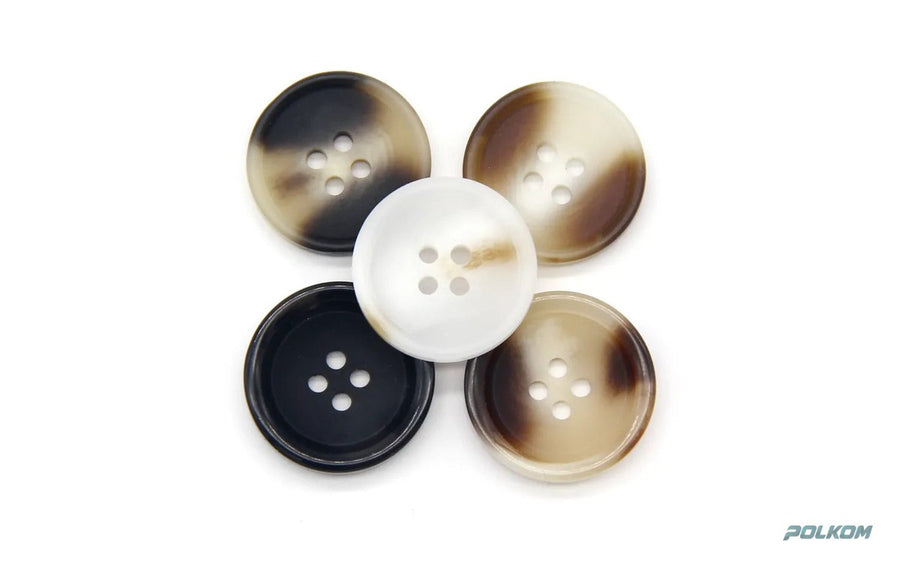
- corozo buttons made from the nut of the tagua palm – a natural material with a rich colour range;
- wooden and coconut buttons for a rustic look;
- cotton woven or printed labels instead of polyester satin ones;
- natural-looking leather labels for jeans and accessories;
- hang tags made of recycled paper with a cotton string.
If the collection has zips, choose metal zips without a shiny synthetic-looking tape where they are visible, or at least a colour that blends with the fabric.
Colours and natural tones
Natural collections often work in a palette of raw, unbleached and earthy tones – ecru, beige, stone, olive, terracotta. Match the thread to a fabric swatch in daylight, not on screen. Unbleached fabric has a slight yellowish or greyish cast that looks different next to white thread. That is why natural or ecru threads, not optical white, are sought for these fabrics.
If the collection is dyed with plant dyes after sewing, use 100% cotton thread in a natural colour and always run a test – plant dyes behave differently from synthetic ones, and the result on the thread must be seen in advance.
Common mistakes in natural collections
- shiny polyester thread on visible seams on matte linen;
- optical white thread on unbleached fabric;
- cotton thread on the overlock for organic jersey – the seams break when the garment is put on;
- claiming a "100% organic product" when the threads and labels have not been checked;
- skipping the wash test on the sample – shrinkage of linen and cotton only shows after the first wash.
Care for garments with cotton seams
Garments in natural materials with cotton seams are washed according to the fabric instructions. The seams tolerate high temperatures, but chlorine bleach and aggressive detergents weaken cotton fibres. Recommending washing at a lower temperature and air drying extends the life of both the fabric and the seams, and matches the message of a sustainable brand. State this care clearly on the label with care symbols.
Cotton threads and natural trims from Polkom
In the cotton threads category you will find mercerised threads in natural and rich colours for clothing made from natural fabrics. Polkom is a Sofia-based manufacturer and wholesaler of sewing accessories with over 30 years of experience – you can order threads, buttons, labels and zips from one supplier with delivery across the EU. Send an inquiry via our contact page with your fabrics and colour samples.