Manufacturer · Fashion & Home Accessories




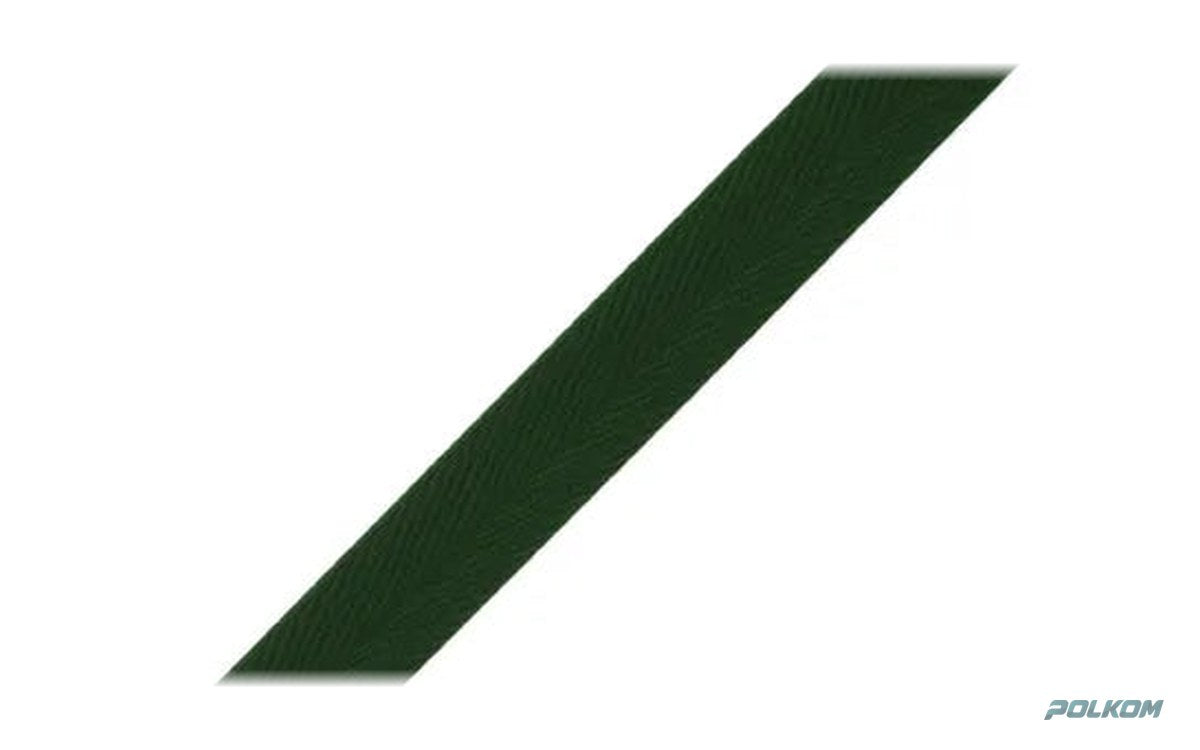
Cotton herringbone tape is soft, matt and suitable for natural fabrics, but it can shrink in the first wash. Polyester tape is stronger, does not shrink and keeps its colour through frequent washing. The choice depends on the fabric of the product, the washing temperature and whether the tape is visible or hidden.
Cotton herringbone tape – properties
Cotton is a natural fibre that absorbs moisture and has a pleasant, dry feel. In a twill weave it gives a dense, matt tape with a clearly defined zigzag. This is the classic tape that has been used in garment workshops for decades.
- Look: matt, "textile", with a natural texture that sits well next to linen, cotton and denim.
- Feel: soft, does not irritate the skin and does not slip.
- Ironing: withstands high temperatures, so it is processed together with cotton and linen fabrics without risk of melting.
- Shrinkage: untreated cotton usually shrinks by a few per cent in the first wash in warm water.
- Dyeing: takes reactive dyes well; an even colour is easy to achieve in pastel and saturated tones.
Polyester herringbone tape – properties
Polyester is a synthetic fibre with high tensile strength and very low moisture absorption. Tape made from it is slightly smoother with a slight sheen, but in a twill weave it looks very close to cotton tape.
- Dimensional stability: it practically does not shrink, which matters when the tape reinforces a seam or sits in a long handle.
- Strength: at the same width and density it withstands a greater load and wears more slowly.
- Colourfastness: it is dyed with disperse dyes at high temperature and the colour does not fade easily in washing and sunlight.
- Quick drying: it suits products that are washed often and need to dry quickly.
- Ironing: requires a lower temperature; with an iron that is too hot it can become shiny.
Comparison table
| Criterion | Cotton | Polyester | Blend |
|---|---|---|---|
| Shrinkage in washing | Possible, especially in the first wash | Minimal | Slight |
| Tensile strength | Good | High | Good to high |
| Look | Matt, natural | Slightly smooth | Close to cotton |
| Ironing | High temperature | Moderate temperature | Moderate temperature |
| Suitable for | Aprons, home textiles, eco bags | Workwear, bags, frequently washed products | Universal applications |
Does cotton tape shrink and what to do about it
Shrinkage is the most common cause of problems with cotton tape. If the tape is sewn into a shoulder seam or along a pocket edge and shortens after washing, the seam puckers and the product loses its shape. There are three ways to protect yourself:
- Pre-soaking. The tape is soaked in warm water, dried loosely without stretching, and only then sewn.
- A test before the run. Measure out 50 cm, wash it at the temperature on the product's care label and measure again. This way you know the real shrinkage percentage of the specific batch.
- Choosing a blend or polyester. When the fabric is synthetic or the product is washed often at high temperature, a stable tape is the safer option.
An important rule: the tape and the fabric must behave the same way in washing. Cotton tape on a cotton fabric that also shrinks usually causes no problem. Cotton tape on a polyester lining or softshell does.
Which material for which product
Aprons and kitchen textiles
Here a natural look and resistance to hot water are wanted. Cotton tape is the logical choice for ties and hanging loops, provided it and the fabric have been pre-shrunk. For professional restaurant aprons that are washed industrially, a blend or polyester gives a more stable result.
Bags and totes
For the handles of cotton eco bags, cotton is chosen – for the look and the sense of a natural product. If the bag will carry weight or be used for a long time, polyester tape wears less at the edges and stretches more slowly under load.
Workwear and uniforms
Reinforcing tapes in work jackets, overalls and uniforms are chosen in polyester or blends. They withstand industrial washing, do not fade and do not change length.
Reinforcement in knitwear and jackets
For hidden reinforcement of shoulders, necklines and lapels, a thin tape is used, usually 6–12 mm. The material is matched to the fabric: for wool jackets and cotton jersey – cotton or a blend; for synthetic fabrics – polyester.
Colour, look and branding
If the tape is visible – a handle, a tie or a hanging loop – how it takes colour also matters. Cotton gives a soft, slightly "dusty" tone that suits natural collections. Polyester achieves more saturated and durable colours. Both materials can carry a printed logo, but on cotton the print looks more matt. Compare the look with other types in the ribbons section, and if you are looking for a ribbed, more refined ribbon, see grosgrain ribbon.
Practical conclusion
- Choose cotton when the product is made of a natural fabric, the look matters and washing is moderate.
- Choose polyester when the tape carries load, the product is washed often or the fabric is synthetic.
- Choose a blend when you want a natural look with less shrinkage.
You will find all materials and widths in the herringbone tape category.
Samples and orders from Polkom
Polkom is a Bulgarian manufacturer and wholesaler of clothing haberdashery based in Sofia. We supply herringbone tape in cotton, polyester and blends, in standard and non-standard widths, with dyeing to Pantone and logo printing, to customers throughout the EU. Minimum quantities depend on the article. Ask for samples of both materials to test with your fabric via our contact page.