Manufacturer · Fashion & Home Accessories




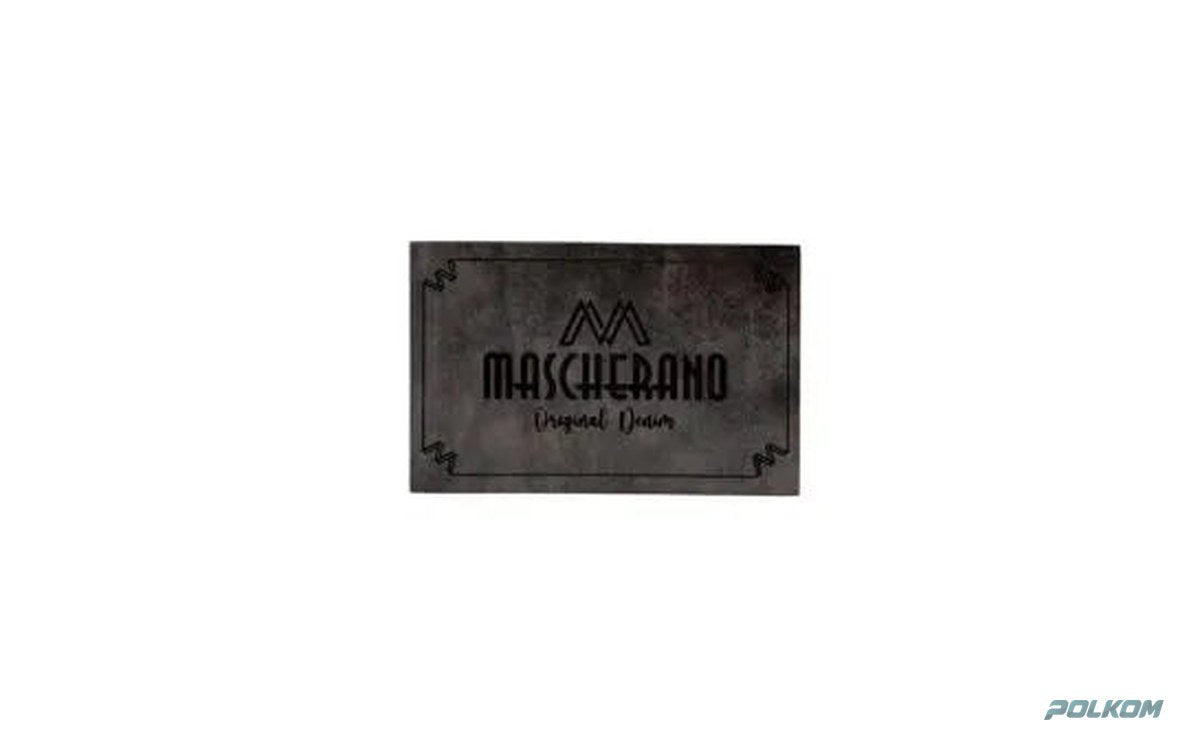
Stamping a logo on leather means pressing the logo into the material with a heated metal die. With debossing the logo is recessed below the surface, while with embossing it is raised above it. Debossing is more common on leather labels because it is more durable, cheaper to produce and suitable for almost any leather. Embossing gives a more three-dimensional, "sculpted" effect but requires two dies and a more suitable material.
How leather logo stamping works
The process is mechanical. The logo is made as a metal die (block) – usually brass or magnesium – with a mirror image. The die is mounted in a press, heated to a temperature suitable for the specific material and pressed against the leather under pressure for a short time. The heat and pressure permanently change the surface structure, and the logo remains in it.
Three parameters determine the result:
- Temperature – too low gives a shallow, unclear relief; too high can burn genuine leather or melt the coating of faux leather.
- Pressure – determines the depth of the relief.
- Dwell time – thicker materials need longer.
That is why the first impressions on every new leather are used for set-up – the aim is a consistent result across the whole run.
Debossing: a recessed logo
Debossing needs only one die, which presses the logo inwards. This is the classic stamping of leather patches on jeans, bags and wallets.
Advantages
- Very durable – the logo does not protrude, so it does not rub off with friction.
- Works with genuine leather, faux leather and jacron.
- On genuine leather the heat slightly darkens the bottom of the relief, creating a natural contrast without ink.
- Lower one-off costs – one die.
Limitations
Very thin lines and small text can "merge", especially on soft and porous leather. That is why lines in the logo must be thicker for debossing than for printing.
Embossing: a raised logo
Embossing uses two dies – a male and a female. The material is pressed between them and the logo rises above the surface. The effect is three-dimensional and luxurious, but it has some particularities:
- A softer, more pliable material is needed that "holds" the shape.
- A recess forms on the back of the label – when sewn onto a dense base this is not visible, but it should be taken into account.
- The raised parts are exposed to friction and wear faster with intensive use.
- Two dies mean a higher one-off cost.
That is why embossing is chosen less often for clothing and more often for accessories and items that are not washed.
Debossing and embossing compared
| Criterion | Deboss (recessed) | Emboss (raised) |
|---|---|---|
| Number of dies | One | Two (male and female) |
| Rub resistance | Very high | Lower on the raised edges |
| Suitable materials | Genuine leather, faux leather, jacron | Mainly soft genuine leather and thick faux leather |
| Fine details | Limited | Even more limited |
| Typical use | Jeans, jackets, caps, bags | Luxury accessories, boxes, covers |
How different materials behave when stamped
Vegetable-tanned leather
It is the "favourite" for stamping. It is dense, holds the shape of the relief and darkens under heat, which creates a natural contrast. Over time the relief becomes softer but stays clear. That is why it is the classic choice for jeans patches and small leather goods.
Chrome-tanned leather
Softer, more elastic and more water-resistant. It takes stamping, but the relief is shallower and the contrast weaker, because the material does not darken as much when heated. It is often combined with foil.
Faux leather
It has an even surface and the relief comes out very clean if the temperature is set correctly. If overheated, the coating turns shiny or deforms, so the set-up is more sensitive.
Jacron
It takes a deep, crisp relief, and its thickness is consistent across the whole area. This makes it convenient for large runs of denim labels with a debossed logo and size.
Stamping with colour: foil and ink in the relief
Plain stamping ("blind", without colour) is elegant, but on light or faux leather the contrast may be weak. In that case hot foil stamping is used – the die transfers gold, silver, copper or a coloured pigment into the relief itself. Another option is stamping followed by colouring the recess. Both approaches keep the relief and add visibility.
How to prepare the logo for stamping
- Use lines at least about 0.5 mm thick at actual size; more on soft leather.
- Leave space between letters and elements so they do not merge under pressure.
- Avoid large solid areas – they stamp unevenly; outline shapes are better.
- Leave a margin of a few millimetres to the edge of the label, especially if it will be sewn around its outline.
The same principles apply to embossing on card – if you are interested in how it is done there, see hang tags. For metal relief, browse our metal logo plates.
When to choose another technique
If the logo has many fine details or small text, laser engraving may be more suitable. If it is multicoloured, screen printing. Stamping remains the best choice when you want durability, a classic look and a good price for larger runs.
Stamped leather labels from Polkom
Polkom makes leather labels with debossing, embossing and foil stamping to your design. We check the logo, suggest corrections if needed and prepare a sample before the run. Send the file and size via our inquiry form.