Manufacturer · Fashion & Home Accessories




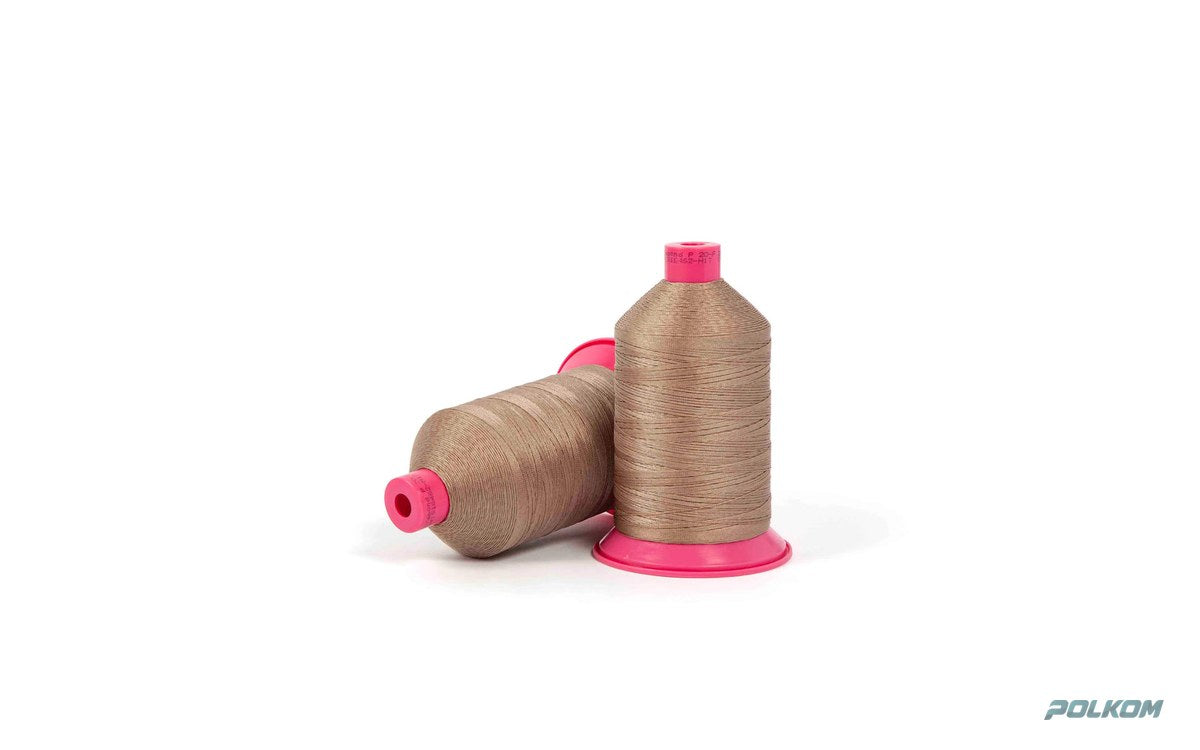
Clear sewing thread is a fine monofilament – a single filament of polyamide (nylon) or polyester that lets the colour of the fabric show through and is therefore almost invisible. It is used on multicoloured fabrics, for attaching appliqués, beads and sequins, for curtain hems and in embroidery. It is sewn with a fine needle, reduced tension and a low ironing temperature.
What clear sewing thread is
Unlike ordinary threads, which consist of many twisted fibres or filaments, clear thread is one solid filament, similar to a very fine fishing line. It comes in two main versions:
- Clear – colourless, for light and medium tones.
- Smoke – with a slight grey tint, for dark fabrics, where colourless thread would glint.
The thickness is very small – often under 0.1–0.15 mm, which allows sewing with an Nm 60–80 needle.
Polyamide or polyester
| Property | Polyamide monofilament | Polyester monofilament |
|---|---|---|
| Softness | softer and more elastic | slightly stiffer |
| Heat resistance | lower – be careful with the iron | higher |
| UV resistance | yellows and becomes brittle over time | more stable in light |
| Suitable for | appliqués, beads, temporary details | curtains, products in the light, longer life |
When to use clear thread
- Multicoloured and patterned fabrics, where no single thread colour blends in everywhere.
- Appliqués and patches – the edge is sewn with a narrow zigzag that does not show.
- Beads, sequins, crystals – the thread does not change the colour of the decoration.
- Curtain hems – the seam does not show against the light.
- Quilting and patchwork – stitching "in the ditch" between the pieces.
- Embroidery and stage costumes – where only the decoration matters.
- Trial seams and temporary fixing on samples.
When not to use clear thread
Monofilament has its limitations. It is not suitable for:
- construction seams on clothing – with wear its ends become scratchy and irritate the skin;
- seams ironed at high temperature – polyamide can melt;
- underwear, children's clothing and sportswear – it touches the skin;
- products exposed to the sun for long periods – polyamide yellows and breaks.
For these cases it is better to choose an ordinary sewing thread in a similar colour.
How to sew with clear thread
- Needle – fine, Nm 60–80, new. For jersey, with a ball point.
- Spool – monofilament is slippery and unwinds by itself; put a thread net over the spool or use a vertical pin so that it does not tangle.
- Top tension – reduce it considerably; with high tension the thread stretches and then puckers the seam.
- Bobbin thread – usually a fine sewing thread in the colour of the fabric is used, not monofilament. If you do wind monofilament on the bobbin, wind slowly and with low tension – otherwise the bobbin can deform.
- Speed – moderate, so that the needle does not heat up.
- Securing – tie off the ends or make a few backstitches; monofilament comes loose more easily than ordinary thread.
- Ironing – at a low temperature and through a cloth.
Clear thread in hand work
When sewing on beads, sequins and crystals by hand, clear thread is convenient because it does not show through transparent decorations. Use a fine beading needle and tie a knot every few centimetres – this way, if the thread breaks, only a few elements come off, not the whole decoration.
Alternatives to clear thread
If you are not sure that monofilament is suitable:
- A very fine polyester thread (ticket 150–180) in a neutral colour is almost as unobtrusive but soft and withstands ironing.
- A grey or beige thread of medium lightness blends with most patterned fabrics.
- Blind stitch – for curtain and trouser hems, a machine blind stitch with ordinary thread is a more durable solution.
Common problems
- The thread slips off the spool – use a thread net or a cone stand.
- Puckered seam – tension too high; the thread stretched while sewing.
- Glint on dark fabric – replace the clear with the smoke version.
- Melted seam after ironing – temperature too high; iron through a cloth on a low setting.
Clear thread in series production
In series garment production clear thread is rarely used, and mainly for decorative operations – attaching sequins, beads and appliqués or temporarily fixing details. The reason is that customers feel the scratchy ends, and ironing at the end of the line is risky. If monofilament is part of the process, record the ironing temperature and the way the ends are secured in the tech pack to avoid complaints.
What to choose for curtains and home textiles
For curtains, drapes and tablecloths clear thread is handy for hemming patterned fabrics, but these products stay in the light for years. So choose polyester monofilament here, which tolerates sunlight better, or an ordinary polyester thread in a neutral colour. Polyamide monofilament at a window yellows and breaks much faster.
Accessories and threads from Polkom
Polkom is a Bulgarian manufacturer and wholesaler of sewing accessories. In the threads category you will find sewing threads in a wide range of colours, and for decorative details take a look at the ribbons. If you are not sure whether clear thread is suitable for your product, send us a description via our contact page – we will suggest a solution and a sample.