Manufacturer · Fashion & Home Accessories




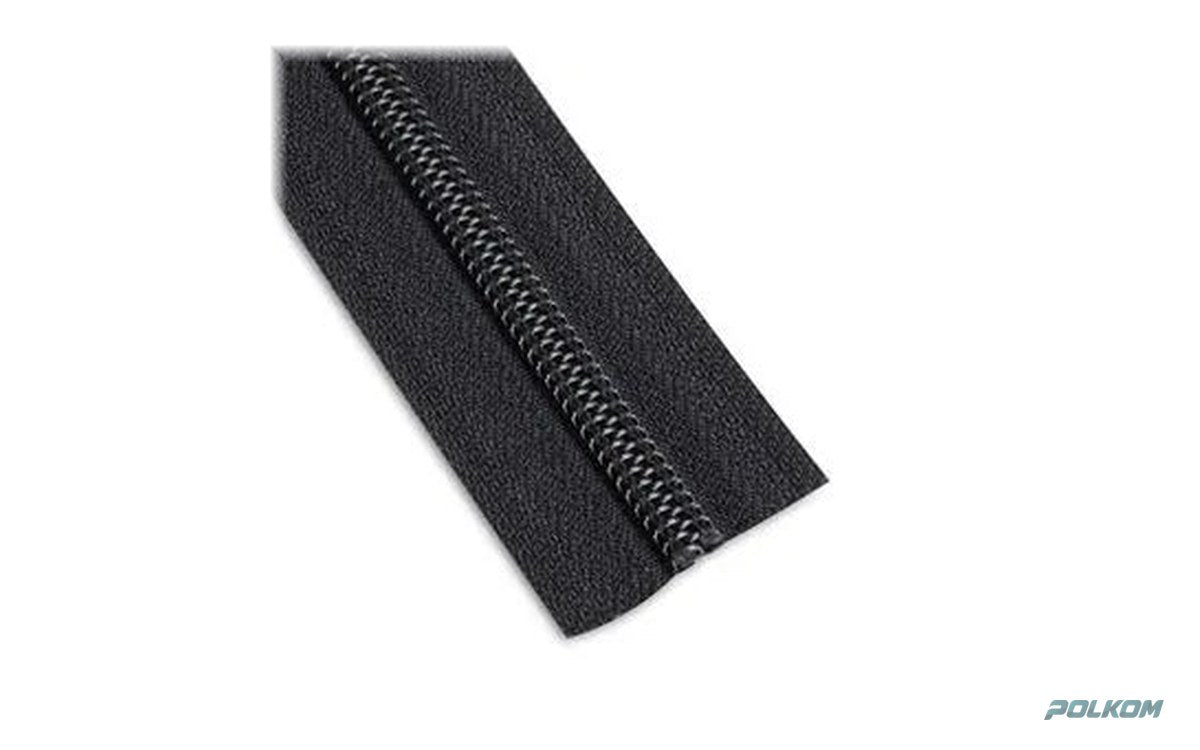
A water-resistant zip is a nylon coil zip whose tape is coated with polyurethane or laminated with a film, and whose coil is usually turned to the inside. When closed, it keeps out rain and splashes without the need for a fabric flap. Water-resistant zips are chosen for jackets, backpacks, covers and technical garments, but the real protection also depends on how the product is constructed.
How a water-resistant zip is made
An ordinary textile zip lets water through the weave of the tape and between the coil elements. The water-resistant version solves this in two ways:
- Tape coating. The face of the tape is coated with polyurethane (PU) or laminated with a thin film. The coating fills the pores of the fabric.
- Reverse coil. The coil sits on the inside, and the coated edges of the two tapes meet tightly when closed, forming a barrier.
The result is a smooth zip with a slight gloss or a matt look and a narrow line down the middle. A separate category is airtight zips for drysuits and specialist equipment – they have a different construction and are rarely used in mass-market clothing.
Water-resistant, water-repellent or airtight
| Type | What it does | Typical use |
|---|---|---|
| Water-repellent | The tape is impregnated; water runs off, but penetrates in prolonged rain | Windbreakers, light jackets, city backpacks |
| Water-resistant (PU or laminated) | Keeps out rain and splashes in normal use | Softshell and hardshell jackets, hiking backpacks, covers |
| Airtight | Lets through neither water nor air, even under pressure | Drysuits, waterproof bags, special equipment |
In everyday language, "waterproof zip" usually means the second option. When ordering, it is a good idea to describe the conditions of use rather than simply writing "waterproof" – that way you will receive a suitable proposal.
How to choose a water-resistant zip for a jacket
- Size. For the main front zip of a jacket, No. 5 or No. 8 is most common; for pockets and vents, No. 3 or No. 5.
- Type. Open-end for the front, closed-end for pockets, two-way for long jackets and parkas.
- Slider. Auto-lock for the front zip; a large puller that is easy to use with gloves.
- Finish. Matt or gloss; matching the fabric or contrasting.
- Zip garage. A small fabric pocket at the top end into which the slider tucks – this is where water penetrates most easily.
Water-resistant zips for backpacks and bags
On backpacks the zip runs horizontally or in a curve and takes more strain than on a jacket. We recommend:
- a larger size (No. 8) for the main opening;
- two-way opening with sliders that meet in the middle;
- non-locking sliders for quick access;
- cord or rubber pullers that do not rattle or scratch.
A coated zip is stiffer than an ordinary one, so it is harder to sew around very tight curves. Check a sample on the actual model before launching the series.
The construction of the product is just as important
Even the best water-resistant zip does not guarantee a dry inner layer if the seams around it leak. Pay attention to:
- Needle holes. On waterproof products, seams are sealed on the inside with seam-sealing tape.
- The ends of the zip. The top end and the bottom stop are weak points – a zip garage and an inner flap help here.
- Inner flap (storm flap). A narrow strip of fabric behind the zip that stops water if it does get through.
- Stitching at a distance from the coil. Stitching too close gets in the way of the slider and damages the coating.
Common mistakes when choosing
- A water-resistant zip on a product without sealed seams. The cost of the zip is wasted if water gets through the neighbouring seam.
- A standard slider. Coated zips with a reverse coil require a slider designed for reverse coil.
- Too fine a size for the main opening. The coating makes the zip stiffer, and under strain a fine coil separates more easily.
- Approving the colour from a photo only. The coating changes how the colour is perceived – approve from a sample.
- No garage at the top end. The slider remains exposed and water runs straight down it to the inside.
Good practice is to test the prototype under a shower or with a spray bottle before the series is released – that way weak points are found in time.
Sewing and processing
- Use a sharp needle and a longer stitch so you do not perforate the coating too densely.
- Avoid pins in the coated part – use clips or temporary adhesive tape.
- Do not iron directly on the coating; for heat bonding, test the temperature on a sample.
- When cutting continuous zip by the metre, seal the end with a hot knife.
Care and durability
The coating wears over time, especially with frequent bending and friction. To extend the life of a water-resistant zip:
- close the zip before washing and wash at a moderate temperature;
- do not use fabric softener, which can degrade the coating;
- rinse sand and salt off the coil with water;
- if it sticks, use a special zip lubricant, not oil.
For products that do not need a coating but will be used in harsh conditions, also consider moulded plastic zips – they cope well with cold and moisture. You will find the full range of nylon coil zips in the category.
Water-resistant zips from Polkom
Polkom is a Sofia-based manufacturer and wholesaler of garment accessories. We help outdoor and sportswear brands select a water-resistant zip, compatible sliders and pullers with logo, as well as additional accessories such as cord stoppers and cords. Availability depends on size, colour and coating. Send a request for a quote describing the product and its conditions of use.