Manufacturer · Fashion & Home Accessories




Ironing symbols are shaped like an iron, and the dots inside show the maximum soleplate temperature: one dot – up to 110 °C, two dots – up to 150 °C, three dots – up to 200 °C. A crossed-out iron means the item must not be ironed. With one dot, the standard also warns that steam ironing may cause irreversible damage.
Ironing symbols according to ISO 3758
The iron is the fourth symbol on the care label, after washing, bleaching and drying. The temperatures refer to the iron's soleplate. Most household irons have a dial marked with the same dots, so the consumer can match the label to the setting directly.
| Symbol | Maximum temperature | Typical fabrics |
|---|---|---|
| Iron with three dots | 200 °C | Cotton, linen |
| Iron with two dots | 150 °C | Wool, silk, polyester, viscose, blends |
| Iron with one dot | 110 °C, no steam | Polyamide, acrylic, acetate, elastane, delicate synthetics |
| Crossed-out iron | Do not iron | Items with prints, foil, sequins, some technical fabrics |
The table gives general guidance. The specific symbol depends on how the fabric has been finished and what details the garment has.
How to iron according to the dots
Three dots
Cotton and linen tolerate high temperatures and steam. They are best ironed slightly damp. Dark linen items are ironed on the wrong side so that they do not become shiny.
Two dots
The medium temperature is suitable for most blends. Wool is ironed through a damp cloth so that the surface is not flattened and no shiny imprint of the soleplate remains. Silk is ironed on the wrong side.
One dot
With polyamide, acrylic and fabrics with a lot of elastane, the soleplate should only be warm. High temperatures can melt the fibres and leave a shiny mark or a hole. Steam is also risky, which is why the standard excludes it for this symbol.
Crossed-out iron
The item must not come into contact with a hot soleplate. Sometimes creases can still be removed with a garment steamer without contact, but this is at the consumer's own risk. Prints, rubber appliqués and reflective tapes are easily damaged.
Ironing symbols and accessories
The symbol must take into account not only the fabric but everything sewn or bonded onto the garment:
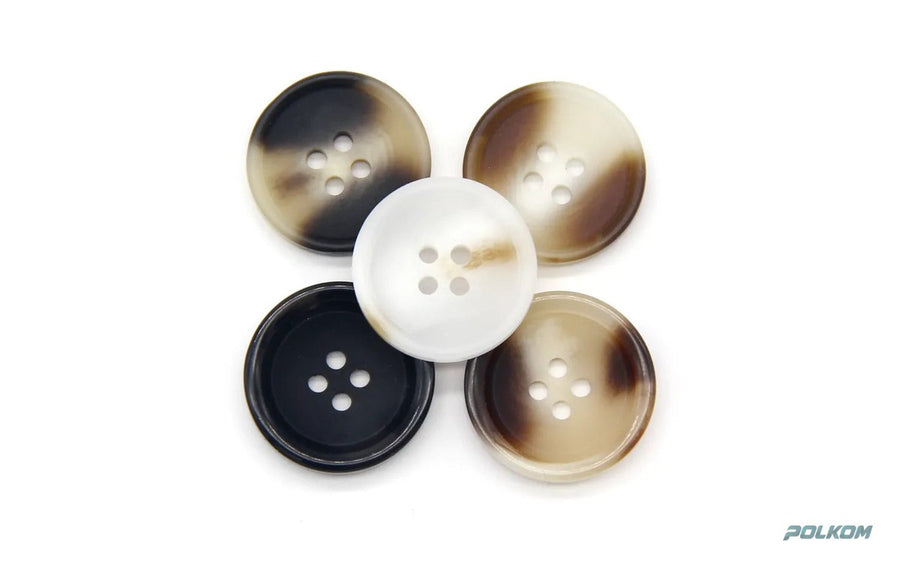
- Buttons – plastic buttons can deform on direct contact with a soleplate at 200 °C. So the area around them is ironed carefully.
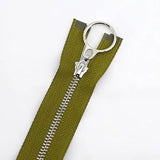
- Zips – nylon coil zips are made of polyester or polyamide; they are not ironed directly with the hot soleplate.
- Labels – printing on satin withstands normal ironing, but shiny and metallised labels may require a lower temperature.
- Fused interlinings and heat-applied appliqués – at too high a temperature the adhesive can soften again.
That is why a cotton jacket with a viscose lining and plastic buttons often has two dots rather than three.
Common mistakes in choosing an ironing symbol
When preparing labels for a new collection, errors in the ironing symbol are among the most common. These are the situations garment technologists check before printing:
- Three dots on a blended composition. If a T-shirt is 95% cotton and 5% elastane, the symbol must take into account the elastane, which is more sensitive. This usually means two dots.
- Overlooked lining. A wool coat with a polyester or acetate lining cannot have a symbol higher than the lining allows.
- Print or transfer. Even if the fabric tolerates 150 °C, a plastisol print can soften. In that case an instruction to iron inside out or a crossed-out iron is used.
- Copying from an old collection. A new fabric with the same name may have a different finish or dyeing and react differently.
The simple rule is: the symbol is determined by the most sensitive component, not by the main fabric.
What an iron with crossed-out steam underneath means
On some labels you will see an iron with two crossed lines underneath it, resembling steam. This is a "no steam" instruction from the American ASTM labelling system, which is not part of the ISO 3758 set but appears on imported products. In the European standard, the steam prohibition is included in the meaning of the one-dot symbol.
How ironing symbols are printed
The iron is the most complex symbol in shape, and if printed too small the dots merge. So it is important that the label is wide enough and printed at a good resolution. On care and composition labels, the symbols are usually a few millimetres high and are printed in one row. On narrow tapes, it is better for the symbols to go onto a separate line than to become illegible.
If you want the symbols to look like part of your corporate style, you can choose the print colour and material to match the main label. Take a look at our printed labels and the full labels category.
Practical tips for consumers
- Start at the lowest temperature and increase it if the creases do not smooth out.
- Iron dark fabrics on the wrong side to avoid shiny marks.
- Use a cloth between the iron and delicate fabric.
- Never iron directly on prints, rubber appliqués or reflective tapes.
- Empty the water tank when ironing on one dot, so there is no accidental steam.
Labels with the right symbols from Polkom
Polkom is a manufacturer of labels and garment accessories based in Sofia with over 30 years of experience. We help you arrange the ironing symbols and other instructions, print care and composition labels with your logo and send a sample before production. We deliver across the EU. Send an inquiry via our contact page.