Manufacturer · Fashion Accessories



For garments that are dyed after sewing (garment dye), 100% cotton threads are used, because they take the same dyes as the cotton fabric and the seam takes on the colour of the garment. Polyester threads are not suitable for garment dyeing – they stay in their original colour and the seams stand out. Core-spun thread gives an intermediate result.
What is garment dyeing and why the thread is critical
In conventional production, the fabric is dyed in the roll and then cut. In garment dyeing, the garment is sewn from greige or white fabric and dyed as a finished product. This gives soft, slightly uneven tones, the characteristic "worn-in" feel and the option of quick small runs in different colours from one base.
The problem is that each fibre takes different groups of dyes:
- cotton, linen, viscose – reactive and direct dyes;
- polyester – disperse dyes at high temperature;
- polyamide, wool – acid dyes.
A cotton garment is dyed with cellulose dyes. A polyester thread in it takes practically no colour and stays white or in the colour in which it was bought.
Which threads to choose for garment dyeing
| Thread type | Result when dyeing a cotton garment |
|---|---|
| 100% cotton (mercerised) | takes the dye like the fabric; the seam matches |
| Core-spun with a cotton wrap | the wrap is dyed, the core is not; with friction a light strand may appear |
| 100% polyester | stays undyed; the seams stand out |
| Viscose | takes the dye but is weaker when wet |
Mercerised cotton gives the most even result because it takes dye better than untreated cotton. The tone of the seam is rarely 100% identical to the fabric – the difference in density and twist creates a slight variation which, in garment dyeing, is usually accepted as part of the aesthetic.
Dyeing for a contrasting colour
Some brands use the effect deliberately – they sew with polyester thread to get light contrasting seams after dyeing. This is a legitimate design decision, but it must be planned. If the aim is for the seam to match, all threads – on the lockstitch machine, the overlock and the coverstitch machine – must be cotton.
The reverse approach is also possible – sewing with thread in a pre-selected dark colour, which remains as a contrast after dyeing in a light tone. This effect is harder to control, because cotton thread also takes some of the new dye and its tone changes. If you want a predictable contrast, polyester is the safer option; if you want the seams to "disappear" into the garment, the choice is mercerised cotton in white or natural. Whatever you choose, record it in the model's technical sheet so it is repeated in every subsequent series.
Preparing the garment for garment dyeing
- PFD fabric (prepared for dyeing) – without finishes and optical brighteners that hinder even dyeing.
- Greige or white cotton threads for all seams.
- Allowance for shrinkage – the garment will shrink during dyeing, so the pattern must include a tolerance.
- Accessories that withstand the process – buttons, zips and labels go through a hot bath, mechanical tumbling and chemicals.
- Test garment – dye one piece before the series.
Accessories in garment dyeing
Besides the thread, check the other components:
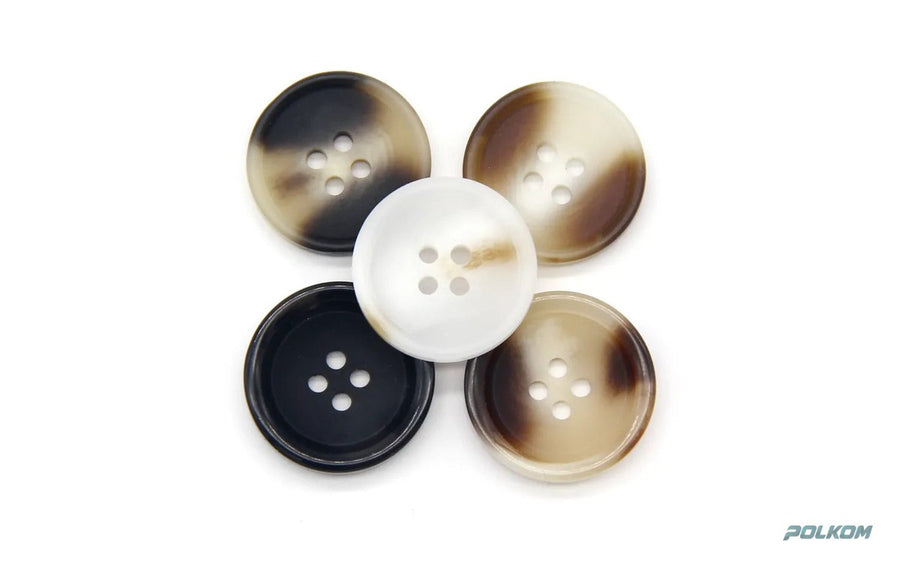
- Buttons – corozo buttons partially absorb the dye and are coloured together with the garment, which is often a desired effect. Polyester buttons stay in their colour.
- Labels – woven polyester labels do not take the dye; cotton labels are coloured. Choose deliberately according to the design.
- Zips – the tape of a polyester zip will not be dyed; metal teeth must withstand the chemicals.
Mistakes to avoid
- an overlock with textured polyester thread in an otherwise all-cotton garment – the inside seams stay white;
- mixing different thread batches with different mercerisation – the seam is dyed in different tones;
- testing only on a piece of fabric rather than a sewn garment;
- ignoring thread shrinkage – with 100% cotton the seam shrinks together with the fabric, but with blended threads it can pucker.
What to agree with the dye house
The result of garment dyeing also depends on the dyeing technology, not just on the thread. Before sending the series, agree on a few things with the dye house:
- which dyes will be used and at what temperature;
- whether there is an enzyme or stone wash stage for a worn effect;
- what shrinkage to expect with your fabric;
- whether softener will be added, which affects the appearance of the seams.
Enzyme and stone washing mechanically wear the surface. With these, cotton thread also lightens at the edges, giving the seams a natural "vintage" look. If the garment needs to keep a saturated, even colour, discuss a gentler programme with the dye house. Send them a test garment with all seams and accessories, not just a piece of fabric – that way you will see the real result before dyeing the whole series.
Cotton threads for garment dyeing from Polkom
In the cotton threads category you will find mercerised threads in natural and white, suitable for dyeing finished garments. For seams that must remain contrasting, see our polyester sewing threads. Polkom is a manufacturer and wholesaler of sewing accessories with delivery across the EU – send an inquiry via our Contact page to receive a sample for test dyeing.