 Manufacturer · Fashion & Home Accessories





Custom Wash Care Labels
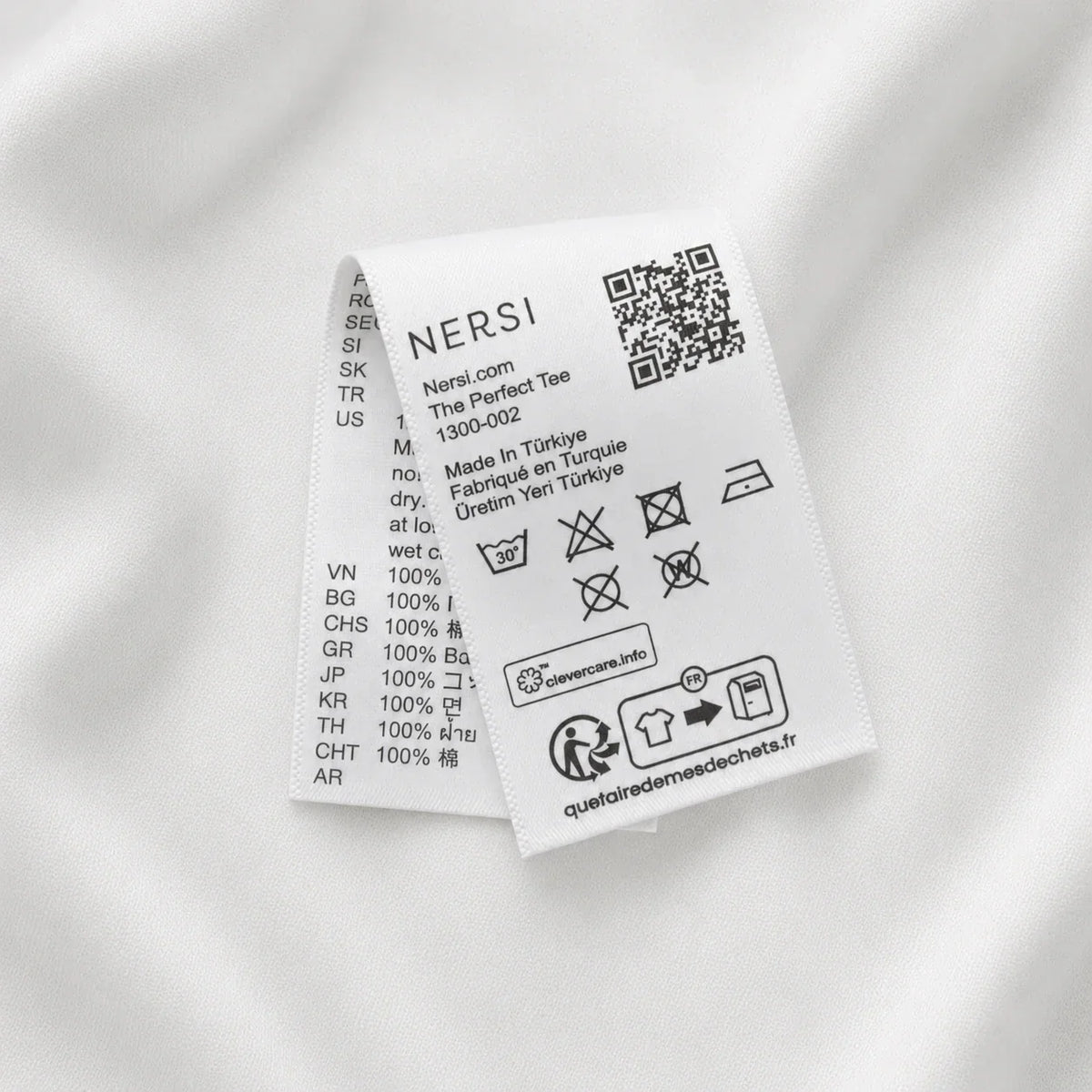
Wash care labels with ISO 3758 care symbols, made by Polkom as the manufacturer – printed on satin, taffeta or cotton tape with your logo and text in the languages you need.
Wash Care Labels – examples from our production
A small selection of the models we produce and supply. Send an inquiry for samples and the full catalogue.
Wash care labels: what they are for
Wash care labels tell the buyer how to wash, dry, iron and clean a garment without damaging it. The information is given through internationally recognised symbols, so the label is understood whatever language the customer speaks. Well-chosen care instructions reduce complaints about shrinkage, fading or distortion and protect the reputation of the brand.
Polkom manufactures custom wash care labels for clothing brands, sewing workshops and makers of home textiles and furniture. We print the symbols, text and your logo on a soft, durable material and help you lay out the information clearly.
ISO 3758 care symbols
The ISO 3758 standard defines five basic symbols, which are shown in a fixed order:
- Washing – a washtub; the number inside is the maximum temperature in °C (for example 30, 40, 60), a hand means hand wash, and bars under the symbol mean a gentle or very gentle cycle.
- Bleaching – a triangle; an empty triangle allows any bleach, one with two diagonal lines allows only oxygen-based, non-chlorine bleach.
- Drying – a square; a circle inside it means tumble drying, with dots for the temperature, while lines inside the square mean natural drying (line dry, dry flat, dry in the shade).
- Ironing – an iron with one, two or three dots for low, medium or high temperature.
- Professional care – a circle with the letter P or F for dry cleaning, or W for professional wet cleaning.
A symbol crossed out with an X means that treatment is not allowed. We recommend basing the instructions on the most delicate material in the item – including the lining, appliqués and trims.
Wash care label or composition label: the difference
The two labels are often sewn in together, but they answer different questions. The wash care label shows how to look after the item. The composition label shows which fibres it is made of – as percentages and with the names required by Regulation (EU) No 1007/2011.
| Wash care label | Composition label | |
|---|---|---|
| Main content | symbols for washing, bleaching, drying, ironing and professional care | fibre composition in percentages |
| Basis | ISO 3758 symbol system | Regulation (EU) No 1007/2011 |
| Language | symbols are international, text is optional | fibre names in the language of the market |
| Format | separate label or part of a combined label | separate label or part of a combined label |
In practice the most common solution is a single combined label with composition, care symbols and country of origin. When many languages are needed, the information is spread across several pages that are folded and sewn in together.
What a wash care label should include
- the care symbols in the standard order;
- short text instructions where needed, such as "Wash with similar colours" or "Turn inside out before washing";
- fibre composition, if the label is combined;
- country of origin, article number, batch or size;
- your logo or brand name.
Materials for wash care labels
Satin
Soft and smooth with a slight sheen. Suitable for lingerie, childrenswear, blouses and dresses – wherever the label touches the skin.
Nylon taffeta
A firmer, more economical base that holds its shape. Used for outerwear, workwear and large production runs.
Cotton tape
A natural look and soft handle – a good choice for cotton and linen collections.
Non-woven fabric
A light, economical material often used for bed linen, home textiles and upholstered furniture.
The text is printed with inks made for textiles, so it stays legible after repeated washing. The edges are cut ultrasonically or with a hot knife so they are soft and do not fray. Labels are supplied cut and folded or on a roll.
Where the wash care label goes
The label is usually sewn into the inside side seam near the hem, where the buyer can easily find it but does not feel it when wearing the garment. On trousers and skirts it often sits in the side seam of the waistband or in the back seam; on home textiles and furniture it goes into the seam of the cover or on the back of the item. A centre-folded label is sewn in with both ends in the seam and hangs free.
Common mistakes with wash care labels
- Instructions based on the main fabric only – if the lining, embroidery or appliqué needs gentler washing, the instructions must follow them.
- Text that is too small – symbols and text must remain readable after washing; do not shrink them just to save space.
- Stiff material against the skin – for lingerie and childrenswear choose satin and soft edges, so the buyer does not feel the need to cut the label off.
- Missing languages – if you sell in several countries, plan the space for the text at the design stage.
If you are not sure how to arrange the information, send us the details of the item and we will propose a label layout.
Ordering together with your other labels
It makes sense to order wash care labels together with your main brand label and your size labels, so they match in width and colour. See every type in the labels category, and the ordering steps in How to order labels. Minimum quantities and lead times are available on request.
Frequently asked questions
Are care symbols mandatory in the EU?
Who decides which symbols go on the label?
Can one label carry text in several languages?
Which material is best for a wash care label?
Do you supply the labels on a roll?


Looking for a specific model, colour or size?
Send us an inquiry with a description or photo – you will receive an offer, samples and a production lead time.