Manufacturer · Fashion Accessories

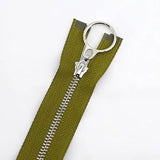


Logo accessories are metal or plastic trims that carry the brand's mark: metal logo plates, rivets, eyelets, zip pullers, buckles, cord ends and cord stoppers. The logo can be raised, debossed, laser-engraved, printed or filled with enamel. Branded hardware turns functional details into a recognisable brand element and is made to order – after a drawing and a sample have been approved.
Which accessories can carry a logo
- Metal logo plates – the most visible logo carrier on jeans, jackets, bags and caps.
- Rivets – the logo is on the cap and is repeated on every pocket.
- Eyelets – the mark is placed on the top ring.
- Zip pullers – metal, rubber or leather, with a raised or engraved logo.
- Buckles – on belts, bags and coats the logo is on the frame or plate.
- Cord ends and cord stoppers – a small mark or monogram, typical of sportswear brands.
- Snap buttons – the logo is on the cap.
Logo application methods
Raised logo by casting
The logo is built into the mould itself and appears when the part is cast – usually in zinc alloy. It suits plates, buckles and pullers with complex shapes. It requires a mould to be made, so it is most cost-effective for larger series.
Stamping (embossing and debossing)
The logo is struck into sheet metal with a die. It is used for rivets, eyelets, snap buttons and thin plates, and produces a clear, even relief.
Laser engraving
The laser removes the plating to reveal the metal underneath or creates a contrasting mark. It needs no tooling, so it suits small series, samples and personalisation. An engraved logo is flat, with no relief.
Enamel and colour fill
The recesses of a raised logo are filled with coloured enamel or paint, so the logo can appear in the brand's colours. It suits plates and pullers.
Printing
Pad printing or UV printing on plastic or painted accessories – cord stoppers, buckles, pullers. It allows more colours but is less resistant to abrasion than relief.
Comparison of methods
| Method | Logo type | Tooling | Suitable for |
|---|---|---|---|
| Casting | Raised, three-dimensional | Mould | Plates, buckles, pullers |
| Stamping | Embossed or debossed | Die | Rivets, eyelets, buttons |
| Laser engraving | Flat, contrasting | None | Small series, samples |
| Enamel | Coloured, in relief | Mould or die | Plates, pullers |
| Printing | Coloured, flat | Printing plate | Plastic accessories |
How to prepare your logo for accessories
- Vector file. Send the logo in AI, EPS, PDF or SVG format. A photo or low-resolution JPG is not enough for a die.
- Simplification. A small-diameter rivet cap has no room for fine lines and small text. Prepare a simplified version or a monogram.
- Minimum line thickness. Fine lines are lost in relief and with wear. Ask the manufacturer for the minimum thickness for the specific method.
- Positive or negative. Decide whether the logo should be raised or recessed.
- Finish. Choose a finish in which the logo is visible – antique finishes emphasise relief, while smooth nickel makes it more discreet.
The ordering process for logo accessories
- An inquiry with the accessory type, size, logo and approximate quantity.
- A technical drawing or visualisation for approval.
- Tooling (for casting and stamping).
- A sample in the actual material and finish.
- Sample approval after testing on the garment.
- Series production and delivery.
The tooling usually remains available for repeat orders, so subsequent series with the same logo are faster.
What affects the price of logo accessories
There can be no public price for branded hardware, because every order is different. Use the following factors as a guide and send a request for a quote:
- The method – casting and stamping require tooling, engraving does not.
- Logo complexity – more detail means a more complex die and more inspection.
- Size and weight of the part – a solid plate uses more metal than a rivet cap.
- The finish – antique, enamel and special tones add operations.
- The quantity – the tooling cost is spread across all pieces, so larger series have a lower unit price.
- Repeat orders – once the tooling exists, the next series is more economical.
Common mistakes with logo accessories
- A full logo with long text on a part just a few millimetres across.
- Approval from a visualisation only, without a physical sample in the actual finish.
- Different finishes on the branded and standard accessories in one garment.
- Ordering too close to the start of production – tooling and sampling take time.
How to build a complete branded set
The strongest impression comes from a collection in which the logo is repeated consistently: a plate in a prominent position, engraved rivets, a zip puller and cord ends on the drawstring – all in one finish. Not every element needs to carry the full logo. Brands often use the full logo on the plate and just an initial or symbol on the small details. This keeps the hardware clean while the mark remains recognisable.
See the models that can be made with a logo in our accessories, metal logo plates and zip pullers categories.
Logo accessories from Polkom
Polkom has been manufacturing accessories to clients' designs and logos for over 30 years. We offer logo engraving, sample making and advice on choosing the method and finish. We work with brands, garment factories and bag manufacturers throughout the EU. Send your logo in vector format and a description of the accessories via our inquiry form and we will propose a solution with a sample.