 Manufacturer · Fashion & Home Accessories











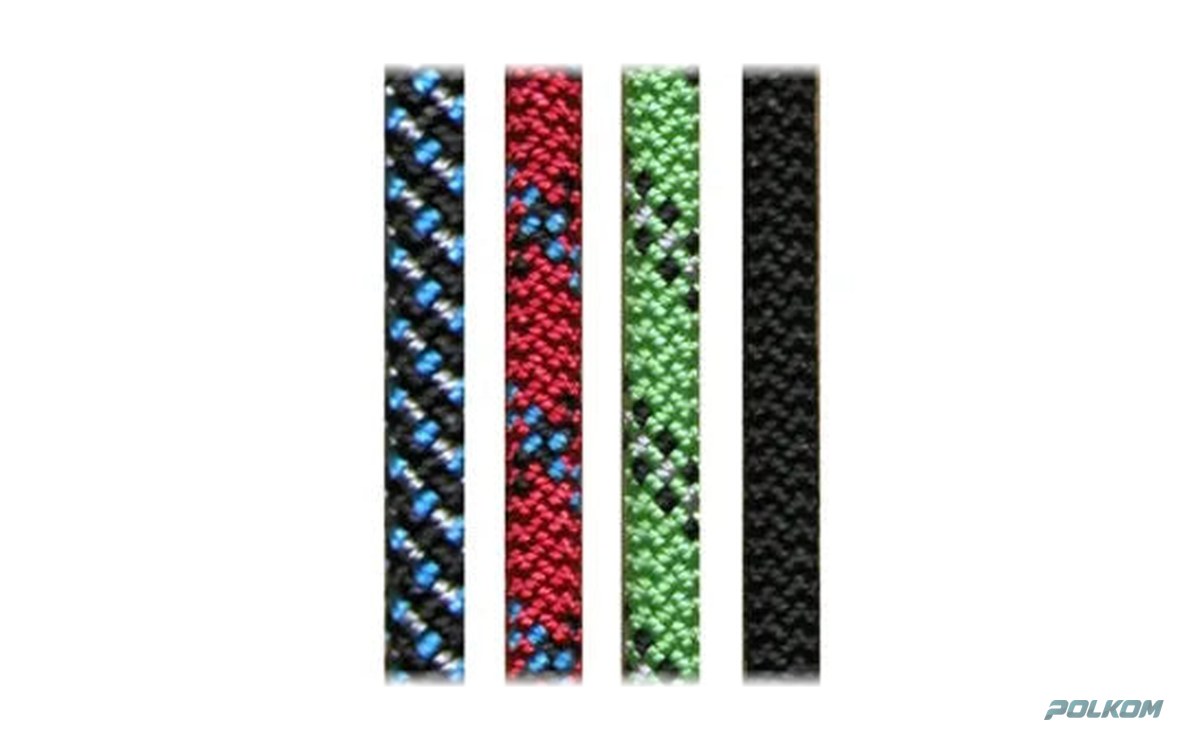
Paracord is a strong polyamide (nylon) cord made up of a braided outer sheath and a core of several twisted strands. It was originally created for parachute lines, and today it is used in outdoor and sportswear, backpacks, bags, leashes, key rings and bracelets. The most widespread type is about 4 mm thick, but thinner 2–3 mm versions are also used for clothing.
What paracord is and how it is built
The name comes from “parachute cord”. The construction is of the “core and sheath” type (kernmantle):
- Sheath – tightly braided from polyamide yarns; it protects the core from abrasion and UV rays and determines the colour and pattern.
- Core – several twisted strands that take most of the load. In the most popular type the core consists of seven strands, each made up of finer fibres.
Thanks to this construction, paracord is strong, flexible and light at the same time. Polyamide is slightly elastic, rot-resistant and unaffected by moisture.
Paracord vs ordinary cored cord
| Characteristic | Paracord | Ordinary cored cord |
|---|---|---|
| Material | polyamide (nylon) | polyester, polypropylene, cotton |
| Core | twisted strands that carry the load | filling for shape and volume |
| Strength | high | medium |
| Elasticity | slight | minimal |
| Look | technical, outdoor | softer, fashion |
| Typical use | backpacks, outdoor, leashes | hoods, tracksuits, drawstring bags |
In fashion, the term “paracord” is sometimes used for any strong, colourful cored cord. When buying for technical products, ask about the material and construction, not only the name.
Where paracord is used
Outdoor and sportswear
Adjusting hoods, hems and waists of jackets, anoraks and mountain trousers. The strong cord withstands frequent tightening and does not break when snagged. It is used together with cord stoppers, which fix the cord in the required position.
Backpacks and bags
For closing openings, compression straps, external gear lashing, zip pulls and decorative bungee lacing on the front panel. Combined with plastic buckles and cord stoppers, paracord is a standard in technical backpacks.
Accessories
Bracelets, key rings, dog leashes, zipper pulls, key and badge lanyards. Paracord is also a popular material for branded promotional products.
Footwear
Laces for hiking and work boots, where strength and moisture resistance are needed.
Paracord thicknesses
- about 2 mm – zip pulls, fine ties, bracelets;
- about 3 mm – hoods and hems of jackets, small backpacks;
- about 4 mm – classic paracord; backpacks, leashes, bracelets, outdoor;
- over 4 mm – heavier applications and handles.
When choosing for clothing, the deciding factor is the opening of the cord stopper, eyelet or buttonhole – the cord must pass through them easily.
How to choose paracord for a production run
- Define the load – a handle and a hood adjustment require different strength.
- Compatibility with the cord stopper – test the cord with the specific stopper; polyamide is slippery, and with an unsuitable stopper the cord may slip.
- Colour and pattern – paracord is made in solid, melange, camouflage and reflective versions.
- End finishing – heat sealing, aglets or plastic cord ends.
- UV and colour fastness – important for items that spend a long time outdoors.
Finishing and processing
Polyamide melts, so the ends of paracord are heat-sealed – with a hot knife or a lighter. This way the end does not fray and the core does not slip out of the sheath. In production, metal or plastic aglets and cord ends, which can carry the brand logo, are used for a more finished look. When cutting cord in series, use a hot knife – cutting and sealing happen in one operation.
Branded paracord
For brands in the outdoor and sports segment, paracord is a convenient carrier of identity. The cord can be ordered in corporate colours or with a woven-in contrasting tracer yarn characteristic of the brand. The ends are finished with metal aglets or plastic cord ends with an embossed logo. Paracord zip pulls with a branded end are a small but memorable detail that sets the product apart on the shelf. For such orders, match the colour of the cord with the cord stoppers, buckles and zip so that the set looks unified.
Care
Paracord withstands washing at the usual temperatures for synthetic clothing. It does not shrink significantly and dries quickly. Avoid direct contact with an iron – polyamide melts. If the item combines paracord with a cotton base, check the washing behaviour on a sample, because cotton shrinks and the cord does not.
Common mistakes when using paracord
- A cord stopper for a thinner cord – the cord does not pass through or the stopper does not hold.
- An end not cut with a hot knife – the core slips out and the end frays during assembly.
- Paracord on an item that is ironed – polyamide melts on contact with the iron.
- Cord that is too thick for children’s clothing – it is heavy and does not meet the safety requirements in the hood area.
Paracord and cored cords from Polkom
Polkom is a Sofia-based manufacturer of haberdashery and accessories for fashion, furniture, footwear and bags, with over 30 years of experience. In the cords category we offer round cored cords and technical cords in various thicknesses and colours, together with cord stoppers, buckles and aglets for outdoor clothing and bags. We deliver across the EU and send samples quickly. Send an inquiry with the thickness, colour and application.




