Manufacturer · Fashion & Home Accessories




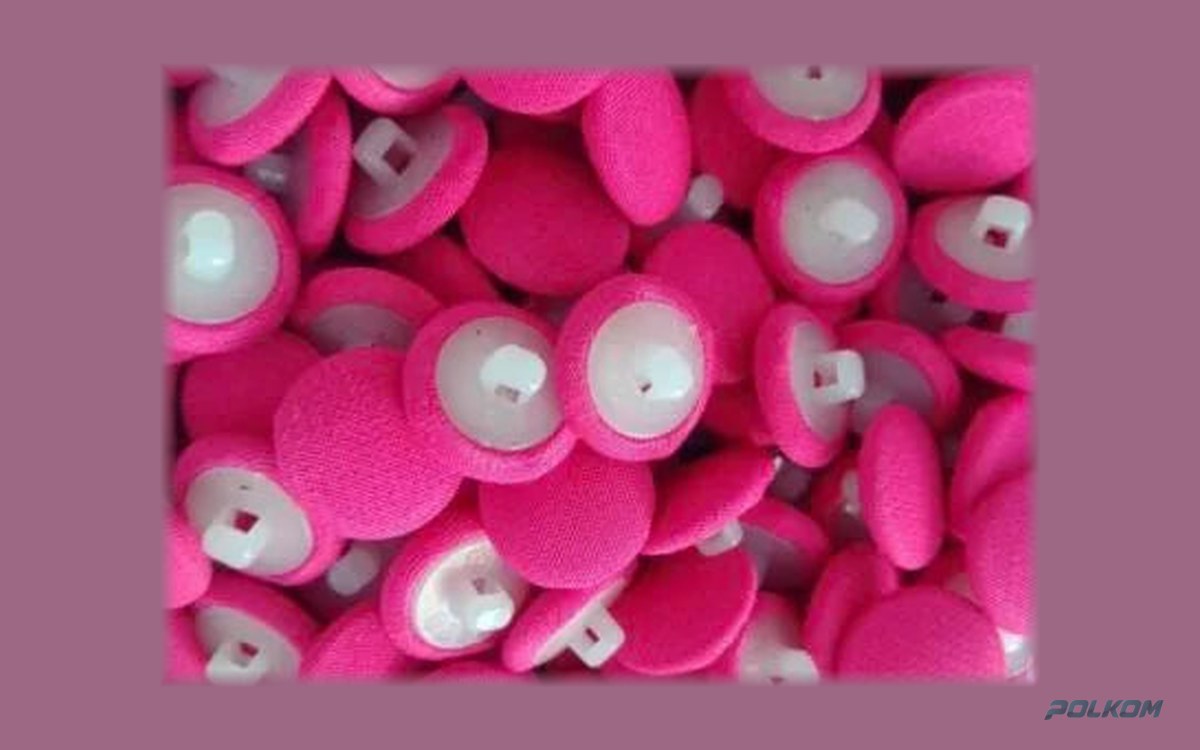
Washing fabric-covered buttons is possible when the fabric covering them is washable and their base is corrosion-resistant. Wash at the temperature on the fabric's care label, inside out and buttoned up, preferably in a laundry bag, and dry in a well-ventilated place. For silk, velvet, leather and eveningwear, dry cleaning is recommended. Rust and stains appear mainly with an unsuitable metal base and prolonged moisture.
Why fabric-covered buttons need attention
A fabric-covered button combines two materials with different behaviour: a textile that absorbs water, shrinks and wears, and a rigid base of metal or plastic that does not change but can corrode. When water gets under the fabric, it stays in contact with the metal cap longer than with the rest of the garment. If the base is not protected, rust appears and stains the fabric from the inside out – as a brown spot in the centre or along the edge of the button.
Washing fabric-covered buttons – basic rules
- Follow the garment's care label. The button is covered with the product's fabric and needs the same care.
- Fasten the buttons and turn the garment inside out. This way the edge of the button does not rub against the drum.
- Use a laundry bag for delicate items and eveningwear.
- Choose a delicate programme and a low spin speed. A strong spin presses the buttons against the drum.
- Do not use bleach or harsh detergents – they discolour the fabric and damage the metal base.
- Take the garment out immediately after washing. A garment left wet in the machine is the most common cause of rust under the fabric.
- Dry in a well-ventilated place, away from radiators and direct sunlight.
When dry cleaning is better
- silk, satin, taffeta and mikado – washing leaves water marks and changes the sheen;
- velvet and suede – the pile is flattened;
- genuine leather – it hardens and discolours;
- bridal and evening dresses;
- lined wool coats and jackets;
- upholstery fabrics – usually cleaned in place according to the fabric manufacturer's instructions.
During dry cleaning, the buttons can be protected with foil or removed, if they are detachable.
Fabric shrinkage
If the garment fabric has not been pre-shrunk, it may shrink on the first wash. The fabric on the button shrinks too, but it is stretched over a rigid cap and cannot shrink freely – the result is pulling at the edge or exposure of the base. So for products that will be washed, the fabric for the buttons should ideally be decatised before covering, just like the fabric for the garment.
Rust and stains – causes and prevention
| Cause | How to avoid it |
|---|---|
| Unprotected metal base | Buttons with a corrosion-resistant or plastic base |
| Garment left wet | Taking it out immediately and drying quickly |
| Drying in a closed room | A well-ventilated place, on a hanger |
| Chlorine-based products | Neutral laundry detergent |
| Cap damaged during assembly | Press control, rejecting defective buttons |
For garment manufacturers, this means the choice of base must match the intended care method. State in your inquiry whether the product will be machine washed, at what temperature and whether it will go through industrial laundering.
Industrial washing and garment processing
Some products are washed or processed after sewing – for example for softening, pre-shrinking or a worn effect. The fabric-covered buttons on such products go through the same processing and must withstand it. If such a step is planned, send a trial button together with the product to the laundry, or choose buttons that are sewn on after processing. This minimises the risk of stains and deformation.
Ironing garments with fabric-covered buttons
Do not iron directly over fabric-covered buttons. The iron presses the fabric against the edge of the cap and leaves a shiny ring or imprint, and with synthetic fabrics it can melt them. Iron around the buttons or from the wrong side on a soft pad, letting the buttons sink into it. For velvet, use steam without pressure.
Wear at the edge
The highest point of the dome and the edge of the button are the areas of greatest friction. With intensive use, the fabric there wears thin faster than the rest of the garment. This is normal, but it can be slowed down:
- with a denser fabric for the buttons if the garment is made of thin fabric;
- with a flat instead of a domed profile in high-friction areas;
- with a padding layer between the fabric and the cap that cushions the pressure;
- with spare buttons supplied with the garment for replacement.
Care label
If the fabric-covered buttons require more careful care than the rest of the garment, the label must reflect this. Care symbols are determined by the most sensitive component of the product and are standardised under ISO 3758, so they are understood throughout the EU. If necessary, add a text instruction too – for example "wash inside out". You will find more about labels with care and composition information under care and composition labels.
How to choose fabric-covered buttons that withstand washing
- State the washing method in your inquiry from the start.
- Choose a corrosion-resistant base.
- Decatise the fabric before covering if the garment will be washed.
- Test a trial button under real washing conditions.
- Provide spare buttons.
Browse the options in the fabric-covered buttons category and the other types under buttons.
Advice from Polkom
Polkom makes fabric-covered buttons to order and wholesale and selects the base according to how the product will be cared for. We make trial buttons quickly so you can test them under real conditions, and we deliver across the EU. Describe the fabric and the washing instructions via our contact page and we will recommend the right solution.