 Manufacturer · Fashion & Home Accessories











Contents
Haberdashery is the group of additional textile materials that go into a garment but are not the main fabric: elastics, ribbons, cords, lace, piping, hook and loop tape and similar items, most often sold by the metre or on rolls. The Bulgarian word for it, galanteria, comes from the French galanterie – “refinement”, “ornament” – and originally meant small fashion accessories. Today in the garment industry, haberdashery means the materials that shape, fasten, reinforce and decorate the product.
What is haberdashery – the meaning of the word
The word is used in two senses. In retail, a “haberdashery” is a shop selling yarns, threads, buttons, zips, ribbons and small sewing notions. In production the term is narrower: it refers to the soft textile items that pass through the sewing machine together with the fabric. Metal accessories – buckles, eyelets, rivets – are usually classed as “accessories”, while buttons, zips and labels are planned as separate groups.
This distinction is useful because each group is bought, stored and checked differently. Haberdashery is measured in metres, has a width and elasticity, shrinks in the wash and must match the fabric in colour. Metal accessories are counted in pieces and assessed by finish, size and the strength of the fitting.
The main types of haberdashery
Elastics
Elastics contain elastomeric threads and provide fit – in waistbands, cuffs, lingerie, swimwear and sportswear. They are mainly divided into knitted, woven and round elastic. An overview of the types can be found in the elastics category.
Ribbons and tapes
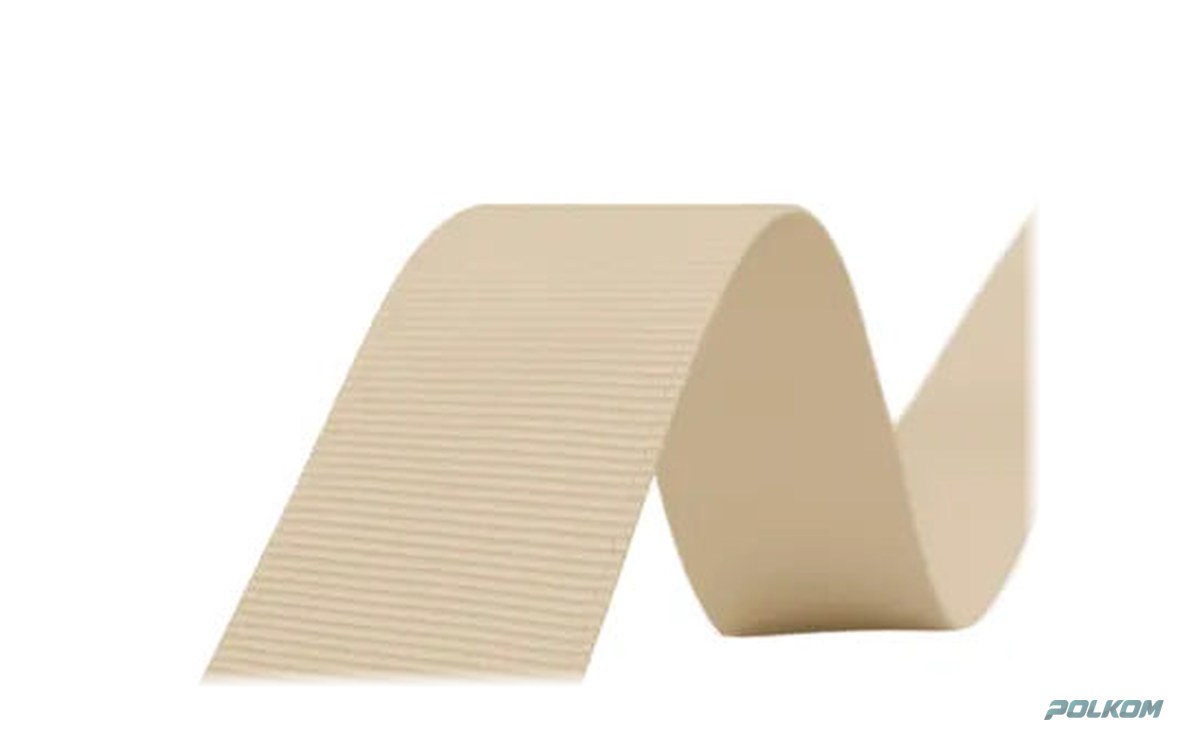
Ribbons and tapes are narrow woven materials without stretch: satin, grosgrain, organza, herringbone tape, piping and bias binding. They are used for binding edges, reinforcing seams, hanging loops, ties and decoration. The differences between them are collected in the ribbons section.
Cords
Round and flat cords are threaded into casings in hoods, waistbands and joggers, and are used for pouches, packaging and backpacks. Cord stoppers and cord ends are added to them.
Lace
Lace is an openwork textile with a motif made of threads and open spaces. It is a key material for lingerie, nightwear, dresses and bridalwear, as well as for home textiles.
Hook and loop
Hook and loop tape (Velcro) consists of a part with hooks and a soft part with loops. It is a quick fastening for children’s and sportswear, workwear, footwear and bags.
How haberdashery differs from other accessories
| Group | Examples | Unit of measure | Key parameter |
|---|---|---|---|
| Haberdashery | elastics, ribbons, cords, lace, hook and loop | metre, roll | width, elasticity, shrinkage |
| Metal accessories | buckles, eyelets, rivets, cord stoppers | piece | size, finish, fitting |
| Buttons | polyester, metal, corozo | piece | size in lignes, number of holes |
| Zips | coil, metal, moulded, invisible | piece or metre | size, length, slider type |
| Labels | woven, printed, care and composition | piece | size, material, information |
Materials haberdashery is made from
- Polyester – the most widespread; strong, resistant to light and washing, easy to dye.
- Polyamide (nylon) – soft and smooth, often used in lace and lingerie elastics.
- Cotton – a natural look and soft feel, suitable for children’s clothing and home textiles; more prone to shrinkage.
- Elastane / latex – the elastic component in elastics and stretch lace.
- Viscose and blends – for a more luxurious sheen and softness in ribbons and piping.
Composition also matters for labelling. Regulation (EU) No 1007/2011 on textile fibre names requires the composition of the product to be stated on the label, with exceptions for some parts, for example visible decorative ribbons or lace below a certain share of the weight. The garment technologist should check the specific case before approving the composition label.
How to buy haberdashery wholesale
For an atelier or a brand, buying haberdashery is not a one-off action but part of collection planning. The practical order is as follows:
- Describe each product and exactly where the haberdashery is used – waist, edge, neckline, hood.
- Define the width, type and composition, then the colour – to Pantone or to a fabric sample.
- Calculate the metres per garment and add waste for cutting and testing.
- Ask for samples and do a wash and shrinkage test together with the main fabric.
- Order the whole quantity from one batch to avoid differences in shade.
The price of haberdashery depends on the material, the width, the complexity of the weaving or knitting, a special colour, a logo and the quantity. So compare quotes for the same parameters and always send a request for a quote with an exact specification.
Custom haberdashery
When the standard range is not enough, many items are made to order: elastic with a woven-in logo for lingerie, ribbon in the collection colour, cord of a specific thickness. Production starts with a sample that is approved before the run. This way the brand gets a detail that cannot be bought off the shelf, and consistent quality every time the order is repeated.
Haberdashery from the manufacturer – Polkom
Polkom is a Bulgarian manufacturer of haberdashery and accessories for fashion, furniture, footwear and bags, based in Sofia, with over 30 years of experience. The catalogue includes more than 10,000 articles, and in the haberdashery category you will find elastics, ribbons, cords, lace and hook and loop tape. We make samples quickly, produce to the customer’s design and with their logo, and deliver across the EU. Send a list of the materials you need via the inquiry page and we will suggest suitable articles.
Share this article


