Manufacturer · Fashion & Home Accessories











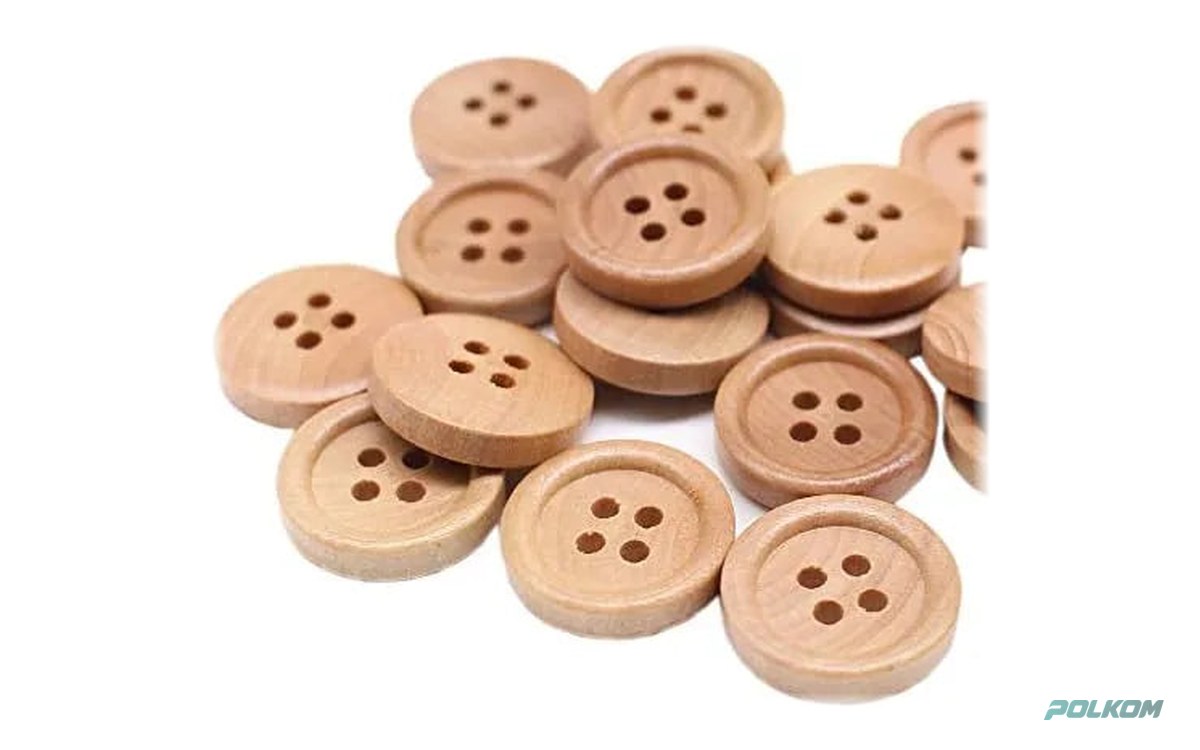
Buttons for children’s clothing are tested with a pull test: a device grips the button or snap fastener and pulls it with a set force for several seconds. The button must not detach, break, or tear the fabric. This test is done on samples before production, on batches during manufacturing, and after washing. The reason is simple – a detached button is a small part that a young child could swallow.
Why buttons for children’s clothing are tested separately
For adult garments, a lost button is an inconvenience. For baby and children’s clothes, it is a safety risk. Children pull, bite, and twist buttons, and small parts can easily reach their mouths. Therefore, brands, retailers, and market regulators require proof that buttons, snap fasteners, and other small accessories will not detach under normal use or reasonably foreseeable misuse.
How the pull test works
- Securing the garment. The fabric around the button is fixed firmly in the lower clamp of the device or a special holder.
- Gripping the button. The upper clamp grips the button – a suitable clip for flat buttons, or an attachment that holds the snap cap for snap fasteners.
- Applying force. The device gradually pulls to the specified force and holds it for a set time, usually about 10 seconds.
- Evaluation. The test passes if the button does not detach, break, the fabric shows no visible tearing, and snap fastener parts remain intact.
Besides pull force, some methods also apply a torque test – the button is twisted to a certain angle before pulling. This simulates a child twisting the button.
What force is used
The force depends on the method, the child’s age group, and buyer requirements. Many retail specifications for baby and children’s clothing require buttons to withstand about 90 N for 10 seconds. Some methods differentiate age groups with different values. Always use the force specified by your client or the applicable standard.
Standards and methods used
| Standard | Scope |
|---|---|
| CEN/TR 16792 | European recommendations for mechanical safety of children’s clothing, including small parts |
| BS 7907 | British code for safe design and manufacture of children’s clothing |
| ASTM D4846 | Test method for retention force of snap fasteners |
| 16 CFR 1500.51–1500.53 (USA) | Use and abuse tests (pull and torque) for children’s products |
| 16 CFR 1501 / EN 71-1 | Small parts cylinder test – whether detached parts are choking hazards |
Many retailers have their own guidelines that build on these documents. They define force, duration, sample numbers, and whether testing is repeated after washing.
Children’s buttons – factors affecting test results
Flat buttons
- strength and thickness of the sewing thread;
- number of stitches and stitch type – lockstitch is more reliable than chain stitch;
- smoothed buttonholes that do not cut the thread;
- reinforcement of fabric under the button.
Snap fasteners
- correct fabric system – for knits and bodysuits usually snap fasteners with prongs;
- precise die and press settings;
- sufficient fabric thickness in the area – often double layers or inserts;
- distance from seams and edges.
For snap fasteners, the most common cause of test failure is not the button itself but the installation. See the systems and sizes in snap fasteners.
Baby clothing buttons – good design practices
- avoid decorative buttons with stones, pearls, or small appliqués for children under 3 years;
- prefer snap fasteners over buttonholes for bodysuits and rompers;
- do not place buttons where children can easily reach with their mouths, such as collar areas;
- choose buttons with smooth edges and no sharp parts;
- for sew-on solutions, use sew-on snap fasteners with strong thread.
What to require from your manufacturer
- Sample testing before approving production – on the actual fabric and with the real buttons.
- Batch testing during production, with a test report.
- Post-wash testing – especially for snap fasteners and knits.
- Calibrated device – with a valid calibration certificate.
- Records – date, batch, fabric, force, and result for each test.
- Operator training for press operators and checking settings when changing dies.
How to read the test report
The report should include the button model and size, fabric, garment position, applied force and duration, number of buttons tested, and result for each. Pay attention to the failure type: a detached button with the whole thread means a sewing issue, torn fabric means lack of reinforcement, and separated snap fastener parts indicate wrong die or system. This information tells you exactly what to improve.
Wholesale snap fasteners for children’s collections
When ordering snap fasteners wholesale for children’s collections, request the manufacturer’s specification of model, system, and recommended die, plus a material certificate. It is best to receive button samples before fabric samples to allow timely testing. If the test fails, change the model or system before production.
Children’s clothing buttons from Polkom
Polkom is a manufacturer of accessories for fashion, footwear, bags, cosmetics packaging, and furniture, with over 30 years of experience based in Sofia. We offer snap fasteners and classic buttons for baby and children’s clothing with OEKO-TEX® certification; all metal parts are nickel free. Send your fabric and model in a request – we will select the system and send samples for your testing.