Manufacturer · Fashion & Home Accessories











Contents
Buttons for leather coats and shearling must have a shank, be large enough for the thick edge, and be reinforced from the inside, because leather does not recover after piercing and every hole remains permanently. For lambskin shearling with fur, buttons with long shanks, toggles with leather or cord nuts work best, while for thinner leather jackets, snap buttons from a strong system are suitable. The material is chosen according to the leather’s weight and style: horn, metal, leather-covered buttons or wood.
How leather differs from fabric
- Holes are permanent. If the button is moved, needle marks remain visible.
- Leather tears along stitch lines. Many close stitches act like perforations, causing leather to tear.
- Thickness. The edge of shearling with fur can be several times thicker than a wool edge.
- Buttonholes are made differently. Classic machine buttonholes with stitched edges are unsuitable for thick leather.
- Leather cannot be ironed. Mistakes in placement cannot be “smoothed out”.
Button sizes for leather coats
Leather coats and shearling require larger buttons than wool coats of the same cut because the edge is thicker and the button must be proportional to the volume.
| Garment | Approximate Size | Attachment |
|---|---|---|
| Leather jacket | 24–32L (about 15–20 mm) | snap button or shank button |
| Leather coat | 36–44L (about 23–28 mm) | shank button with reinforcement |
| Lambskin shearling | 40L and above or toggle | long shank, leather or cord nut |
| Suede coat | 32–40L | shank button, leather-covered or horn |
The size in lignes is a guideline; the final decision is made by testing a sample on the actual edge.
Materials for leather coat buttons
Horn and faux horn
Horn buttons are a classic for leather and suede – warm, heavy, and with a natural pattern. They suit high-end leather coats and shearling. See horn buttons. Faux horn is lighter and more affordable for production runs.
Metal
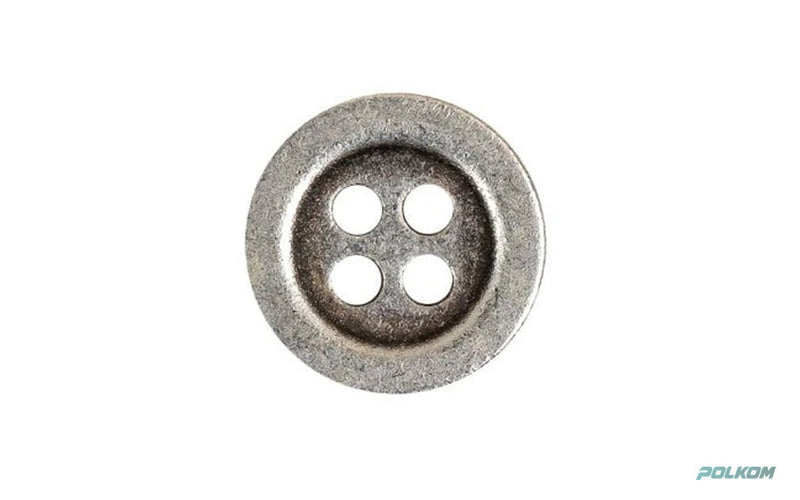
Metal shank buttons in antique brass, bronze or black emphasise biker and military styles. They are durable but heavy – reinforcement is mandatory.
Leather-covered buttons
Buttons covered with the same leather look cohesive and elegant. They are typical for classic leather coats and suede. See options in leather-covered buttons.
Wood
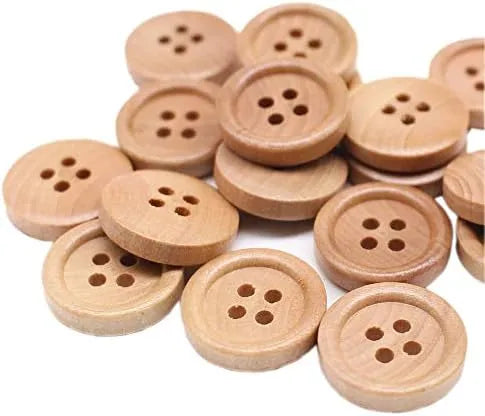
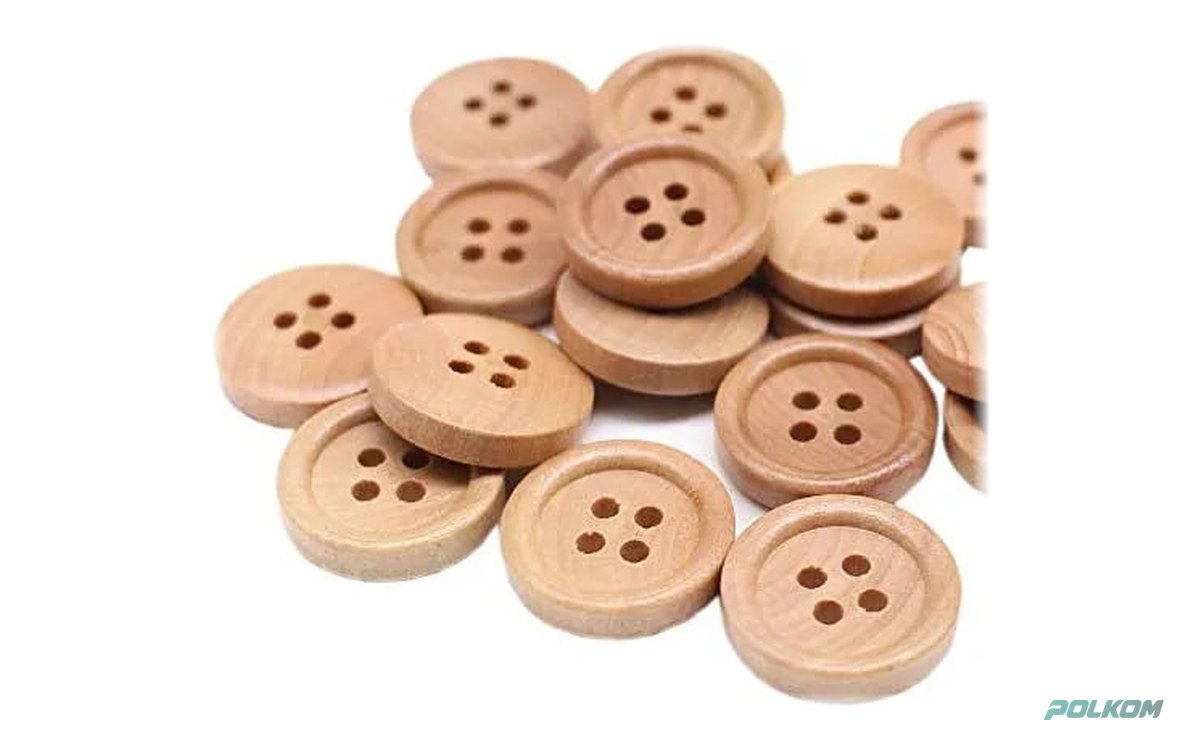
Wooden buttons and toggles suit shearling in natural style and children’s garments.
Toggles for shearling
A toggle is an elongated button (stick) fastened into a nut made of leather, cord or ribbon, not a buttonhole. This is the most logical solution for shearling:
- no buttonhole is cut into the thick fur leather;
- easy to fasten even with gloves on;
- the nut bears the load, not the leather itself;
- fits naturally with the shearling style.
The nut is sewn or riveted into the edge seam, and the toggle has a shank made of leather strip or thread.
How to attach buttons to leather
- Reinforcement. A piece of leather or sturdy fabric is placed on the inside, and for heavy buttons – a backing button as well.
- Leather needle. A triangular-point needle cuts through leather instead of piercing it, easing sewing but requiring precision.
- Few, spaced stitches. This prevents perforating the leather.
- Strong thread. Polyester or polyamide thread suitable for leather, waxed if needed.
- Shank. Long, covered shank to prevent bending the leather under the button.
Buttonholes
For leather coats, ribbon (stitched) buttonholes are made – a slit finished with thin leather strips. They are neat and do not fray. Nuts are an alternative, especially for thick leather.
When snap buttons are a better choice
For leather jackets, vests and thinner coats, snap buttons are often more practical than buttons with buttonholes:
- no buttonhole is cut into the leather;
- fast and even assembly;
- the cap can carry a logo;
- suitable are strong systems, such as the 61 system, designed for leather and thick materials.
The condition is to use the correct die and pin length according to the leather thickness, plus reinforcement from the inside. For shearling with fur, snap buttons are not a good solution because the fur hinders closure.
Black, brown or colour-matched buttons
For black leather, black buttons must match in gloss: matte leather with glossy buttons looks cheap. For brown leather and suede, horn and wood provide a natural transition. Metal buttons work with all colours if the finish matches the zipper and buckles.
Cleaning leather coats and buttons
Leather coats and shearling are cleaned in specialised leather dry cleaners. The process includes solvents, oiling and sometimes dyeing, which can affect buttons:
- some plastics and lacquers soften or lose gloss when exposed to solvents;
- leather-covered buttons are cleaned along with the leather and may change tone similarly;
- natural horn tolerates cleaning but may dry out and lose shine;
- metal buttons without proper coating may darken.
During production, indicate on the care label whether buttons should be removed, and include a spare button with the garment.
Leather buttons by Polkom
Polkom is a manufacturer of accessories for fashion, footwear and bags, perfumes and cosmetics, packaging and furniture accessories, with over 30 years of experience and headquarters in Sofia. We produce buttons, toggles and snap buttons for leather goods, in nickel-free finishes and custom logos, all OEKO-TEX® certified. Send a leather sample in a request – we will advise on size, attachment and samples.
Share this article