Manufacturer · Fashion & Home Accessories











Contents
The main types of garment buttons by fastening method are two: buttons with holes (two or four), sewn through the button body, and buttons with shank – a loop or protruding “leg” at the back through which the thread passes. Buttons with holes are more economical, flatter, and ideal for automatic sewing on shirts, blouses, and trousers; buttons with shank are better suited for thick fabrics, coats, jackets, and decorative metal designs.
Types of garment buttons by fastening
Buttons with holes
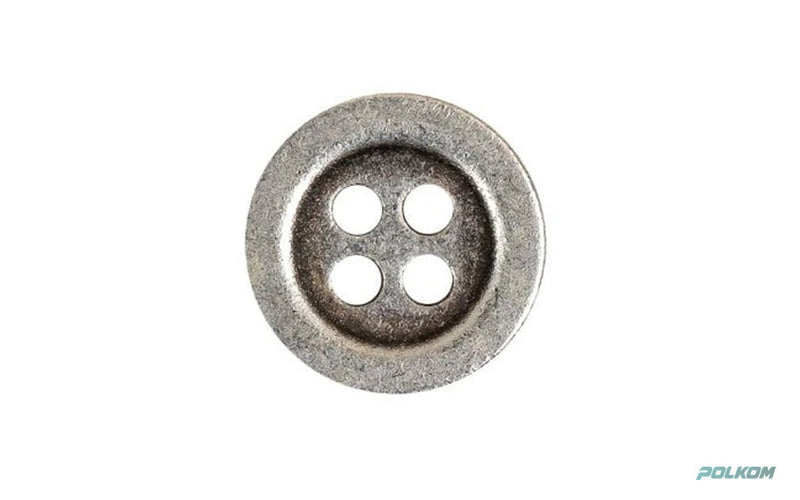
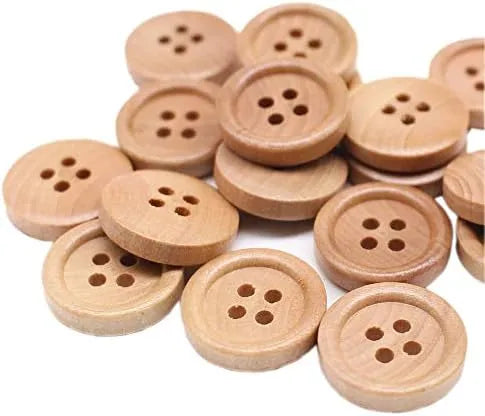
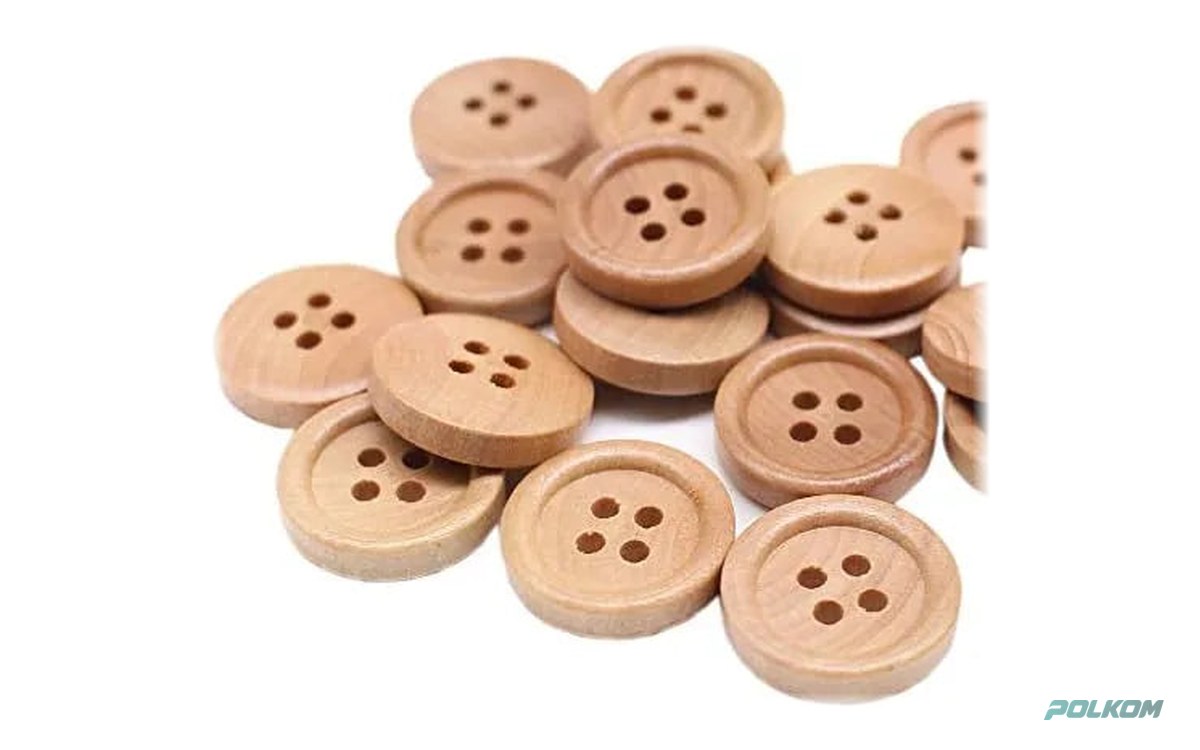
The most common construction in ready-to-wear. The holes are usually two or four, rarely three, symmetrically arranged around the centre. The button face often has a recessed “cup” where the thread sinks and is protected from abrasion. Buttons with holes lie flat against the fabric, making them the natural choice for shirts, blouses, skirts, and underwear.
Buttons with shank
At the back, there is a loop made of metal, plastic, or thread, or a cast protruding “leg” with an opening. The face remains completely clean – no holes or visible thread – so this construction is used for embossed, engraved, enamelled, and fabric-covered buttons. The shank lifts the button above the fabric, leaving space for the thickness of the buttonhole.
Comparison: when to choose which
| Criterion | Buttons with holes | Buttons with shank |
|---|---|---|
| Fabric thickness | Thin and medium fabrics; for thick fabrics – with thread shank | Medium and thick fabrics, wool, tweed, denim, leather |
| Typical garment | Shirts, blouses, dresses, trousers, pajamas, children’s clothing | Coats, jackets, blazers, uniforms, knitwear |
| Face appearance | Visible holes and thread – can be a design accent with coloured thread | Clean face, ideal for logos, embossing, and enamel |
| Ease of fastening | Flat, easily passes through buttonhole | More space, “stands” above fabric, easy to grip with fingers |
| Sewing in series | Fast on automatic button machines | Requires special clamp or manual operation |
| Risk during washing | Thread wears less if sunk in cup | Loop may abrade thread if material is unsuitable |
| Operation cost | Lower | Higher due to slower sewing |
Coat buttons: why shank or thread stand
For coats, there must be space between the button and fabric for the thick buttonhole – otherwise the closed coat puckers and the thread breaks under pressure. There are two options: a button with shank or a button with holes sewn with a “thread stand” – the thread is wrapped several times between button and fabric. The length of the stand roughly equals the thickness of the garment part with the buttonhole.
Large coat buttons (36L and above) are often sewn with a small backing button inside. It distributes the load and protects the fabric from tearing under strong pulling.
Metal buttons for jackets and blazers
Metal buttons for jackets almost always have a shank. The reason is technological: their face is stamped or cast with relief and logo, and holes would spoil the design. The shank is usually soldered or cast together with the body, and for heavier zinc alloy models, the strength of the body-to-shank connection is the key quality parameter. More models are available in the metal buttons section.
Production: what the choice means for the factory
The choice of construction affects the production line, not just the design:
- Speed. Automatic machines sew buttons with holes in seconds, programmed for two or four holes. Buttons with shank require a different holder and often manual finishing.
- Seam strength. Chain stitch is faster but unravels if broken; for load-bearing buttons, lockstitch or extra knotting is preferred.
- Positioning. Buttons with shank can rotate, so for asymmetric or printed designs, the orientation must be specified in the tech pack.
- Pressing and ironing. Protruding shank buttons leave marks when pressing finished garments without proper backing.
Therefore, in large series, a compromise is often made: buttons with holes on all functional places and buttons with shank only where the look is crucial – on the jacket front or coat cuff. This keeps the production line fast while preserving the garment’s accent.
Special cases
- Fabric-covered buttons almost always have a shank or a metal base at the back – see fabric-covered buttons.
- Jeans buttons are not sewn at all – they are attached with rivets and press.
- Snap buttons are a separate fastening group, also attached without thread.
- Knitwear can use both types, but buttons with shank stretch the loops less often.
How to choose for your specific model
- Determine the fabric thickness in the buttonhole area.
- Decide if the button face should carry a logo or relief.
- Check if the factory has a machine for shank buttons or if the operation will be manual.
- Choose the size in lignes and test on a prototype.
- Clearly specify the construction in the tech pack: “4 holes”, “2 holes” or “shank”, plus orientation if any.
If in doubt, send us your fabric and model. Many of the garment buttons in our range are made in both versions, and polyester buttons allow the same face with holes or shank.
Polkom – Buttons Direct from the Manufacturer
Polkom is a manufacturer of accessories for fashion, footwear, bags, cosmetics packaging, and furniture accessories, based in Sofia with over 30 years of experience. We produce buttons with holes and shank from polyester, metal, and natural materials, in custom colours and with logos. All products have OEKO-TEX® certification, and metal models are nickel free. Contact us via the contact page for samples and quotes.
Share this article