Manufacturer · Fashion & Home Accessories











Contents
Elastic for sleeves and cuffs is a small detail that decides whether the sleeve stays in place, keeps out the draught and feels comfortable on the wrist all day. In production this choice is often made in a hurry, and later it turns out that the cuff is too tight, gathers unevenly or slackens after a few washes. In this article we look at which widths are used, which type of elastic is suitable and how it is inserted in different products.
Where elastic is used in sleeves
Elastic in a sleeve has three main jobs – to take in excess width, to hold the sleeve at a set height and to protect against wind and cold. We most often find it:
- in the cuffs of jackets, windbreakers and shell suits – as a visible gathered cuff or as a hidden inner cuff;
- at the bottom of the sleeves of sweatshirts, tracksuits and sports tops;
- in puff sleeves on dresses and blouses – at the edge or above the elbow;
- in children's wear, pyjamas and loungewear, where the cuff must be soft and easy to put on;
- in workwear and protective clothing, where the sleeve must not catch in machinery and tools.
Which sleeve elastic width to choose
The width depends on the type of garment and on whether the elastic will be visible. The guide values below are a good starting point, and the final width is set with a sample in the actual fabric.
| Product | Elastic width | Suitable type |
|---|---|---|
| Puff sleeve on a blouse or dress | 3–6 mm | narrow knitted elastic or elastic cord |
| Children's wear and pyjamas | 6–10 mm | soft knitted elastic |
| Sweatshirts and sports tops | 10–20 mm | knitted elastic |
| Inner cuff of a jacket | 15–25 mm | woven or knitted elastic |
| Workwear and protective clothing | 20–30 mm | woven elastic |
If you also work with waistband elastic, compare with the rules in the article waistband elastic width – the logic is similar, but in a sleeve the load is lower and the elastic should be softer.
Knitted or woven elastic for cuffs
Knitted elastic
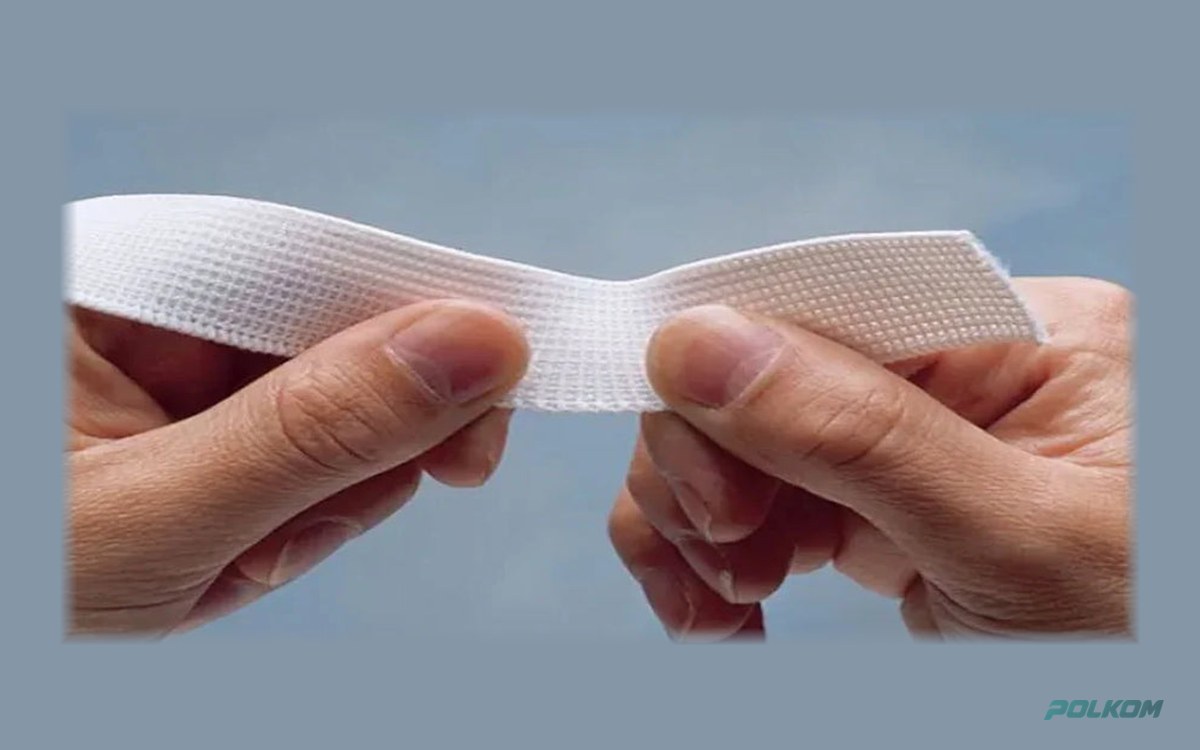
Knitted elastic is soft, light and flexible, with a smooth surface that does not irritate the skin. That is why it is the first choice for children's wear, lingerie, pyjamas and sports tops. It narrows slightly when stretched, which is not a problem at the narrow widths used in sleeves. Browse the range in the knitted elastic category.
Woven elastic
Woven elastic is dense and stable – it keeps its width under tension and does not roll in the casing. It is suitable for inner jacket cuffs, workwear and products that are washed often and at higher temperatures. See our woven elastic if the cuff has to last a long time without losing its shape.
You will find a detailed comparison of the two types in the article woven or knitted elastic.
How elastic is inserted in a sleeve
In a casing
The elastic is threaded through a casing formed by the hem or by a separate tape. This method is quick, allows easy replacement and gives even gathering. The casing should be 2–3 mm wider than the elastic so that it does not twist inside.
Sewn on directly under tension
The elastic is sewn directly onto the fabric with a zigzag or coverstitch, stretched while sewing. The result is a flat, evenly gathered cuff without a casing – a typical solution for sportswear and children's wear.
As a separate inner cuff
Jackets often have a separate inner cuff of jersey or fabric with elastic, which stays hidden under the sleeve. This keeps the outer look of the sleeve while keeping the wind out. Here the elastic should be wider and more stable.
How much elastic one cuff needs
The length of the elastic is based on the circumference of the wrist or the sleeve at the gathering point, reduced by a percentage according to the stretch of the elastic and the grip you want. For a soft cuff on children's wear the reduction is smaller, and for a windproof jacket cuff it is larger. Make a sample on one sleeve, check how easy it is to put on, and only then fix the length in the tech pack. To calculate the total quantity for the whole production run, see how to calculate elastic yardage for a production run.
Common mistakes with sleeve elastic
- elastic too wide for a narrow sleeve – the cuff folds over and looks heavy;
- elastic too firm on children's wear – it leaves marks on the skin and makes dressing difficult;
- a casing with no width allowance – the elastic twists in the wash;
- mismatched colour – on light and thin fabrics a dark elastic shows through; choose elastic matching the fabric;
- no wash test – some elastics lose stretch at high temperatures, so check the sample at the actual wash setting.
Sleeve elastic from the manufacturer
Polkom manufactures and sells wholesale elastics for clothing – knitted and woven, white, black and coloured, in widths for every product and made to order in Pantone colours. Minimum quantities depend on the item and width, samples are made for 50–100 €, and the production run is ready 10–20 days after sample approval. We deliver across Europe, and our products are OEKO-TEX® certified. Send us the product type, width and quantity and we will suggest a suitable elastic.
Share this article