Manufacturer · Fashion & Home Accessories











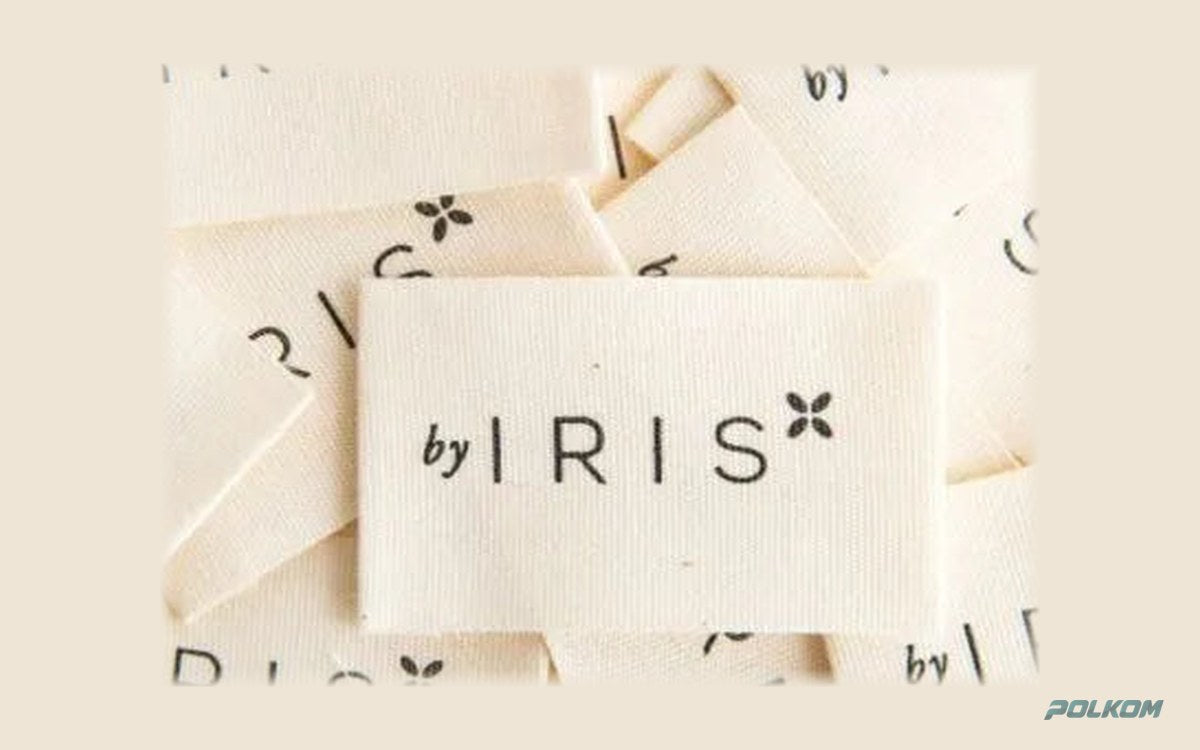
Do printed labels fade in the wash? With the right tape, ink and printing method – no, the label stays legible throughout the normal life of the garment. Fading, rubbing off or peeling happens when unsuitable materials are used (for example a wax ribbon or a paper sticker), when the ink is not cured properly, or when the garment is washed under harsher conditions than intended.
Below we look at what exactly destroys the print, how to choose a durable combination and how to test the sample before ordering the run.
Do printed labels fade – the main causes
In the washing machine a label is subjected to several stresses at once: water and heat, detergent, mechanical friction in the drum and against neighbouring garments, and then the dryer or the sun. Each of them attacks a different part of the label.
| Problem | Likely cause | Solution |
|---|---|---|
| Print rubs off | Wax ribbon, unsuitable ink | Textile resin ribbon or textile ink |
| Print peels | Ink sits only on the surface, poor adhesion to the tape | Tape with a suitable coating, proper curing |
| Colour fades | Bleach, high temperature, sunlight | Suitable pigment; no-bleach care instructions |
| Text smudges | Font too small, porous tape | Larger font, smoother tape |
| Tape shrinks or curls | Unstable tape, high temperature | Heat-stable synthetic tape |
How the tape affects durability
The base is half the battle. Smooth synthetic tapes – nylon taffeta, polyester satin and coated polyester tape – take the ink evenly and do not shrink significantly. That is why they are the standard for care and composition labels that must remain legible for years.
Cotton tape is pleasant and natural, but more porous, and its fibres move more during washing. Print on it looks softer and may fade faster under heavy use. It suits a brand label with a larger font, while for small text a synthetic base is the safer option.
Printing method and ink
Thermal transfer
Durability depends entirely on the ribbon. Wax ribbons are for paper and rub off. For textiles, wash-resistant resin ribbons are used, which bond with the synthetic tape.
Flexographic printing
Textile inks are used, which remain flexible after drying. Proper drying and curing is key – under-cured ink washes off.
Screen printing
Gives the thickest ink layer, so it is very durable, but the layer must be well cured, otherwise it can crack with repeated folding.
The role of design
Even the most durable print loses a little sharpness over time. Good design allows for this:
- Use a font without very thin serifs and the minimum size recommended for the method.
- Choose high contrast – dark print on a light tape.
- Do not place important text too close to the edge or the fold, where friction is strongest.
- Leave enough space between lines so the care symbols do not merge.
How to test the sample
Before approving series production, run your own test that recreates real use:
- Sew the label onto a piece of the same fabric as the garment.
- Wash it at the highest temperature that will be stated on the label, with ordinary detergent.
- If the garment can be tumble dried, include that cycle too.
- Repeat several times and compare with an unwashed label from the same batch.
- Check legibility, colour, tape size and whether the edges have frayed.
If the garment will be dry-cleaned, tell the manufacturer – the ink is chosen separately for that kind of care.
What depends on the end customer
Part of a label’s wear comes from how the garment is cared for at home. That is why care symbols under ISO 3758 should reflect what the garment can really take, rather than being more liberal “just in case”. If the label allows washing at 60 °C but the garment and label have only been tested at 40 °C, both the print and the garment itself are at risk.
Useful practices you can include in the instructions or on the hang tag:
- wash with the garment turned inside out;
- no bleach or aggressive stain removers directly on the label;
- moderate dryer temperature or line drying;
- iron on the reverse side, without the iron directly on the label.
What to include in your inquiry
- Garment type and material (e.g. cotton T-shirt, wool coat, baby bodysuit).
- Maximum washing temperature and whether tumble drying is allowed.
- Dry cleaning – yes or no.
- Label position – in the seam, at the neck, visible on the outside.
With this information the manufacturer can suggest the right tape and ink. If the label must be exceptionally durable with a premium look, also compare woven labels, which have no printed layer to wear off.
The legal side
Under Regulation (EU) No 1007/2011, fibre composition information must be durable and legible. A care and composition label that is illegible after a few washes is not only an inconvenience for the customer but also a risk for the brand in an inspection or complaint.
Durable printed labels from Polkom
Polkom is a Sofia-based wholesale manufacturer of accessories for fashion, furniture, footwear and bags with over 30 years of experience. We select the tape, ink and printing method according to how your product will be cared for, and produce printed labels with a sample before the run. We deliver across the EU. Describe the garment and the washing regime in an inquiry via Contact.