Manufacturer · Fashion & Home Accessories











Contents
A furniture mechanism is the moving metal system that lifts a bed frame, unfolds a sofa into a bed, turns an armchair or pulls out a table top. Three things decide the right choice: the movement the piece must perform, the weight of the moving part and the space available in the construction. Below you will find an overview of the main types and a list of the data a factory should prepare before sending an enquiry.
Types of furniture mechanisms by function
In upholstered and cabinet furniture production, mechanisms fall into four large groups. Each solves a different task and has its own fitting requirements.
| Group | Typical use | Key selection parameter |
|---|---|---|
| Lift-up mechanisms | ottoman storage beds, upholstered bed bases, storage chests | weight of the frame and mattress, bed size |
| Sofa bed mechanisms | sofa beds, corner sofas, ottoman beds | unfolding method, seat depth |
| Swivel bases | armchairs, bar stools, lounge furniture | base size, height, load |
| Table and cabinet systems | pull-out tables, built-in ironing boards | runner travel, size of the top and cabinet |
Lift-up mechanisms for beds
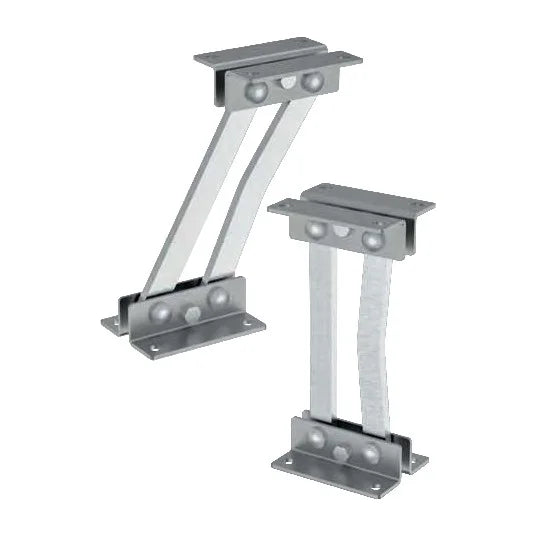
A lift-up (gas lift) bed mechanism raises the frame with the mattress and reveals the storage space underneath. The most common version works with gas struts – cylinders that counterbalance the weight, so the frame can be lifted with little effort and stays open. The force of a gas strut is given in newtons (N) and is chosen according to the total weight of the moving part.
What affects the choice
- Bed size – single, small double and double beds need a different arm length and a different force.
- Weight of the mattress and frame – latex and pocket-spring mattresses are heavier than foam; if the strut is too weak the frame drops, if it is too strong the bed is hard to close.
- Opening direction – end-lift (from the foot end) or side-lift; in narrow bedrooms side opening is often more practical.
- Base height – it determines the fitting position and the depth of the storage box.
The mechanism works together with the bed supports. If you are designing a new base, also choose bed legs in the same finish. You will find more on the centre support and height in the article Bed Legs – Types, Height and Centre Support.
Sofa bed mechanisms
On sofa beds the mechanism determines both how comfortable everyday unfolding is and the shape of the sofa itself. The most common systems are:
- Click-clack – the backrest tilts back to a horizontal position; suited to compact sofas.
- Dolphin – an extra module comes out from under the seat and rises to seat level; typical of corner sofas.
- Pull-out (eurosofa) – the seat is pulled forward and the backrest lies down in the space it frees.
- Folding ("French bed" type) – a multi-section frame with a mattress hidden under the seat.
- Accordion – the sections unfold forward like a concertina and give a large sleeping area.
This group also includes armrest and backrest mechanisms that allow adjustment in several positions. They are often combined with a sofa bed mechanism in the same model.
Swivel bases for armchairs
A swivel base lets the seat turn through 360° without moving the furniture. Two main types are used: a round plate hidden under the body, and a star base that stays visible and is part of the design. When choosing, state the diameter or size of the base, the seat height and whether the base will stand directly on the floor or have legs underneath. If the base must match the colour of the sofa legs from the same collection, see sofa and armchair legs.
Mechanisms for tables and cabinets
Pull-out and folding systems store a table or ironing board inside a cabinet or drawer. They are used in kitchens, small flats, campervans, hotel rooms and offices. The main options are a table on runners, a table with a scissor mechanism that raises the top, a built-in ironing board and a runner with a support leg for longer tops. Here the key figures are the runner travel, the size of the top and the internal dimensions of the cabinet.
Materials, finishes and fitting
Mechanisms are made mainly of cold-rolled steel with a powder-coated or electroplated finish, of aluminium for pull-out systems, and with plastic bushings wherever the movement needs to be quiet. All Polkom metal parts are nickel free. The colour can be matched to the furniture – for example a black mechanism on a visible frame, or the leg colour on swivel bases.
When fitting, follow a few practical rules:
- Fit mechanisms in symmetrical pairs, so both sides work with the same force.
- Use bolts rather than self-tapping screws at the points that take the load.
- Check the movement in the finished frame before upholstering – corrections after upholstery are expensive.
- Test a sample in your own construction with the real mattress or cushions.
What to include in your enquiry for furniture mechanisms
The more complete the data, the faster a suitable model and sample can be offered. Prepare:
- the type of furniture and the movement required (lifting, unfolding, swivelling, pulling out);
- the outer dimensions of the frame or top and the space available for fitting;
- the approximate weight of the moving part (frame, mattress, cushions);
- the opening direction and any constraints in the construction;
- the required colour and finish;
- the expected quantity for the series.
Load capacity and fixing holes are taken from the technical sheet of the specific model – so it is important to send real data, not just a photo of the furniture.
Furniture mechanisms direct from the manufacturer
Polkom is a manufacturer of furniture mechanisms and other furniture accessories for upholstered and cabinet furniture factories, with its own production in Sofia. The minimum quantity is usually 1000 pcs per model, samples depend on the type of mechanism, and production takes 10–20 days after approval. If you want a logo or marking on visible parts, send the file in any format, preferably a vector PDF. Describe your furniture and send a request for a quote and a sample.
Share this article