Manufacturer · Fashion & Home Accessories












A GRS certificate (Global Recycled Standard) is an international voluntary standard of the organisation Textile Exchange that verifies the share of recycled material in a product and its traceability along the entire supply chain – from waste collection to the finished article. Besides content, the standard also includes social, environmental and chemical requirements for production. For a brand this means that the claim "recycled" can be proven with documents, not just with words.
What a GRS certificate verifies
- Recycled content – the percentage of recycled material in the product, verified by an independent certification body.
- Traceability – every stage that processes or trades the material must be certified.
- Social requirements – working conditions, health and safety at certified sites.
- Environmental requirements – management of water, energy, waste and emissions.
- Chemical restrictions – a ban on certain substances in production.
To be certified to GRS, a product must contain at least 20% recycled material. To carry the GRS consumer label, the requirement is higher – at least 50% recycled content, with all stages up to the last seller that applies the label being certified.
The chain of custody: scope and transaction certificates
The core of GRS is the so-called chain of custody. It works with two types of documents.
Scope Certificate (SC)
A scope certificate shows that a company has been audited and certified to GRS for certain products and processes. It says "this site may produce or trade GRS products".
Transaction Certificate (TC)
A transaction certificate is issued for a specific shipment between two certified companies and confirms the quantity and the recycled content in it. It says "this delivery contains certified material".
If one link in the chain is not certified – for example a trader who resells the material – the chain is broken and the end product loses the right to a GRS claim.
What recycled polyester is
Recycled polyester (rPET) is most often made from used PET bottles, which are cleaned, shredded into flakes, melted and extruded as new fibres or pellets. There is also recycling from textile waste, but it is still a smaller part of the market.
- Pre-consumer waste – production offcuts that never reached a consumer.
- Post-consumer waste – used products, for example bottles or garments.
In its properties, recycled polyester is very close to virgin polyester: strength, resistance to washing and dyeability. That is why it is used for zip tapes, threads, labels, elastics, cords and polyester buttons.
100% recycled polyester: reality and limits
The textile tape of a zip, the satin tape of a label or a thread can be made entirely of recycled polyester. However, the finished accessory is rarely 100% recycled as a whole: a zip has a metal or plastic slider, an elastic contains an elastomer yarn, a label contains ink or coloured yarns. That is why an accurate claim must describe the specific component, for example "tape made of 100% recycled polyester", rather than the whole article, unless this has been proven.
Recycled accessories by group
| Accessory | Where the recycled content is |
|---|---|
| Zips | Tape and coil made of recycled polyester; for moulded zips, separate solutions for the teeth |
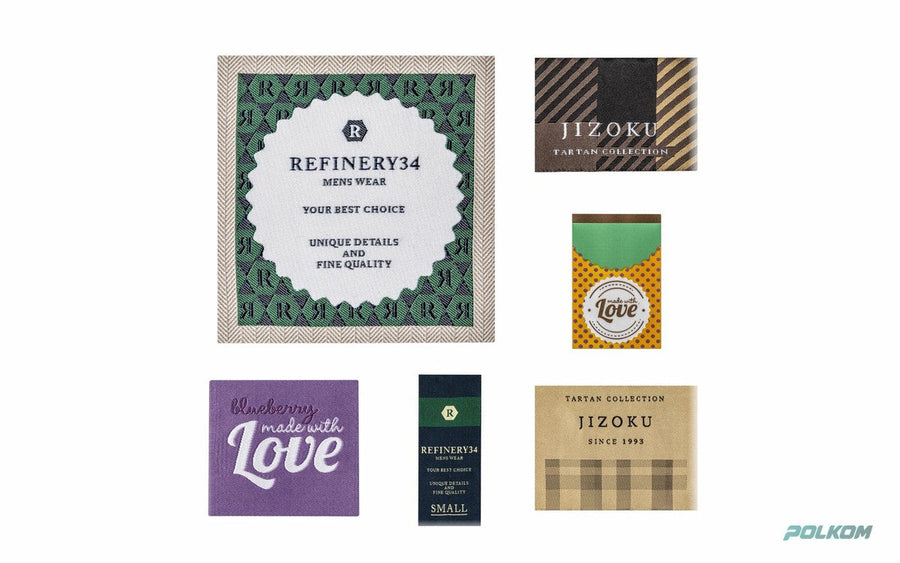
| Labels | Woven and printed labels made of recycled yarn or tape |
| Threads | Sewing threads made of recycled polyester |
| Ribbons and cords | Grosgrain, satin, herringbone tape, cords made of recycled fibres |
| Buttons | Polyester buttons with a share of recycled raw material |
The recycled options available depend on the style, colour and quantity – ask about the specific article.
GRS and OEKO-TEX: different questions
The two standards do not replace each other. GRS answers the question "how much recycled material is there and where does it come from". OEKO-TEX® Standard 100 answers the question "is the product safe in terms of harmful substances". Recycled raw material can carry residues from its previous use, so brands that want both guarantees combine recycled components with testing for harmful substances.
What a brand should ask for to claim "recycled"
- A copy of the supplier's Scope Certificate, with a validity and scope that include the product ordered.
- A Transaction Certificate for the shipment, if you continue the chain and certify your own product.
- The exact percentage of recycled content for each component.
- Your own certification, if you want to use the GRS label on the finished garment – the brand or its manufacturer must also be in the certified chain.
- Clear wording of the claim – specific, measurable, without general words such as "eco-friendly".
The new European rules against misleading environmental claims make this documentation even more important: an unsupported "sustainable" on the label may turn out to be an infringement.
How to communicate recycled accessories correctly
Good communication is specific. Instead of "eco zip", write "zip with a recycled polyester tape", and instead of "sustainable collection", state which components are recycled and in what proportion. If the claim is on the hang tag or in the online shop, keep the documents that support it for each season. When the supplier changes the material or colour, check whether the new version is also within the scope of the certificate. That way the claim remains true not only for the first order but for every repeat.
Common mistakes
- Using the GRS logo without certification of the product itself.
- Claiming "100% recycled" for an accessory with metal or elastomer parts.
- Buying from an uncertified trader, even though the manufacturer of the material is certified.
- No Transaction Certificate for the specific delivery.
Recycled accessories from Polkom
Polkom is a Bulgarian manufacturer of accessories for fashion, furniture, footwear and bags, based in Sofia and selling wholesale, with over 30 years of experience. Polkom holds a GRS certificate and offers recycled products, and an OEKO-TEX® certificate is available for all articles. We offer recycled versions of zips, labels and other accessories on inquiry. You will find details on the certificates page. State in your inquiry that you are looking for GRS articles and we will suggest suitable styles with the documentation.