Manufacturer · Fashion & Home Accessories




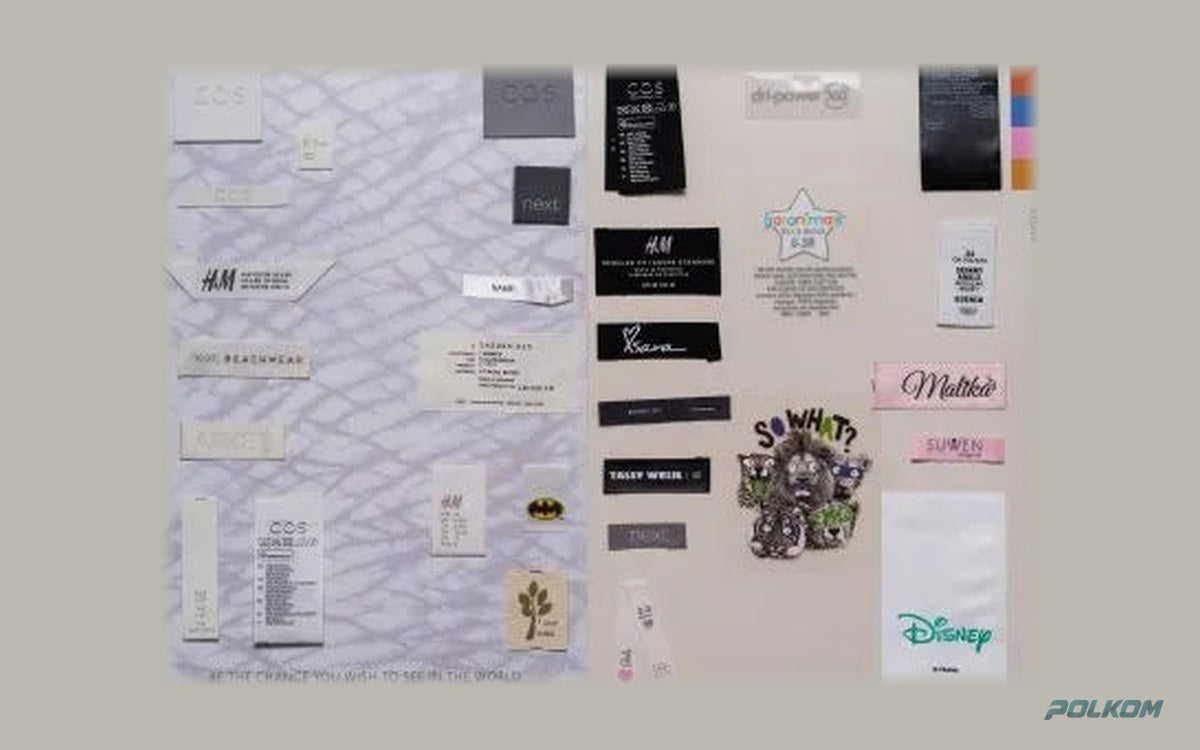
To make clothing labels for your own brand, start with a list of the labels you need (brand, size, composition, hang tag), prepare your logo and texts, choose the technology and material, order a sample and only then a production quantity. Home solutions such as iron-on paper or a marker are fine for personal use, but garments for sale need durable labels that meet the requirements. Here is the process step by step.
How to make clothing labels: which labels you need
A first collection usually needs four types of label:
- Brand label – with the logo, usually in the back neck.
- Size label – a small label with S, M, L or a numeric size.
- Care and composition label – fibre composition in the language of the market (Bulgarian for sale in Bulgaria), care symbols and manufacturer details. It is mandatory.
- Cardboard hang tag – brand, style, price, barcode or QR code.
Optionally, add an external mark – a leather label, a flag label in the seam or a metal plate.
Step 1: prepare the logo
The logo must be in vector format (AI, EPS, PDF, SVG). If a designer creates it, ask for a simplified version for small sizes as well – without thin lines, gradients or a tiny slogan. On a label a few centimetres wide, complex details get lost. Define the colours in Pantone so that they can be matched exactly to the yarns or inks.
Step 2: write the texts
For the care and composition label, take the exact composition from the fabric supplier and write it using the standard fibre names – "cotton", "polyester", "elastane" – with percentages in descending order. Add the care symbols, the brand or manufacturer name and a contact, as well as a style or batch number. If you sell in other countries, add their languages too.
Step 3: choose the label type
| Purpose | Recommended type |
|---|---|
| Premium brand label | Woven damask |
| Soft label for lingerie or children's clothing | Printed on satin or cotton |
| Composition and care | Printed on satin or taffeta |
| Jeans, jackets, hats | Leather label with embossed logo |
| Retail sale | Cardboard hang tag |
You will find more about soft tape labels under textile labels, and about hang tags under cardboard hang tags.
Step 4: decide on size and fold
Cut out paper mock-ups in different sizes and place them on the garment. You will get a much better feel for the proportions than on screen. Then choose the fold according to how the label will be sewn: a flat label sewn on all four sides, an end-fold label for sewing at both ends, a centre-fold label to be caught in a seam. The care and composition label is almost always sewn into the side seam, folded in the centre.
Step 5: order a sample
Send the manufacturer the logo, texts, sizes and quantities. After a visual proof and approval, a sample is made. Sew it onto a real garment, wash it and wear it for a day. Check whether the label scratches, whether the colours are right and whether the text is legible. Only then confirm production.
Step 6: sewing in
- The brand label is caught in the neck seam or sewn around its edge with a straight stitch.
- The size label is placed under or next to the brand label.
- The care and composition label is caught in the left side seam, usually 8–15 cm above the hem – this is established practice, not a legal requirement.
- The hang tag is attached with a string or a plastic tag fastener to the brand label or to a seam.
Common mistakes with first labels
- The logo is transferred without adaptation. Thin lines and a small slogan disappear at a small size.
- The neck label is stiff. Metallic yarns or thick tape irritate the neck – choose a soft material.
- The composition is rounded "by eye". The percentages must match the fabric specification.
- The local-language text is missing. For sale in Bulgaria, the composition must be in Bulgarian.
- The labels are ordered at the last minute. Sampling and production take time – plan them together with the fabric.
- Different labels in different styles. Design the whole package at once so that the brand looks consistent.
Homemade or professional labels
There is plenty of advice online about labels made with an iron, transfer paper or a fabric marker. They are handy for naming children's clothes or handmade gifts. Garments for sale, however, need labels that survive dozens of washes, do not peel off and contain the mandatory information. A professional label is also part of the perception of quality – the buyer notices it immediately.
Budget for a small brand
With small runs, the price per piece is higher because the production set-up is spread over few pieces. You can reduce costs by using one brand label for all styles and a separate size label, limiting the number of logo colours and ordering all labels at once. The price depends on the type, size and quantity – send a request for a quote. You will find all types in our clothing labels category.
Make your labels with Polkom
Polkom is a Bulgarian manufacturer of garment accessories based in Sofia with over 30 years of experience. We help new and established brands prepare their complete label package – from the technical adaptation of the logo to the sample and series production. We deliver across the EU. Send us your logo and idea via our inquiry form. Minimum quantities depend on the article.