Manufacturer · Fashion & Home Accessories











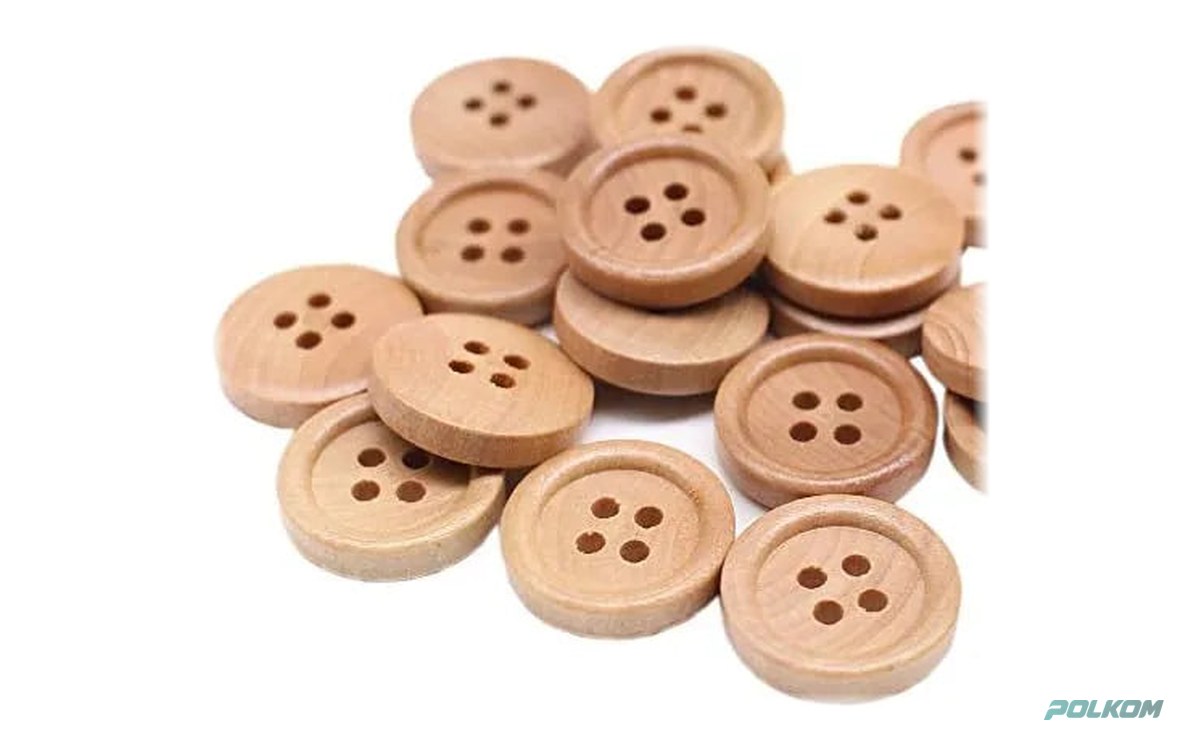
The industrial button sewing machine is a specialised device that clamps the button and sews it with a preset number of stitches in seconds – suitable for 2- or 4-hole buttons, and with attachments for shank buttons. The main options are chain stitch with one thread or lockstitch with two threads, mechanical or electronic control, and manual or automatic feeding. For flawless operation, the button itself must have precise dimensions and clean holes.
How an industrial button sewing machine works
The button is placed in a clamp that holds it above the fabric. The needle moves vertically, while the clamp and fabric move sideways and lengthwise so the needle passes sequentially through each hole. The machine completes a cycle of a set number of stitches – usually between 8 and 32 – and then automatically cuts the thread. The operator simply positions the garment and presses the pedal.
Chain stitch with one thread
Classic button sewing machines use a single thread chain stitch, forming a chain on the underside. They are fast and simple but have a drawback: if the thread end is pulled, the stitch can unravel. Therefore, a locking stitch is used at the end of the cycle, often combined with thread welding or glue on some fabrics.
Lockstitch (two-thread) stitch
Lockstitch machines use an upper and lower thread like a regular sewing machine. The stitch does not unravel if pulled, is denser and stronger. These machines are typical for electronic models and preferred for children’s, workwear, and outerwear.
Programs: 2-hole, 4-hole and stitch patterns
| Button | Stitch pattern | Application |
|---|---|---|
| 2 holes | single row of stitches | shirts, blouses, underwear |
| 4 holes – parallel (=) | two parallel rows | shirts, trousers, classic look |
| 4 holes – cross (X) | crossed stitches | workwear, greater durability |
| 4 holes – square or Z | decorative shape | fashion accents |
| Shank button | stitches through the shank eye | jackets, coats, dresses |
Electronic machines store dozens of programs: stitch count, hole spacing, sewing order, speed. Changing button models is done by selecting a program and swapping the clamp, not mechanical adjustment.
Shank buttons and shank wrapping
Shank buttons cannot be held in a standard clamp because the shank protrudes downwards. A special clamp holds the button sideways while the needle passes through the shank eye. Jackets and coats require a thread shank – a free length of thread between the button and fabric to allow for thick interlining. There are two approaches:
- the machine sews with the button raised, and the shank is wrapped manually;
- a separate wrapping machine (stem wrapping) wraps thread around the shank and locks it – this keeps the button upright and protects the stitch from abrasion.
Button feeding
For small batches, the operator places each button in the clamp by hand. For large batches, an automatic feeder is used: a hopper that arranges buttons, turns them face up, and feeds them into the clamp. The feeder is sensitive to shape: convex, two-tone or asymmetrical buttons often require manual feeding. When planning production, check if the button model suits automatic feeding.
Button requirements for machine sewing
Most sewing problems arise not from the machine but from the button. Require:
- Consistent diameter – the clamp is set for a specific size; deviations cause slipping.
- Equal hole spacing – the program is set in millimetres; misaligned holes cause the needle to hit and break the button.
- Clean holes without edges – sharp edges cut the thread during washing and wear.
- Sufficient hole diameter for needle and thread thickness.
- Flat underside – warped buttons do not sit stably in the clamp.
- Impact resistance – the material must not crack from accidental needle strikes.
Polyester buttons are most common in mass production due to their precision and uniformity – see polyester buttons. Natural materials like corozo and mother-of-pearl require more careful adjustment as their sizes vary slightly more.
Thread and needle
Machine sewing of buttons uses strong polyester or core-spun thread, usually thicker than for main seams. The needle must suit the button holes and fabric: rounded tip for knits, thicker for dense fabrics. Thread selection is available at sewing threads.
Quality control
- tensile testing of samples from each batch, especially for children’s clothing;
- post-wash inspection – stitch tightness and button stability;
- visual check of button position relative to buttonhole;
- check for broken buttons and missed stitches;
- inspection of thread ends – long ends look untidy, too short may cause unraveling in chain stitch;
- comparison of button positions across sizes, especially for graded shirt spacing.
Hand or home machine button sewing is another topic; in the factory, speed, repeatability and documented strength matter.
Machine-sewable buttons by Polkom
Polkom is a manufacturer of accessories for fashion, footwear and bags, perfumes and cosmetics, packaging and furniture accessories, with over 30 years of experience and headquarters in Sofia. We produce buttons with precise dimensions and hole spacing suitable for industrial sewing and offer button sewing as a service. Send your model and order quantity in a request – we will prepare samples for testing on your machine.