Manufacturer · Fashion & Home Accessories




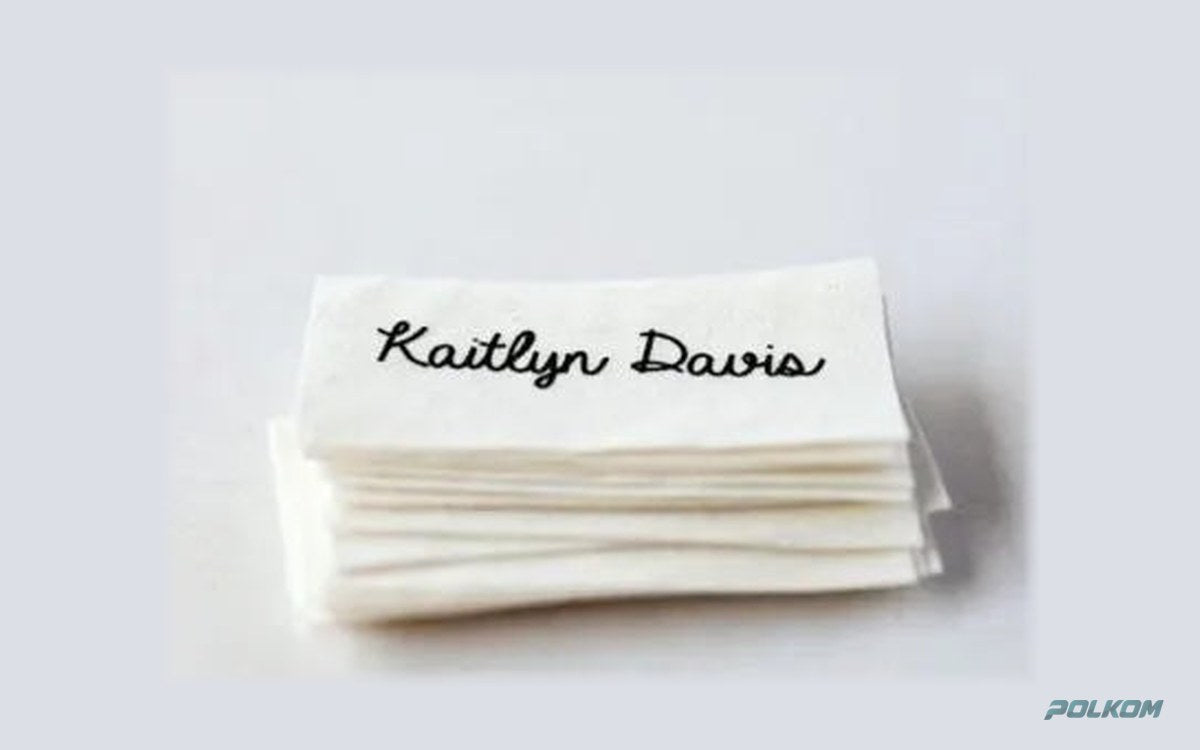
The inks used to print clothing labels depend on the method. Thermal transfer printing uses resin-based textile ribbons, flexo printing uses liquid textile inks that are dried, and screen printing uses thicker pastes fixed with heat. What they have in common is that once dry they must stay flexible, must not irritate the skin and must withstand washing, rubbing and detergents.
The choice of ink is rarely discussed with the client, yet it is what decides whether the label will still look good after a year of wear.
Label printing inks by method
| Method | Consumable | How it is fixed | Characteristics |
|---|---|---|---|
| Thermal transfer | Ribbon – coated film | Melted by heat from the print head | Precise, thin layer; the choice of ribbon is decisive |
| Flexo printing | Liquid ink, water-based or other | Drying after printing | Thin, even layer; good softness |
| Screen printing | Paste – pigment, plastisol or other | Drying and heat fixing | Dense layer, high opacity |
Thermal transfer ribbons
A ribbon is a thin film coated with ink on one side. There are three main groups:
- Wax – for paper and board. Cheap and fast, but the print rubs off with a finger and disappears in the washing machine. Not used for garment labels.
- Wax-resin – more durable, suitable for synthetic stickers and packaging, but not the optimal choice for frequent washing.
- Resin textile ribbons – developed specifically for satin, taffeta and polyester. They withstand washing, chemicals and abrasion.
The ribbon and the tape must be compatible. The same ribbon can give an excellent result on polyester satin and a mediocre one on uncoated tape. That is why label manufacturers test combinations and work with proven material pairs.
Flexo printing inks
In flexo printing the ink is liquid and is applied in a very thin layer. This keeps the label soft and flexible – important for labels that are folded or sewn into a seam. Durability comes from correct drying: under-dried ink looks fine coming off the machine but washes out in the first few washes.
Screen printing inks
Screen printing inks are thicker and contain more pigment. They cover dark tapes and give a saturated colour. Plastisol inks form an elastic layer on the surface and are very durable, while water-based inks penetrate the fabric more and are softer to the touch. The choice depends on the tape and the desired effect.
How ink affects softness
The thicker the ink layer, the stiffer the label becomes where it is printed. With small text this is barely noticeable, but with a large, solidly filled logo the label can become noticeably stiffer. For labels that touch the skin – collar, lingerie, childrenswear – thinner layers and a design with more empty space are preferred.
- Avoid large solid areas of ink on labels next to the skin.
- Use outlines or a thin typeface instead of filled backgrounds.
- Put the logo on a separate, visible label and leave only the necessary text on the label next to the body.
Colours and special effects
Standard colours – black, white, navy, grey, burgundy – are the most durable and easiest to repeat. More complex shades are mixed to Pantone and require a sample. Metallic effects (gold, silver) look luxurious on dark satin but should be tested in the wash. Fluorescent colours attract attention but fade faster over time than standard ones.
Contrast and legibility
For care and composition labels and size labels the rule is simple: dark print on a light tape. White print on a black tape is possible, but it requires a method with good opacity – most often screen printing – and a slightly larger typeface.
Safety and requirements
Inks and ribbons for textile labels must meet the requirements for textile products in the EU, including the chemical restrictions under REACH. For products for babies and young children some brands require additional certificates to specific standards. If your client or market requires specific documents, say so in advance – the answer depends on the specific materials and cannot be given in general terms.
What to state in your inquiry
- The type of garment and where the label will be (next to the skin or visible).
- The colour of the tape and the print, preferably as Pantone.
- Washing, drying and dry-cleaning conditions.
- Special requirements – childrenswear, lingerie, workwear, documentation.
How to check the ink on a sample
Ink is best judged after use, not at the desk. The sample you receive can be checked with a few simple tests before approving the series:
- Rubbing – rub the print vigorously with a damp white cloth. If colour remains on the cloth, the ink is not well fixed.
- Folding – fold the label several times right through the text. The print must not crack or peel.
- Washing – sew the sample to fabric and wash it several times at the setting on the label.
- Light – for visible labels, leave one sample on a window sill for several weeks and compare it with an unexposed one.
Printed labels from Polkom
Polkom is a Bulgarian manufacturer and wholesaler of garment accessories with over 30 years of experience. We produce printed clothing labels and other textile labels, choosing the tape, ink and method to suit the garment. We make fast samples and deliver throughout the EU. Send an inquiry via our Contact page.