Manufacturer · Fashion & Home Accessories




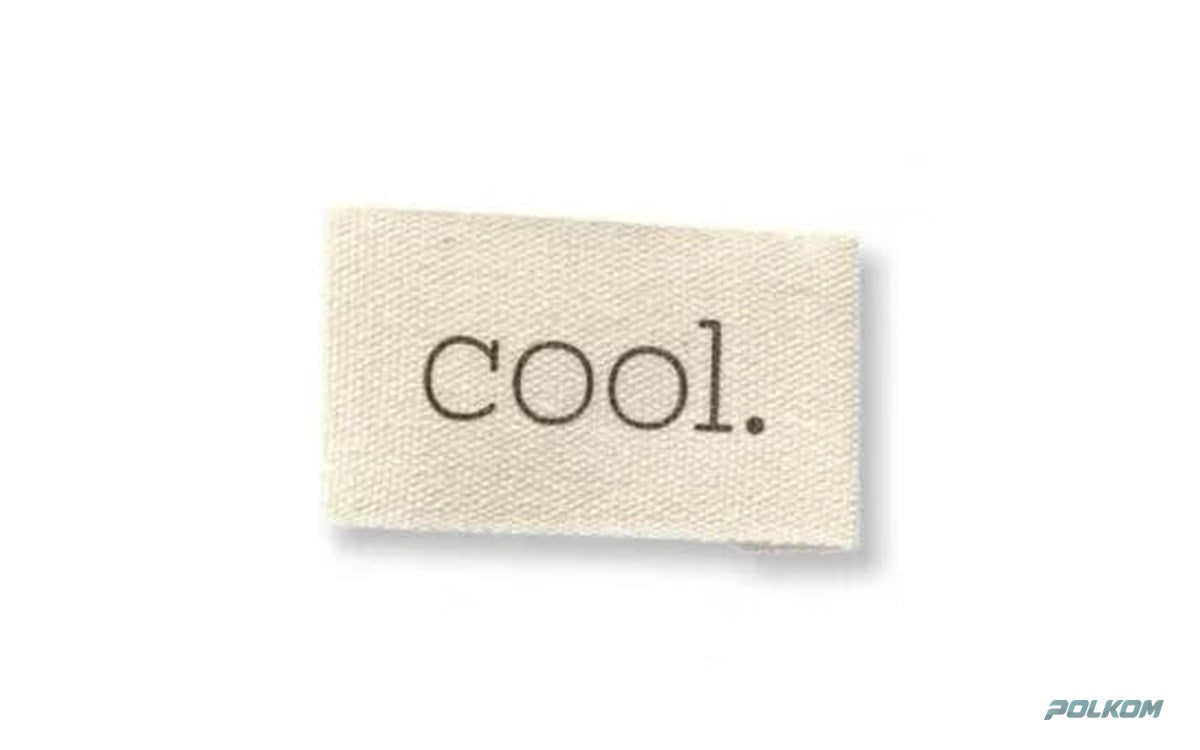
Labels for home textiles – bed linen, towels, curtains, tablecloths and blankets – must withstand washing at higher temperatures and tumble drying, which is why printed labels on synthetic satin or taffeta with durable thermal transfer or flexographic printing are most often used. The label carries the composition, care symbols, product size and brand and is sewn into a hem or seam where it does not get in the way during use.
Why home textile labels are under more strain
Bed linen and towels are washed often and usually at a higher temperature than clothing – for hygiene. Towels and sheets go through the tumble dryer and are sometimes ironed at high temperatures. Tablecloths are washed with stain removers. All of this puts the label through a test that it rarely faces on a blouse.
Another feature is that home textiles are used for years. Even after a long time, the customer expects to see how to wash the product, and in case of a complaint, to have an article or batch number.
What the label contains
- Fibre composition – with the fibre names and percentages under Regulation (EU) No 1007/2011.
- Care symbols under ISO 3758 – washing, bleaching, drying, ironing, professional cleaning.
- Product size – for example the size of the sheet, duvet cover or towel in centimetres.
- Brand or manufacturer and, if needed, country of origin.
- Article or batch number – useful for reorders and complaints.
The price, barcode and product description are usually on the packaging or on a hang tag, not on the sewn-in label.
Labels for home textiles by product type
| Product | Label position | What to watch for |
|---|---|---|
| Sheets, duvet covers, pillowcases | Seam or hem, near the opening | High-temperature washing, ironing |
| Towels and bathrobes | Short hem or next to the hanging loop | Tumble dryer, frequent use |
| Curtains | Heading tape or side hem | Must not show on the outside; light fastness |
| Tablecloths and napkins | Corner of the hem | Stain removers, ironing |
| Blankets and duvets | Side seam | A large label with more information |
Tape and printing
For products washed at high temperatures, synthetic tapes are recommended – polyester satin or nylon taffeta – which do not shrink and retain the print. Combined with textile resin ribbons or suitable textile inks, they withstand intensive care. Cotton tape suits natural linen and cotton collections, but with a larger font and a wash test.
If the product will be ironed at a high temperature, take this into account too: synthetic tape should not be ironed directly with a very hot iron. Positioning the label in the seam rather than on the visible surface solves the problem.
The brand label in home textiles
Besides the information label, many manufacturers add a visible logo label – on the corner of a towel, along the edge of a blanket or at the end of a curtain. Screen-printed satin tape or a woven label is used for this. It is important that the visible label is not too large or stiff, because in home textiles it is part of the product's appearance and is touched constantly.
Sets
In bed linen sets each piece must carry correct information. If the sheet and the duvet cover are made of different fabrics, the labels are different. It is convenient to use one design with variable fields – composition, size, product type – printed by thermal transfer in a single order.
Hotels, restaurants and professional laundry
Textiles for hotels and restaurants are washed in industrial machines at higher temperatures and with stronger detergents. If the labels are for such use, be sure to say so. Information about the owner or department is sometimes added so that the textiles can be sorted after washing. Under such conditions, the sample must be tested on the actual professional laundry regime.
Common mistakes with home textile labels
- A label sewn at one end only. After a few washes the free end bends, curls and snags. The label must be held firmly, ideally on both sides or folded into the seam.
- Stiff tape in baby and children's sets. Children's bed linen is touched constantly; label softness matters as much as on clothing.
- Symbols that do not match the fabric. Blends with polyester often should not be washed and ironed at the highest temperature allowed for pure cotton.
- Missing size. A customer buying an extra sheet or pillowcase looks for the size precisely on the label.
- A visible label on a curtain. If the label is on the face or in the bottom hem, it is seen every time the curtain is drawn.
What to include in your inquiry
- Product type and fabric.
- Maximum temperature for washing, tumble drying, ironing and professional laundering.
- Label content and languages.
- Label size, cutting and folding.
- Quantities by variant – by size and style.
Labels for home textiles from Polkom
Polkom is a Sofia-based manufacturer and wholesaler of accessories for clothing and textiles with over 30 years of experience. We make printed labels and care and composition labels for bed linen, towels, curtains and tablecloths, produce samples and deliver across the EU. Send a description of your products via our contact page to request a quote.