Manufacturer · Fashion Accessories



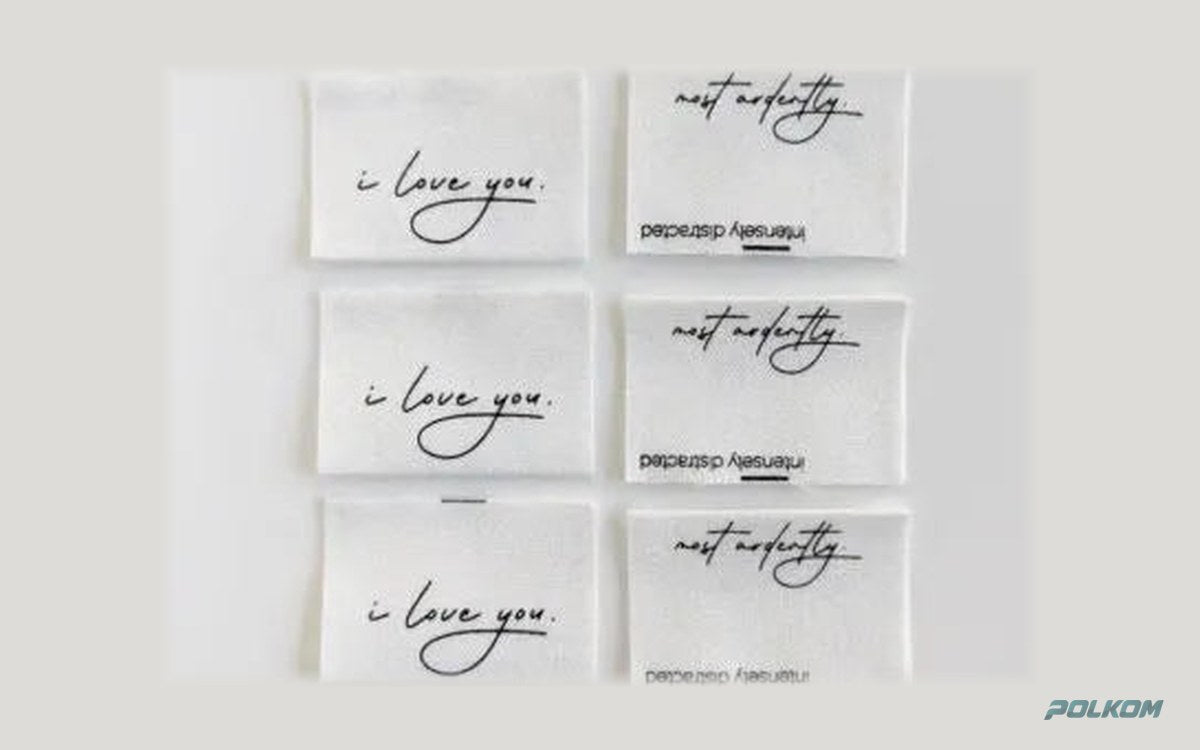
Label printing – the price of a printed textile label is not fixed but is determined by several factors: the type and width of the tape, the printing method, the number of colours, the size of the label, the total quantity, the number of variants (sizes, articles), cutting and folding, and any special requirements. That is why a specific figure can only be given after a request for a quote, but each of these factors can be optimised.
Label printing cost – the eight main factors
1. Tape
Satin, taffeta, polyester and cotton are priced differently. A wider and longer label uses more material. Special tapes – recycled, in a non-standard colour or of a particular density – usually make the label more expensive.
2. Printing method
Thermal transfer has no plate costs, but printing per piece is slower. Flexo printing requires plates but is the most economical for long runs. Screen printing gives the densest colour, but preparing the screens and the slower process are reflected in the price.
3. Number of colours
Each colour means a separate plate or screen, a separate set-up and a separate pass. A single-colour label is the most economical.
4. Label size
A larger label uses more tape and more ink. Sometimes reducing the length by a few millimetres, without loss of legibility, makes a difference on a long run.
5. Quantity
This is the strongest factor. The set-up is spread across all the labels in the order, so the price per piece falls as the quantity increases.
6. Number of variants
A label in ten sizes and five articles is fifty variants. With thermal transfer this does not require new plates, but with flexo and screen printing each different text is a separate set-up.
7. Finishing
A roll for automatic cutting is the cheapest option. Cutting, special folding, ultrasonic cutting and packing by variant add value.
8. Special requirements
Inks with enhanced durability, tests, specific documents or a very short lead time also affect the price.
How the factors interact
| Situation | Usually most economical |
|---|---|
| Small quantity, many sizes | Thermal transfer, single colour, on a roll |
| Large quantity, one design | Flexo printing |
| Light print on a dark tape | Screen printing – or simplifying the design |
| Brand label with a luxury look | Compare with a woven label |
How to reduce the price without sacrificing quality
- Combine orders. Labels for the whole collection in one order share the set-up.
- Reduce the colours. A single-colour logo often looks more elegant and is cheaper.
- Separate the fixed from the variable. The brand label – a long run in flexo or woven; sizes and composition – thermal transfer.
- Standardise the size. The same label size for all styles simplifies production.
- Choose a roll if you have a cutting machine.
- Plan ahead. Rush orders are rarely the most economical.
- Keep the plates. For a repeat order of the same design, the set-up is smaller.
Example: how the quote changes
Imagine a small brand that wants a three-colour brand label on black satin, separate for each of six sizes, cut and folded, in a small quantity. This is one of the most expensive combinations per piece: many colours, many variants, a short run and finishing.
The same brand could choose a single-colour logo on black satin, ordered in one go for the whole year, and a separate small thermal transfer size label on a roll. The logo is printed in a longer run, the sizes require no additional plates and the finishing is simpler. The brand's look stays the same, and the price per piece is usually considerably lower.
Repeat orders
With a repeat order of the same label, part of the set-up has already been done – the file has been checked, the plates or screens may have been kept, the colour recipe is known. So it is worth stating in the inquiry that it is a repeat and attaching the number of the previous order or the approved sample.
Where it is not worth saving
Some savings turn out to be expensive. A stiff, cheap tape at the neck makes customers cut the label out. An unsuitable ribbon or ink makes the label illegible after a few washes, and with a care and composition label that is also a legal problem. Skipping a sample can lead to a whole batch with an error. The cost of the right tape, durable printing and a sample is small compared with the price of the garment.
Printed or woven – a cost comparison
Printed labels are usually more economical with many variants and small text, while woven labels are better suited to the visible brand label, where durability and appearance matter more. Many brands combine the two: a woven label with the logo and a printed label with the size and composition. For the content of information labels see care and composition labels.
What to send for an accurate quote
- A design or sketch with the label dimensions.
- Type and colour of the tape.
- Number of print colours.
- Quantity per variant.
- Cutting, folding or a roll.
- Washing conditions and special requirements.
- Desired delivery date.
The more complete the inquiry, the more accurate the quote and the fewer the surprises at confirmation.
Request a quote from the manufacturer
Polkom is a Sofia-based manufacturer and wholesaler of garment accessories with over 30 years of experience. We make printed labels using thermal transfer, flexo and screen printing, offer options for optimising the price, make samples and deliver throughout the EU. Minimum quantities depend on the article. Send your details via Contact to request a quote.