Manufacturer · Fashion & Home Accessories












Recycled polyester in buttons means the polyester raw material contains partly or entirely previously used content – production waste or post-consumer products – instead of being made from completely new material. Recycled polyester buttons look and are processed like standard buttons, and the claim “recycled” must be supported by traceable documentation such as GRS. Polkom is GRS certified and offers recycled options on request.
What is recycled polyester?
Polyester is a large family of materials. In textiles, it usually means PET fibres, while in buttons it is polyester resin that is moulded and hardened. Recycling means that the raw material includes previously produced content instead of being fully synthesized anew.
The sources are divided into two groups:
- Pre-consumer (post-industrial) – production waste such as cuttings, rejects, leftover moulding and machining scraps.
- Post-consumer – materials from used products, for example packaging, collected, processed and returned to production.
The source type is important for communication. Some brands and markets specifically require post-consumer content, so it is good to know exactly what the product documentation states.
Appearance and durability of recycled buttons
To the customer, recycled polyester buttons usually look no different from standard ones. They are machined, polished and matt finished the same way, can have two or four holes or a shank, and withstand washing and dry cleaning like regular polyester buttons. Some practical notes:
- Colour. Recycled raw material may have a slight inherent tint, so very pure whites and crystal-clear tones sometimes require more sampling.
- Effects. Mother-of-pearl, marble and stone effects are possible but each effect must be approved with a sample.
- Consistency. Batches of recycled raw material may vary more, making an approved standard sample even more important.
- Ironing. The same rules apply as for all polyester buttons – avoid direct contact with very hot irons.
The general material properties are described in the polyester buttons category.
GRS certificate: what it proves
The Global Recycled Standard (GRS) is an international voluntary standard for products with recycled content. It tracks the material through the supply chain – from the recycled raw material source to the finished product – and includes requirements for chemicals, environmental and social conditions in production.
For brands, two types of documents are important:
- Scope certificate – proves the company is certified and for which processes and products.
- Transaction certificate – issued for a specific delivery and confirms that the goods in it are certified.
Without a transaction certificate, brands usually cannot label their product as “GRS”. Therefore, arrange the documents during inquiry, not after delivery. Information about Polkom’s certificates is available on the certificates page.
“100% recycled polyester” and other claims
Labels like “100% recycled polyester” or “made from recycled materials” sound strong but must exactly match the documentation for the specific item. European consumer protection laws increasingly restrict general environmental claims without proof. Practical rules:
- Be specific. “Buttons contain recycled polyester” is more accurate than “eco buttons”.
- Refer to the part, not the whole. If buttons are recycled, do not claim the entire garment is recycled.
- State percentages only if documented. If content is not confirmed in writing, do not specify a number.
- Keep documentation. Transaction certificates must be available for inspection by customers, retailers or authorities.
- Distinguish certificates. OEKO-TEX® covers product safety regarding harmful substances; GRS covers recycled content and traceability. They are not interchangeable.
Questions to ask before ordering
- What is the source of the recycled raw material – production waste or post-consumer products?
- Which item and delivery will be covered by the transaction certificate?
- Are there limitations on colour, transparency or effects?
- How is it ensured that recycled and standard raw materials are not mixed during production?
- Is the item covered by the OEKO-TEX® certificate as well?
Answers to these questions provide a basis for responsible communication and help avoid unpleasant surprises during audits by your client.
Recycled polyester in the whole garment
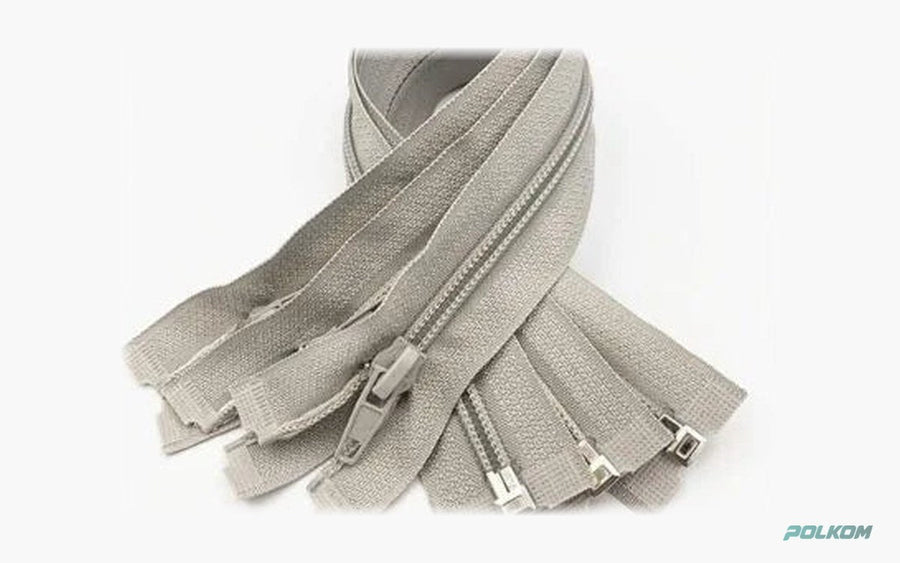
Buttons are a small part of the garment’s weight but a visible sign that the brand cares about details. If the collection is positioned as more responsible, it makes sense to review other accessories too: zips with recycled content – see YKK eco zips, labels, threads, ribbons and packaging. Another option is choosing natural materials such as corozo buttons or wooden buttons, which have a different story and arguments.
How to order recycled polyester buttons
- Specify that you want a recycled option and whether you need GRS documentation.
- Send the model, size in lignes, colour and surface.
- Specify if you prefer a particular source type of raw material.
- Approve a sample – especially for colour.
- Arrange delivery documents together with the offer.
More button types are available in the buttons for garments category.
Polkom – GRS certified manufacturer
Polkom is a manufacturer of accessories for fashion, footwear and bags, as well as for perfumes, cosmetics, packaging and furniture, based in Sofia with over 30 years of experience. The company is GRS certified and offers recycled versions of buttons and other accessories on request. All products have OEKO-TEX® certification. Describe your collection needs via the contact form and we will provide samples and documentation.