 Manufacturer · Fashion & Home Accessories











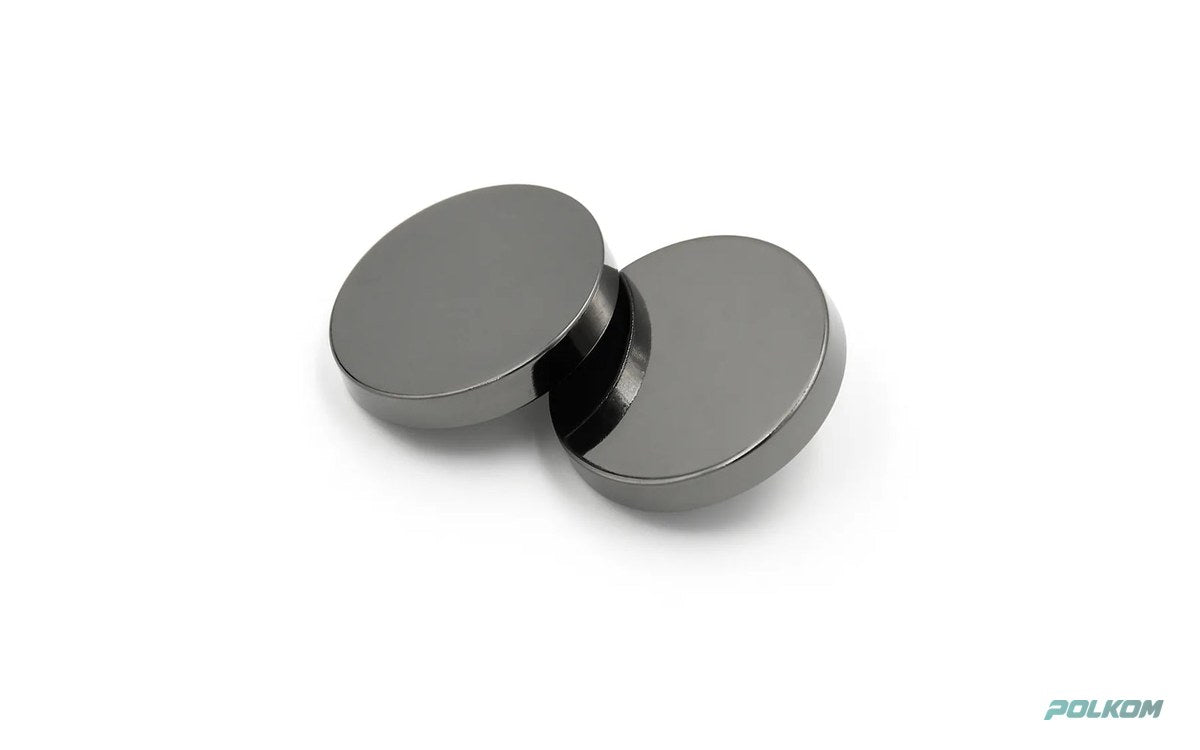
Rose-shaped buttons are metal shank buttons whose face is cast as a flower in full bloom. We offer two styles – MB-07 Rose in 50 mm, which works like a piece of jewellery on a coat or bag, and MB-18 Little Rose in 22 and 37 mm for blazers, dresses and coats. Both are available in nickel colour (nickel free), gold, gunmetal and black gloss.
Rose-shaped buttons – why they are so popular
The rose is one of the most enduring motifs in womenswear – from Victorian brooches to contemporary collections inspired by romanticism. As a button it adds just enough decoration to make a garment memorable without weighing down the silhouette. The voluminous petals create light and shadow that can be seen even from a distance, so even a single button on a plain coat immediately catches the eye.
A shank button is the only sensible option for such a motif: holes would cut through the flower, while the loop underneath leaves the relief intact.
MB-07 Rose 50 mm – the button that is jewellery
MB-07 Rose is the largest button in the series. At 50 mm it is perceived more as an accessory than as a fastener, so designers usually use it singly – at the collar or waist of a coat, on the lapel of a cape or on the flap of a bag.
Where it looks best
- Single-button coats – wrap styles, robe coats or capes.
- Capes and ponchos – the button holds the two sides together and is the main decorative accent.
- Bags – on the flap of a clutch or tote, combined with a leather or cord loop.
How to fasten a 50 mm button
A buttonhole for such a diameter would be longer than 52 mm and would weaken the front. So the practice is different: the button is sewn on decoratively, and the actual fastening is done by a concealed snap button, a hook or a cord loop slipped around the shank. On bags a leather loop is used most often.
MB-18 Little Rose – two sizes for a whole row
MB-18 Little Rose is a more delicate rose, suitable for a row of buttons down the front.
22 mm – blazers, dresses and cardigans
This size is standard for the front of a women’s blazer and allows a normal buttonhole. On a dress the smaller rose looks feminine without being too theatrical, and on a short knitted cardigan it replaces classic dome buttons.
37 mm – coats
The larger size suits double-breasted coats and coats with three or four buttons. The combination of 37 mm on the front and 22 mm on the sleeves or pocket flaps gives a coherent look from one style.
Styles, sizes and colours
| Code | Style | Sizes | Colours | Suitable for |
|---|---|---|---|---|
| MB-07 | Rose | 50 mm | nickel colour (nickel free), gold, gunmetal, black gloss | coats, capes and bags – a decorative statement button |
| MB-18 | Little Rose | 22, 37 mm | nickel colour (nickel free), gold, gunmetal, black gloss | women’s blazers, coats and dresses (22 mm – blazers and dresses, 37 mm – coats) |
Which rose in which colour
- Gold – the classic choice for black, navy, burgundy and camel wool; it emphasises the romantic character of the motif.
- Nickel – cooler and more contemporary; looks good on grey, powder pink, white and denim.
- Gunmetal – a dark metallic shade that makes the rose bolder; suitable for black leather, graphite and olive.
- Black gloss – a rose tone-on-tone on a black coat looks like relief embroidery; the effect is elegant and discreet.
Ideas for combining them in a collection
The rose is a strong motif, so it works best when the rest of the garment is calm. A few proven solutions:
- A monochrome coat with one 50 mm Rose – for example camel wool with the Rose in gold, or a black coat with the Rose in black gloss.
- A blazer with a row of 22 mm Little Roses – in nickel on a grey or powder pink blazer; it looks delicate and office-appropriate.
- A blazer and bag set – the Little Rose on the blazer and the Rose on the bag in the same colour create a capsule that is easier to sell as a look.
- A knitted cardigan – Little Rose 22 mm with a backing button on the inside so the knit does not stretch.
Avoid combining roses with other figurative buttons on one garment – two strong motifs compete and the garment loses focus.
How to sew on a rose button correctly
- Before sewing, decide how the rose should be turned – with figurative buttons the direction of the petals is visible, so all buttons in the row must be oriented the same way.
- Place the shank parallel to the buttonhole; if the direction of the motif requires otherwise, use a loop instead of a buttonhole.
- Sew with doubled polyester thread, 6–8 stitches, and wind the thread under the shank on thick fabrics.
- For MB-07 and MB-18 37 mm, add a backing button on the reverse side – it protects the fabric from tearing.
Caring for rose buttons
When washing, turn the garment inside out and put it in a laundry bag so the buttons do not knock against the drum. When ironing, do not touch the relief with the iron – iron around the button or through a cloth from the reverse side. If the coat is dry cleaned, cover the roses with aluminium foil or remove them; the shank makes it easy to sew them back on. Dust can collect between the petals – clean it with a soft brush, without abrasive products, especially on the black gloss.
Order online
You can order both styles directly in the button shop. The minimum quantity is 500 pcs per style, size and colour. You will find more about the series and the other shapes on the Metal buttons page, and for bags see also buckles for bags.
Polkom – over 30 years of fashion accessories
Polkom has been manufacturing and supplying accessories for fashion, furniture, footwear and bags for over 30 years. All our metal finishes are nickel free. If you are preparing a collection with a rose motif and want to see the buttons in person or discuss a larger quantity, write to us.


