Manufacturer · Fashion & Home Accessories











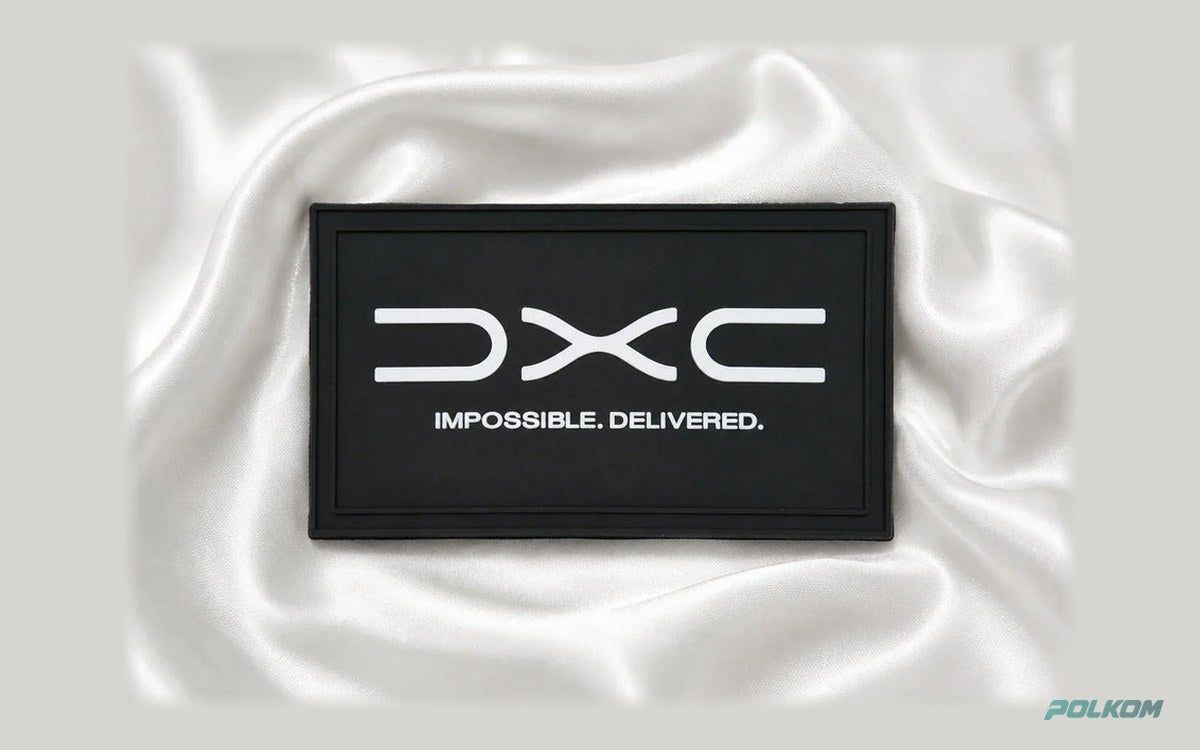
Silicone logo labels are flexible raised badges moulded in a die and sewn or heat-applied onto the garment. For sportswear they are among the most practical solutions: they don't soak up sweat, withstand frequent washing, don't scratch and follow the movement of stretch fabric. The main choice is between 2D (flat, graphic relief) and 3D (sculpted, three-dimensional relief).
Why silicone logo labels suit sports apparel
A sports garment is worn for short periods but takes a lot: sweating, stretching, rubbing against a backpack or equipment, and washing after almost every wear. Printing on the fabric gradually cracks, and a woven label in an exposed spot can fray at the edge. With a silicone label, the logo is part of the material itself – there is no ink to wear off and no threads to snag.
The second reason is visual. The relief catches the light and the logo is visible from a distance – on the track, in the gym, in a race photo. That is why sports brands often place a silicone badge in a visible spot (chest, sleeve, leggings waistband, hood) and keep the classic size and care labels inside the garment.
2D or 3D: what is the difference
Both types are moulded, but the relief is formed differently. On a 2D label each element has a flat top surface and sits at a defined level – background, logo, outline. On a 3D label the transitions are smooth, edges can be rounded and individual parts of the logo rise higher than others.
| Criterion | 2D silicone label | 3D silicone label |
|---|---|---|
| Relief type | Flat levels, sharp outlines | Three-dimensional, rounded, sculpted |
| Best for | Text, geometric logos, small marks | Emblems, crests, marks with depth |
| Typical products | Leggings, T-shirts, swimwear, underwear | Jackets, sweatshirts, backpacks, caps |
| Thickness | Thinner and lighter | Thicker, more noticeable |
| Mould making | Simpler | More complex, needs more detailed modelling |
A practical rule: the closer to the skin and the stretchier the fabric, the better suited a thin 2D label is. 3D relief is strong where the material is denser and the label is a decorative accent.
Silicone, TPU or soft PVC rubber
In everyday language all these labels are called "silicone", but the materials differ:
- Silicone – the softest option, pleasant to the touch, withstands higher temperatures. Suitable for leggings, swimwear, sports underwear and childrenswear.
- TPU (thermoplastic polyurethane) – denser and more abrasion resistant, gives sharp relief and clean colours. Convenient for heat application on functional fabrics.
- Soft PVC rubber – strong with saturated colours, used mainly for bags, backpacks, footwear and accessories where contact with the skin is minimal.
If the product is for children or is worn directly against the skin, mention it in your inquiry – the material is then chosen with softness and safety as priorities.
Sewing on or heat application
Sewing on
The label is made with a thin flat edge (flange) around the perimeter for the needle to pass through. Stitching is the most secure attachment and is a must for backpacks, jackets and products washed often and at higher temperatures. Downside: on a very stretchy fabric the seam restricts stretch over a small area.
Heat application
A heat-activated adhesive layer is applied to the back and the label is fixed with a press at a set temperature, pressure and time. There are no holes in the fabric, which matters for waterproof materials and thin knits. Always test on the actual fabric before production – some membranes and coatings do not tolerate the press temperature.
Design: what to prepare
- Vector logo (AI, PDF, SVG) – the relief is modelled along the outlines; a raster image is not enough.
- Label size and the smallest text in it – very fine letters "fill in" with silicone.
- Pantone colours – each colour in a silicone label is a separate zone, so simplify the palette.
- Shape – circle, rectangle, shield or cut to the outline of the logo.
- Attachment method – it affects the label's construction right from the mould.
Care for garments with silicone labels
Silicone tolerates normal washing but does not like direct ironing and aggressive high-temperature drying. The care label should carry a symbol for ironing inside out or a warning not to iron over the label. Heat-applied labels are more sensitive than sewn ones to high tumble-dryer temperatures. These instructions go on the care and composition labels.
Combining with other labels
A silicone badge on the outside and a woven logo label at the neck make a logical pair: one provides recognition, the other shows the brand every time the garment is put on. The sports collection then looks finished without the logo being repeated everywhere in the same way. You will find all versions of raised badges in the silicone labels category.
Common ordering mistakes
- Too much detail in a small label. Fine lines and text under a few millimetres lose legibility. A simplified version of the logo is better than blurred relief.
- 3D relief on thin jersey. A thick label is heavy, puckers the fabric and is felt in movement. For such materials choose 2D and a thinner base.
- Heat application without testing. Membranes, silicone coatings and some recycled fabrics react differently to the press. One test saves a rejected production run.
- Colours "by eye". Without a Pantone number or physical sample it is hard to achieve the brand's exact shade, especially with neon and pastel colours.
- Placement not specified. A label on a sleeve, on the chest and on a leggings waistband have different requirements for size, thickness and flexibility.
Silicone labels from Polkom
Polkom is a Bulgarian company from Sofia with over 30 years of experience as a manufacturer of accessories for fashion, furniture, footwear and bags. We make silicone labels to your design – from modelling the relief to an approved sample and production run, with advice on material and attachment. Minimum quantities depend on the article. Send an inquiry with the logo, size and type of product.