 Manufacturer · Fashion & Home Accessories











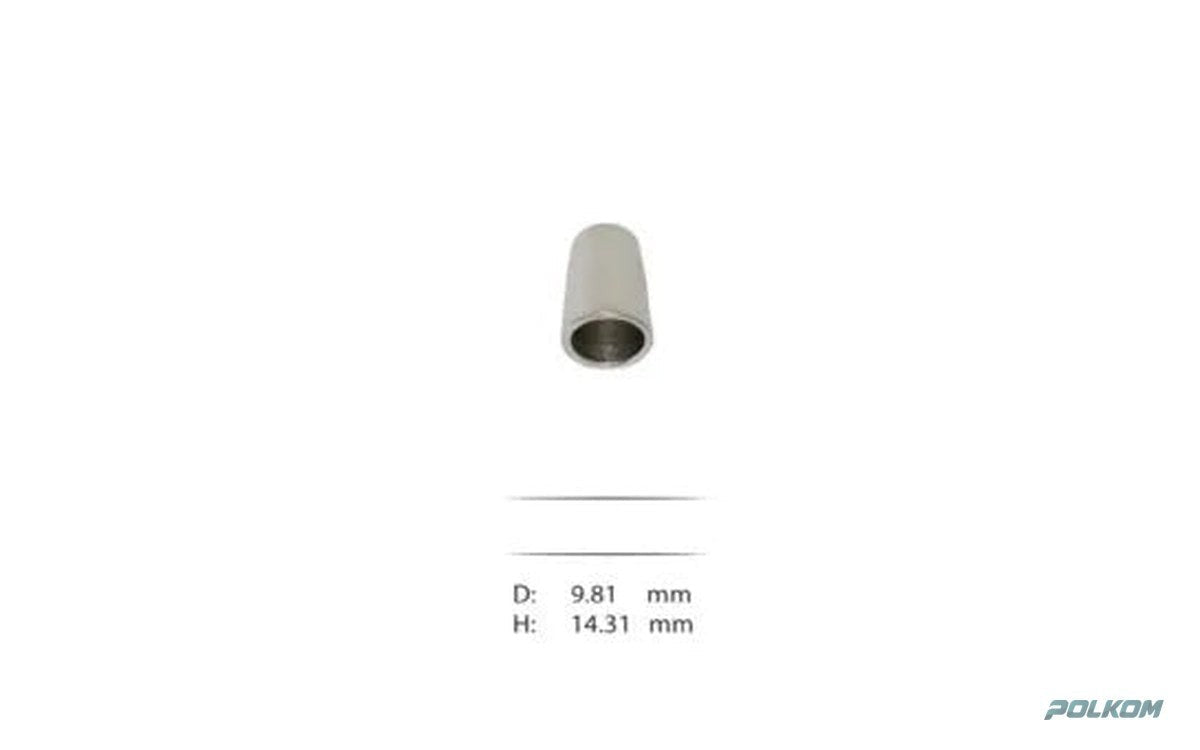
The sizes of cord ends are mainly determined by the internal diameter, which should match the diameter of the sealed cord end or be slightly larger. For round cords used in clothing, cord ends with an internal diameter of about 3 to 6 mm are most common; for shoelaces, about 2 to 5 mm; and for flat cords, the width is considered. The length of the cord end usually ranges from 15 to 30 mm depending on the product and style.
Important dimensions of cord ends
- Internal diameter – the opening where the cord is inserted. This is the key parameter.
- External diameter – determines whether the cord end fits through an eyelet or tunnel and how it looks relative to the cord.
- Length – affects grip and appearance; a longer cord end holds more cord.
- Opening depth – for solid cord ends, how far the cord can enter.
- Width and thickness – for flat cord ends instead of diameter.
How to measure the cord
The most common mistake is to estimate the cord size by eye or rely on the supplier’s description. Knitted cords contract under tension and expand when relaxed, and after sealing, the cord end may become narrower or wider.
- Use a caliper, not a ruler.
- Measure the cord in a relaxed state, without tension, in several places.
- Seal the end as it will be in production, then measure again.
- For flat cords, measure width and thickness.
- Record the largest value – this determines the cord end size.
If unsure, send the manufacturer a few centimetres of the actual cord. This is the most reliable way to get the correct size.
Approximate size chart
| Product | Cord | Internal Diameter of Cord End | Typical Length |
|---|---|---|---|
| Sweatshirt, hoodie | Round, about 4–6 mm | about 4–6 mm | about 20–30 mm |
| Sports trousers, waistband | Round or flat, about 3–5 mm / 8–12 mm | about 3–5 mm or flat | about 15–25 mm |
| Shorts, swimwear | Thin round, about 2–4 mm | about 2–4 mm | about 15–20 mm |
| Jacket, anorak (bottom hem) | Elastic cord, about 2–4 mm | about 2–4 mm | about 15–25 mm |
| Shoelaces | Round about 2–5 mm, flat about 7–10 mm | about 2–5 mm or flat | about 15–20 mm |
| Bag, backpack with cord | Thick round, about 5–8 mm | about 5–8 mm | about 20–35 mm |
The chart is a guideline. The actual size depends on the specific cord and type of cord end.
Tolerance and mounting type
Crimped cord ends
The internal diameter before crimping may be slightly larger than the cord because the metal contracts when squeezed. If the difference is large, the cord end deforms and looks bad. If it is small or negative, the cord won't fit or may be cut.
Glue-on cord ends
A small clearance is needed for the glue – usually tenths of a millimetre. Too wide an opening causes excess glue and a crooked cord end.
Screw or clamp cord ends
These have an internal clamp that grips the cord within a certain range. The manufacturer specifies the minimum and maximum diameters they fit.
External diameter and eyelets
If the cord must pass through eyelets or be removed from a tunnel during washing, the external diameter of the cord end must be smaller than the eyelet’s internal opening. If the goal is the opposite – to prevent the cord from coming out of the tunnel – choose a wider cord end or add a stopper. Also check compatibility with cord stoppers: the cord with the cord end must fit through the stopper’s hole during assembly.
Length and appearance
Length is not only a technical parameter. Long and thin cord ends look elegant on sweatshirts and fashion tops, while short and wide ones look sporty. For heavy metal cord ends, greater length adds weight, keeping the cord taut and neatly hanging. If the cord end will carry a logo, the length must accommodate the inscription or symbol without losing legibility.
Common mistakes in size selection
- Measuring the cord under tension – resulting in a smaller than actual size.
- Choosing based on nominal cord size without considering the sealed end.
- Cord end that does not fit through the eyelet when replacing the cord.
- Using the same cord end size for cords with different weaves in a collection.
- Not testing a sample with the actual cord before production.
How to specify size in your inquiry
Specify the cord type (round, flat, elastic), material, diameter or width measured with a caliper, mounting type, desired length, cord end material, plating, and whether it should have a logo. It is best to send a sample of the cord. If you order the cord from us as well, we will select the matching cord end. Learn more about cords in the cords category.
Size selection for cord, stopper, and cord end sets
When a product includes a cord, stopper, and cord end, sizes are chosen in a specific order. First is the cord – its thickness depends on the tunnel and desired look. Next is the stopper, whose opening must fit the cord, often two cords simultaneously. Finally, the cord end – with an internal diameter matching the cord and an external diameter that allows the stopper to slide on during assembly, or vice versa, to stop the stopper from falling off. Choosing in the reverse order often leads to incompatible combinations.
Exact size cord ends from Polkom
Polkom offers cord ends in various internal diameters, lengths, and shapes, both metal and plastic, as well as custom manufacturing. Send a sample of your cord and product description via the contact page – we will suggest the right size and provide a sample for testing.




