Manufacturer · Fashion & Home Accessories











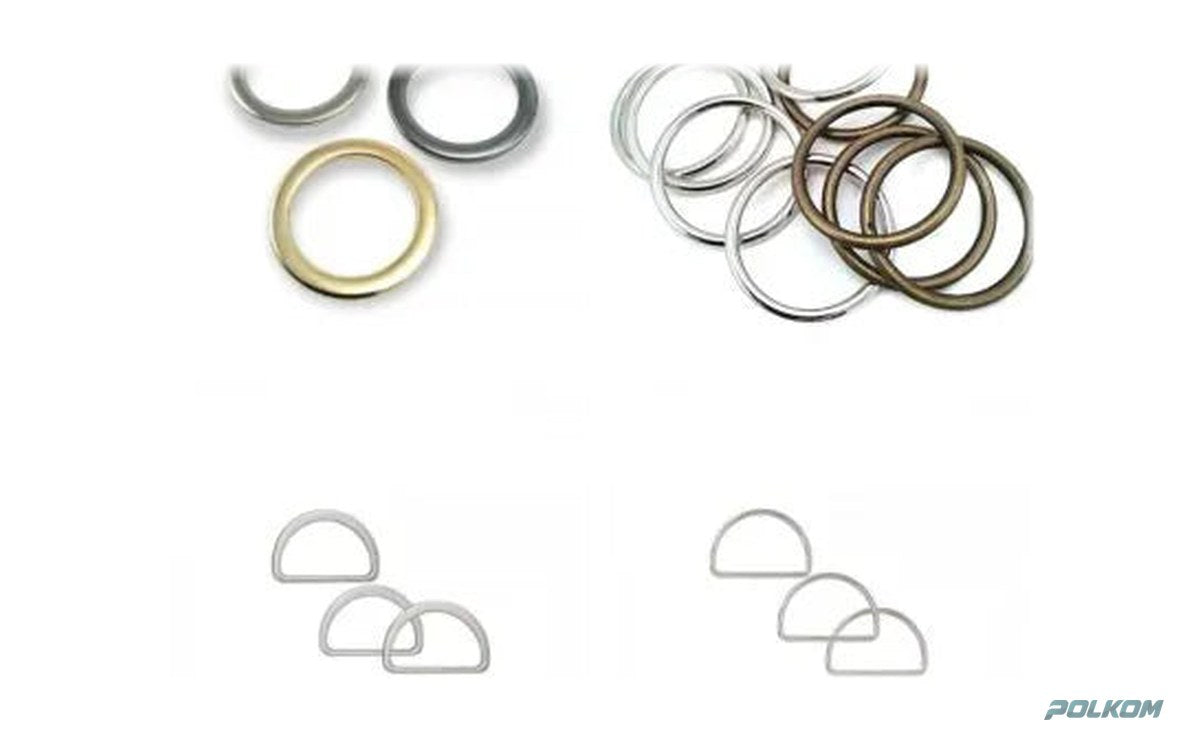
Steel rings are the strongest and most economical choice for straps under load, but they need a protective finish against rust. Zinc alloy rings are cast without a seam and allow complex shapes and logos. Brass rings are heavy, do not rust and look refined. Aluminium and plastic are the lightest. The right material depends on the load, the environment and the style of the product.
Steel rings – strength and price
Steel rings are made from wire that is bent into shape and often welded. Steel has high strength, so even relatively thin wire withstands a considerable load. This makes it suitable for handles and straps on bags, backpacks, dog collars and belts.
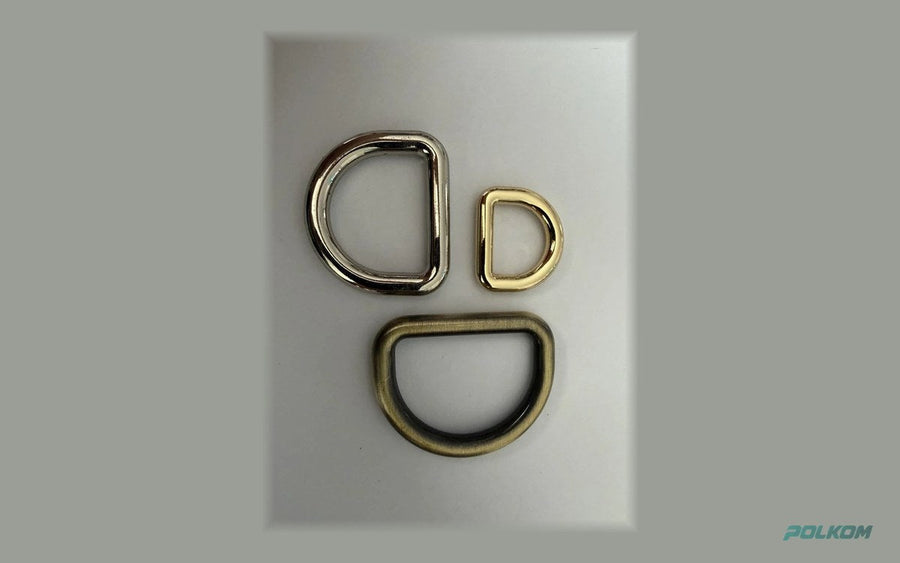
The main disadvantage of ordinary carbon steel is corrosion. That is why steel rings always receive a finish – nickel colour or chrome, black oxide, gold or antique (at Polkom all nickel free). As long as the finish is intact, the ring does not rust. With scratches, constant friction or salt water, the base can start to corrode.
Stainless steel
Stainless steel rings need no finish and are resistant to moisture, sweat and salt. They are preferred for marine equipment, outdoor products, dog collars and items that often get wet. Stainless steel is harder to work, so the choice of shapes is more limited and the price higher than for ordinary steel.
Zinc alloy rings
Zinc alloy is die cast in a mould, so the ring comes out as a single piece – without a seam and without a gap. The advantages are:
- any shape and profile – flat, bevelled, faceted;
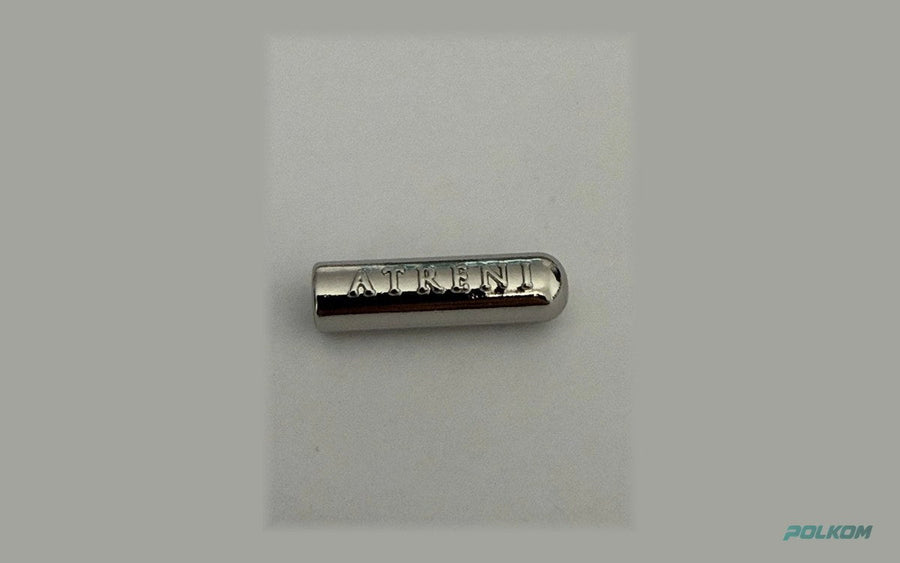
- the option of a raised or recessed logo;
- a smooth surface that takes all kinds of finishes well;
- it does not rust.
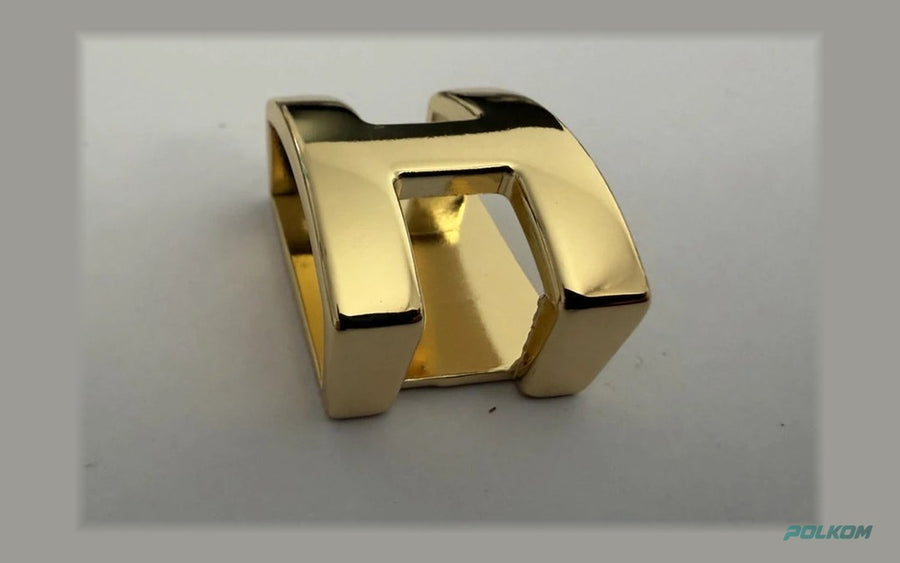
Zinc alloy is more brittle than steel under impact and bending, so for loaded straps the cross-section must be more substantial. Rings made of this material are heavier than steel ones of the same size, which is often perceived as a sign of quality in fashion bags.
Brass rings
Brass is an alloy of copper and zinc with a characteristic warm yellow colour. Brass rings do not rust, have a pleasant weight and can be used without a finish – over time they develop a natural patina that many leather goods brands value. Brass can be polished, satin-finished or plated in nickel colour (nickel free), gold and antique. The disadvantages are the higher price and greater weight.
Aluminium rings
Aluminium is very light and does not rust. Anodised aluminium rings come in bright colours and are used for sports, climbing and outdoor accessories, where every gram counts. Aluminium is used less often for heavy fashion items because it is soft and scratches.
Plastic rings
Plastic rings made of engineering plastics such as polyacetal or polyamide are light, do not corrode, do not feel cold and do not rattle. They are used on backpacks, sports bags, children's products, swimwear and beachwear. They are not suitable for products that need to look luxurious and can deform at high temperatures.
Comparison table
| Material | Strength | Weight | Corrosion | Logo and shape |
|---|---|---|---|---|
| Steel with finish | High | Medium | Protected by the finish | Simple shapes |
| Stainless steel | High | Medium | Resistant | Simple shapes |
| Zinc alloy | Medium, depends on the cross-section | Heavy | Does not rust | Free shapes, logo |
| Brass | Good | Heavy | Does not rust, develops a patina | Good workability |
| Aluminium | Low to medium | Very light | Resistant | Coloured anodising |
| Plastic | Medium | Very light | Does not corrode | Colours, simple shapes |
How to choose the material by product
- High-end leather bags – zinc alloy or brass, for the weight, smoothness and logo options.
- Textile bags and backpacks – welded steel with a finish, or plastic.
- Dog collars and outdoor products – stainless steel, brass or plastic.
- Garments that are washed – brass, zinc alloy or stainless steel; with ordinary steel, test the finish in the wash.
- Sports accessories – aluminium or plastic.
The finish is part of the material
With rings, material and finish must be chosen together. The same steel ring can last for years or rust within months, depending on the quality of the finish. Electroplated finishes in nickel colour and chrome (at Polkom nickel free) give a hard, shiny surface. Black oxide is thinner and cheaper but less resistant to abrasion. Lacquer and powder coatings allow colours but can chip on impact. With brass and zinc alloy the finish is more a question of appearance, because the base does not rust anyway. If the product will be used intensively, ask how the finish has been tested and do your own test with a sample.
What to ask your supplier
- Exactly what material the ring is made of and whether it has a finish.
- Whether it is welded or cast.
- How the finish behaves under abrasion and washing.
- Whether the same finish is possible for the product's metal buckles and rivets.
- Whether you can get a sample for testing.
If you are still undecided, order samples in two materials and compare them on the real product – the difference in weight and feel often settles the question.
Rings in different materials from Polkom
Polkom is a Bulgarian manufacturer of accessories for fashion, furniture, footwear, bags and leather goods, selling wholesale, with a large stock and more than 10,000 articles. We offer rings in different materials and finishes and, if needed, make them to your design. We send samples quickly and deliver throughout the EU. Send an inquiry with the purpose of the ring and we will help you choose the material.