 Manufacturer · Fashion & Home Accessories











Contents
Every hook and loop tape has two sides: the stiff hook side and the soft loop side. In sewing-room jargon they are often called the "male" and "female" parts. The closure works either way round, but in the finished product the position of each side matters – for comfort, for safety and for how long the tape keeps its grip. In this article we have collected the rules and one overall table by product, useful for technologists and pattern makers in production.
The basic rule
The soft loop side goes where the tape stays exposed when the product is open and can touch the skin, hair or other garments. The stiff hook side goes on the movable part – the flap, strap or tab that lies on top when fastened and covers the hooks.
The reason is simple: exposed hooks scratch the skin, snag knitwear and tights and collect lint that weakens the closure. If they are hidden under the flap when not in use, they stay clean and safe.
Table: which side goes where
| Product | Soft side (loops) | Stiff side (hooks) |
|---|---|---|
| Jacket cuff | on the sleeve | on the cuff tab |
| Pocket flap | on the pocket | under the flap |
| Children's shoe | on the shoe upper | on the strap |
| Children's wear | on the main part of the garment | on the small movable tab |
| Patch panel | on the garment | on the back of the patch |
| Bag or backpack flap | on the body of the bag | under the flap |
| Medical support and belt | outer surface of the belt | on the end tightening strap |
| Tightening strap, cable tie | back-to-back tape – hooks and loops on the same tape | |
On patch panels the rule is especially important – details are in the article hook and loop patch panel.
Why the soft side is the "safe" one
Comfort in wear
The soft side does not irritate the skin and can stay exposed on the garment without discomfort. That is why a softer version of the tape is also chosen for children's wear, lingerie and medical products.
Less soiling
The hooks collect hairs, lint and threads. When they are on the movable part, they are closed most of the time and keep their strength for longer.
Washing without damage
Exposed hooks in the washing machine snag other garments and tear knitwear. Even with the correct layout, the tape should be closed before washing – see washing garments with hook and loop.
When the rule is reversed
- Products with no skin contact – on cases, covers and technical textiles the layout is chosen according to the construction; the only thing that matters is that the hooks are not left exposed during transport and washing.
- Interchangeable elements – when the same element attaches to different products, it carries the stiff side and all products carry the soft side.
- Back-to-back tape – on straps and cable ties both functions are on one tape and the question does not arise.
Length and width of the two sides
The two sides do not have to be the same length. The soft side is often longer to allow adjustment – for example on cuffs, belts and supports. The hook part is shorter and sits at the end of the strap. The width of both sides must be the same. We explain how to choose the width in the article hook and loop tape widths.
How to tell them apart on the roll
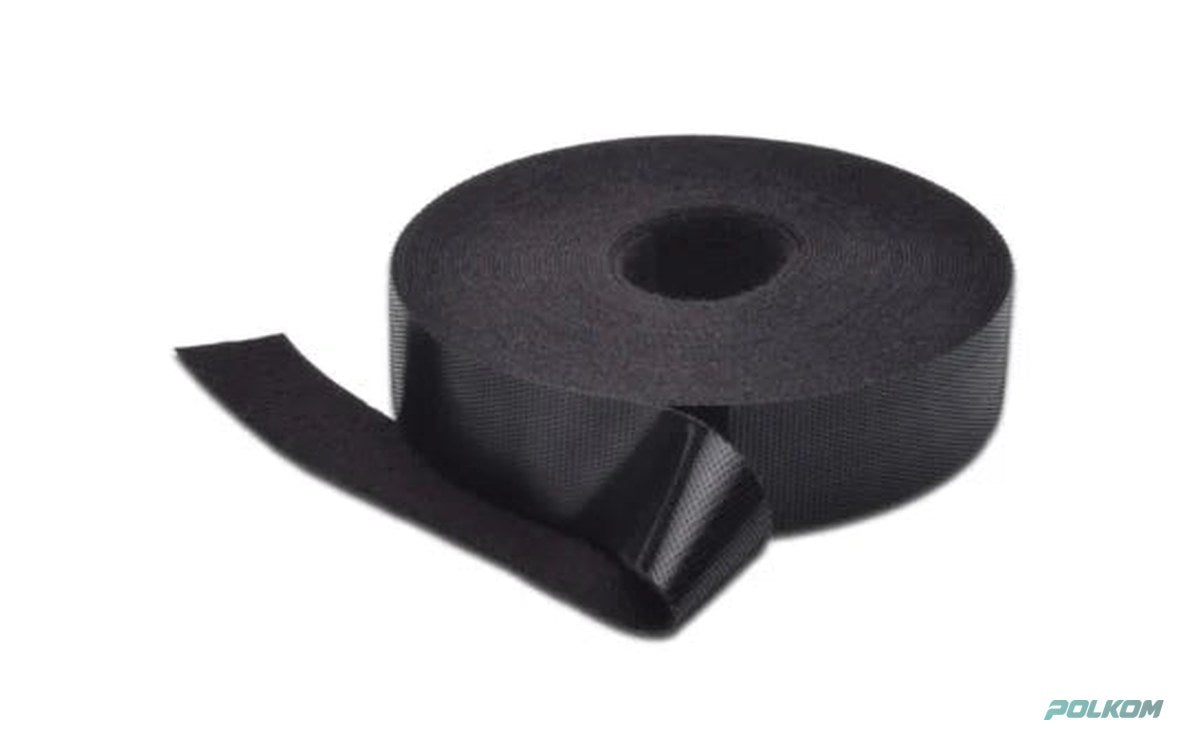
The hook side feels rough, with small plastic hooks. The loop side feels like velvet or felt. In production it is practical to order the two sides on separate rolls and mark them so they do not get mixed up at the machine. Polkom delivers the two parts separately or as a mated set.
Hook and loop in series production – practical tips
- Mark the sides in the tech pack – note "hook" or "loop", the width and the length for each position, so there is no mismatch between cutters and sewers.
- Different roll colours – if the design allows, order the two sides in slightly different shades or mark the rolls; this avoids swaps at the machine.
- Cutting in advance – on large runs, pieces are cut in one go and sorted by side and size.
- Test the first piece – fasten and unfasten it a few dozen times and check that the hooks stay covered.
Common mistakes
- the hook side is on the body of the garment and snags the scarf or knitwear when opened;
- the two sides are different widths and the closure is incomplete;
- the soft side is shorter than the hook side and the hooks are left exposed;
- the tape is not sewn around the whole edge and the corners lift.
You will find more about sewing step by step in the article how to sew on hook and loop, and if the tape has stopped holding, in why hook and loop stops gripping.
Hook and loop from Polkom
We deliver hook and loop tape in widths from 5 to 100 mm, in black, white and practically any Pantone colour or matched to a sample, with soft versions for clothing and stronger tapes for bags and equipment, across Europe. Browse our hook and loop tapes.
Share this article


