Manufacturer · Fashion & Home Accessories











Contents
Two metal buttons can look almost identical in a photo and yet be made in completely different ways. Stamped metal buttons are cut and embossed from sheet metal, while die-cast metal buttons are cast from zinc alloy under pressure. The method determines the weight, the depth of the relief, the possible shapes and the way the logo is made. Polkom manufactures metal buttons using both methods, so here we describe neutrally what each one offers.
How stamped buttons are made
Stamped (also called pressed) buttons are made from brass or steel sheet. A die with the relief cuts the blank and shapes it in one or more pressing steps. The button often consists of two parts – a face and a back – which are closed together, with the shank attached to the back. The result is a hollow, light and strong button.
- Material: brass or steel sheet.
- Weight: light, even at large diameters.
- Relief: crisp, shallower, with soft transitions.
- Shapes: mostly round and domed.
How die-cast buttons are made
Die-cast buttons are cast from zinc alloy under pressure in a multi-cavity mould. The metal fills every detail of the mould, so deep relief, several levels, sharp edges, cut-outs and non-standard outlines are all possible. The shank can be cast together with the button.
- Material: zinc alloy.
- Weight: solid, with a noticeable weight in the hand.
- Relief: deep, multi-level, with fine details.
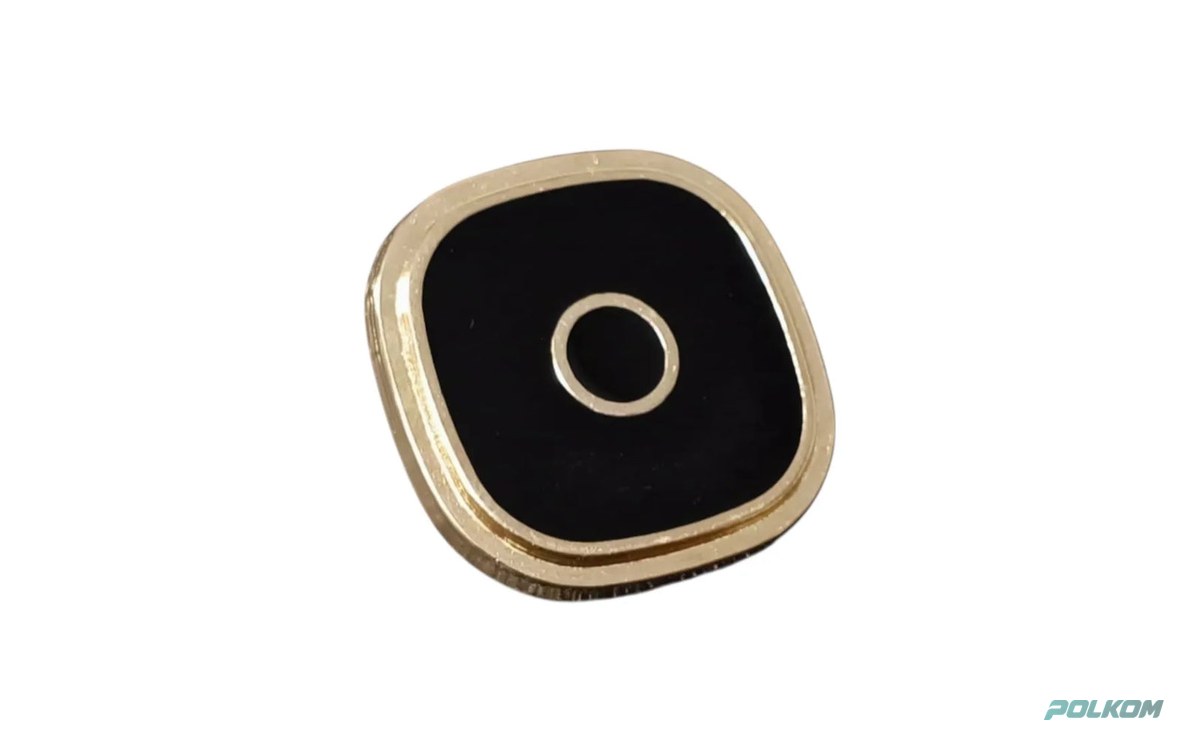
- Shapes: practically anything – square, knot, crest, figure, openwork.
With both methods the button can have a shank for jackets and coats or holes for shirts and cardigans, and the finish is applied after forming.
Comparison
| Criterion | Stamped button | Die-cast button |
|---|---|---|
| Raw material | brass or steel sheet | zinc alloy |
| Weight | light | heavier, solid |
| Relief depth | moderate | deep, on several levels |
| Shape | round and domed | free, including openwork |
| Suitable for | shirts, blazers, light jackets, knitwear | coats, outer jackets, womenswear, statement buttons |
| Finishes | all electroplated finishes and enamel | all electroplated finishes and enamel |
With both methods, all Polkom metal buttons are nickel free, and the finishes – gold, antique brass, silver, gun metal, black or nickel colour – are equally available. You will find more about the metals themselves in the article brass or zinc alloy buttons.
When to choose a stamped button
- when the garment is light and a heavy button would pull the fabric – shirts, summer jackets, knitwear;
- when you need a large diameter with low weight;
- when the design is classic – a smooth domed button, a rim, a crest or an anchor in moderate relief;
- for very large runs of a single design.
When to choose a die-cast button
- when the logo has several levels, fine lines or three-dimensional elements;
- when the shape is not round – square, figure, monogram, openwork;
- when the button is a statement piece on a coat, outer jacket or women's jacket and weight is desirable;
- when the relief will be filled with enamel in several colours.
How to tell the type of button in your hand
- Weight – at the same diameter, a die-cast button is noticeably heavier.
- Back – a two-part stamped button has a smooth back and a visible line along the edge where face and back are closed; a die-cast button is a single solid piece.
- Edge and detail – sharp edges, cut-outs and relief on several levels point to casting.
- Sound – a hollow stamped button sounds higher when tapped than a solid die-cast button.
If you have a sample from a previous collection, send it to us – we will identify the method and suggest the same type or a better option for the new garment.
Logo: relief, laser and enamel
With stamped buttons, the logo is made in the die and appears as relief during pressing. With die-cast buttons, the logo is part of the mould and can be raised or recessed on several levels. With both types, laser engraving on the finished button or an enamel fill can be added. The methods are described in the article engraved metal buttons.
The tooling – what is shared and what differs
Both methods require a tool made to your design: a stamping die for stamped buttons and a casting mould for die-cast buttons. The tool is made once and used for all subsequent orders of the same design. We explain what you need to know about the mould in the article on moulds for metal buttons with a logo.
The same logic for metal plates
The choice between stamping and casting also applies to metal labels and logo plates. If you are ordering these too, see the article cast or stamped metal plate – that way the buttons and the label will share one style.
How to order metal buttons from Polkom
Send us your logo in vector format, the size in lignes, the garment and the finish you want. We will suggest the right method and make a sample for 50–100 €. The minimum quantity is 1000 pcs per design, and the production run is ready 10–20 days after sample approval. We deliver across Europe. Browse Polkom's metal buttons and engraved buttons.
Share this article