Manufacturer · Fashion & Home Accessories











Contents
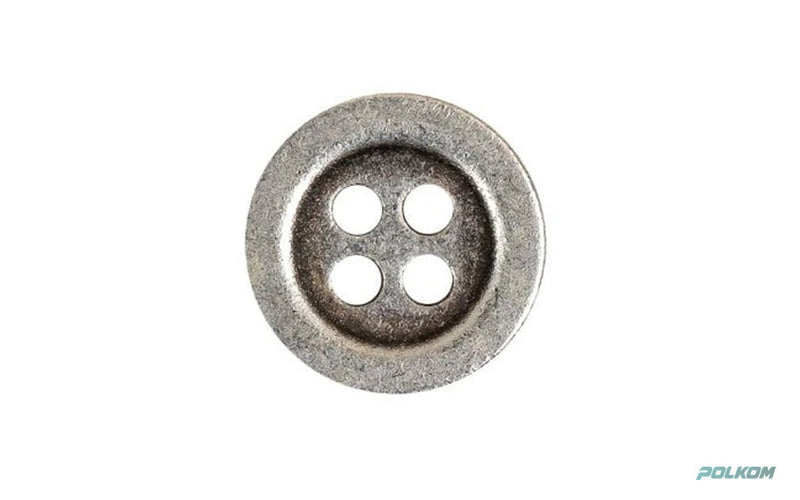
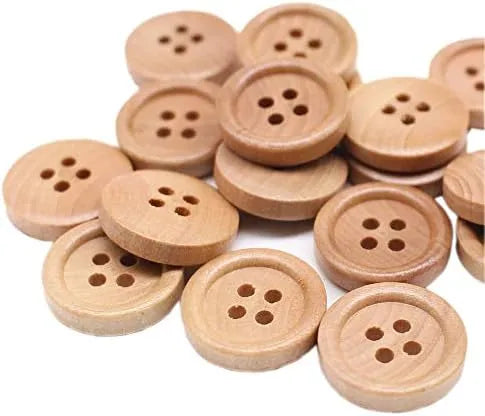
Types of buttons and buttonholes go hand in hand: flat buttons with 2 or 4 holes use straight buttonholes, shank buttons and jeans buttons use eyelet buttonholes, while leather and luxury jackets feature covered or handmade buttonholes. The choice depends on the button’s thickness and shape, the fabric, and the stress on the garment. The buttonhole length is calculated as the button diameter plus its thickness, with a small allowance for convex designs.
Types of Buttonholes
Straight Buttonhole
The straight buttonhole is a slit reinforced with dense zig-zag stitching on both sides and secured with bar tacks (stoppers) at each end. This is the most common machine-made buttonhole.
- Suitable for: flat buttons with 2 or 4 holes, thin and medium-weight fabrics.
- Garments: shirts, blouses, dresses, pajamas, children’s clothing, uniform shirts.
Eyelet Buttonhole
An eyelet buttonhole has a round enlargement at one end, resembling a keyhole. The eyelet provides space for the button shank or tack, allowing the placket to lie flat without puckering.
- Suitable for: shank buttons, thick buttons, jeans buttons.
- Garments: coats, jackets, jeans, trousers, workwear jackets.
The eyelet is always oriented in the direction the button is pulled – toward the edge of the placket for horizontal buttonholes.
Round Buttonhole
A small round opening, fully stitched around. Not for classic buttons but for cords, ties, and small shank buttons, as well as decorative fastenings. Often replaced by a metal eyelet.
Covered (Ribbon) Buttonhole
A slit finished with two narrow strips of fabric or leather folded inward. It looks like a small pocket without visible zig-zag stitching. Used in leather coats, women’s suits, and evening wear where machine buttonholes look too technical.
Handmade Buttonhole
A buttonhole fully hand-stitched with silk or special thread, usually with an eyelet. It is denser, more flexible, and has a characteristic raised edge. Handmade buttonholes are a hallmark of high-end suits and coats.
Lapel Buttonhole
The lapel buttonhole is on the left lapel of a jacket. Historically used to fasten the collar, today it holds a flower or badge. Often handmade and sometimes decorative without a slit.
Which Buttonhole for Which Button
| Button | Buttonhole | Note |
|---|---|---|
| Flat with 2 or 4 holes | Straight | shirts, blouses, dresses |
| Thick flat button (coat) | Eyelet | space for thread shank |
| Shank button | Eyelet or covered | shank fits into eyelet |
| Jeans button | Eyelet | eyelet fits tack |
| Fabric-covered button | Covered or straight | often uses a button back on dresses |
| Toggles | Button back instead of buttonhole | coats, sheepskin jackets |
| Snap or magnetic buttons | No buttonhole | mechanical fastening |
How to Calculate Buttonhole Length
The basic rule is: buttonhole length = button diameter + button thickness. To this, add:
- about 1–2 mm for convex, spherical, or embossed buttons;
- a bit more for thick fabrics that bunch around the slit;
- a bit less for elastic knits to prevent unbuttoning.
Always test the buttonhole on the actual fabric with the actual button before setting the machine for production.
Button Sizes by Garment Type
The button size determines the buttonhole size. Approximate values in lignes (1L = 0.635 mm):
| Garment | Button Size | Typical Buttonhole |
|---|---|---|
| Shirt buttons | 14–18L | Straight, vertical on placket |
| Blouse, dress | 14–24L | Straight or button back |
| Jacket | 24–32L | Eyelet, handmade for high-end |
| Coat buttons | 32–44L | Eyelet or covered |
| Jeans, workwear | approx. 17–20 mm | Eyelet, reinforced |
Horizontal or Vertical Buttonhole
Horizontal buttonholes better absorb stress on plackets and are used on coats, jackets, trousers, and belts. Vertical buttonholes are made where the placket is narrow and stress is low – shirts, blouses, skirts. On shirts, the top collar and cuff buttons usually have horizontal buttonholes, while the placket buttons have vertical ones.
Spacing Between Buttonholes and Distance from Edge
The buttonhole starts about half a button diameter from the placket edge, plus a small allowance. This ensures the button does not extend beyond the edge when fastened. For horizontal eyelet buttonholes, the eyelet is toward the edge because the button is pulled that way. Shirt button spacing is usually even along the placket, with gradation for larger sizes. On coats and jackets, buttons are placed according to waist and lapel lines, not just evenly. Mark all buttonholes with a template for consistency across sizes.
Men’s, Women’s and Workwear
- Men’s wear. Straight buttonholes on shirts, eyelet buttonholes on jackets and coats, handmade buttonholes and lapel buttonholes on high-end suits. Suitable models are available in men’s buttons.
- Women’s wear. More covered buttonholes, button backs and decorative solutions on dresses and evening wear; straight buttonholes on blouses.
- Workwear. Eyelet buttonholes, densely stitched and reinforced, often replaced by snap buttons or jeans buttons.
Common Buttonhole Problems
- Buttonhole too short – button stretches and tears the edge;
- Buttonhole too long – button unfastens by itself;
- Unreinforced fabric – buttonhole frays;
- Sharp button edges that wear out the buttonhole stitching.
Buttons and Buttonholes – a Complete Set
Polkom is a manufacturer of accessories for fashion, footwear and bags, as well as for perfumery, cosmetics, packaging and furniture accessories, with over 30 years of experience and headquarters in Sofia. We produce buttons for all types of buttonholes and garments, certified OEKO-TEX®. If you are unsure which button fits your buttonhole, send us your fabric and model in a request – we will send samples for testing.
Share this article