Manufacturer · Fashion & Home Accessories





Apparel manufacturing in Bulgaria combines three things European brands rarely find in one place: EU membership with no customs duties and the euro as currency since 1 January 2026, labour costs well below the EU average, and factories with long experience in complex garments such as men's suits, jackets and knitwear. Add short delivery times to Central and Western Europe and the option to have buttons, zips, labels and packaging made in the same country where the collection is sewn.
The Bulgarian garment industry today
Textiles are one of the country's oldest industries: the first textile factory in the Bulgarian lands was founded by Dobri Zhelyazkov in Sliven in 1834, and Gabrovo and Sliven were long known as textile centres. After the 1990s the sector turned almost entirely to exports and to production for European brands – either CMT (cut, make, trim) or full package.
In recent years the sector has been shrinking and restructuring. According to an industry association quoted by the Bulgarian business weekly Capital in 2025, the garment industry employs around 86,000 people, compared with around 160,000 a decade ago, and textile and clothing exports were just over EUR 1.6 billion in 2024, against more than EUR 1.9 billion in 2016. The main markets have traditionally been Germany, Italy and Greece, followed by France and Spain.
For a brand looking for production there is an upside: the companies that remain have experienced teams, stable clients and a clear specialisation, and many of them now accept smaller and more complex orders that large Asian factories turn down.
The main advantages of apparel manufacturing in Bulgaria
1. EU membership: no duties and no customs formalities
Bulgaria has been an EU member since 2007. Finished garments and trims move freely within the single market – no duties, no customs clearance and no surprises at the border. Goods can carry "Made in EU" origin, and production follows European rules on chemicals (REACH), textile labelling (Regulation (EU) No 1007/2011) and product safety.
2. The euro since 1 January 2026
Since 1 January 2026 Bulgaria has been the 21st member of the euro area. For brands in the eurozone this means quotes, invoices and payments in the same currency, with no exchange-rate risk and no conversion costs. The collection budget can be planned more precisely, and comparing factories in different countries becomes straightforward.
3. Competitive labour costs with European quality
According to Eurostat, in 2025 Bulgaria had the lowest hourly labour costs in the EU – almost three times below the EU average. They are rising quickly, so the country does not compete with the cheapest Asian producers but on the balance of price, quality and lead time: skilled hands for complex garments at a cost lower than in Italy, Germany or France.
4. Proximity and short lead times (nearshoring)
A truck from Bulgaria to Germany, Austria or Northern Italy travels for days, not weeks like sea freight from Asia. This allows:
- faster samples and prototype corrections – a designer can visit the factory within a day;
- smaller but more frequent orders and quick replenishment of best-selling styles during the season;
- less stock and less tied-up capital;
- easier on-site quality control before the goods are shipped.
5. Flexibility: smaller runs and complex styles
Many Bulgarian factories are small and medium-sized companies used to working with capsule collections, premium brands and styles with many operations. Minimum quantities are agreed with each factory, but in general it is easier to start with a smaller run here than in distant factories built for huge volumes.
6. CMT or full package
Most companies work on a CMT basis – the brand supplies the fabric and trims, and the factory cuts, sews and finishes. More and more also offer full package: they source the materials, trims and packaging to the brand's specification. You will find a detailed comparison of both models in our article on clothing manufacturing in Bulgaria and trims.
Men's suits and jackets: a tailoring tradition
Tailored clothing is one of the strongest specialisations of Bulgarian garment makers. Factories in south-western Bulgaria (Gotse Delchev, Blagoevgrad), in Pleven, Plovdiv and other towns have for decades been making jackets, trousers, suits and coats for European brands, including well-known Italian and German fashion houses. A suit has dozens of operations – fusing, shaping the lapel, setting the sleeve, hand finishing, pressing between operations – and requires an experienced team that cannot be built quickly.
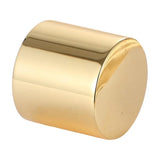
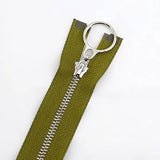
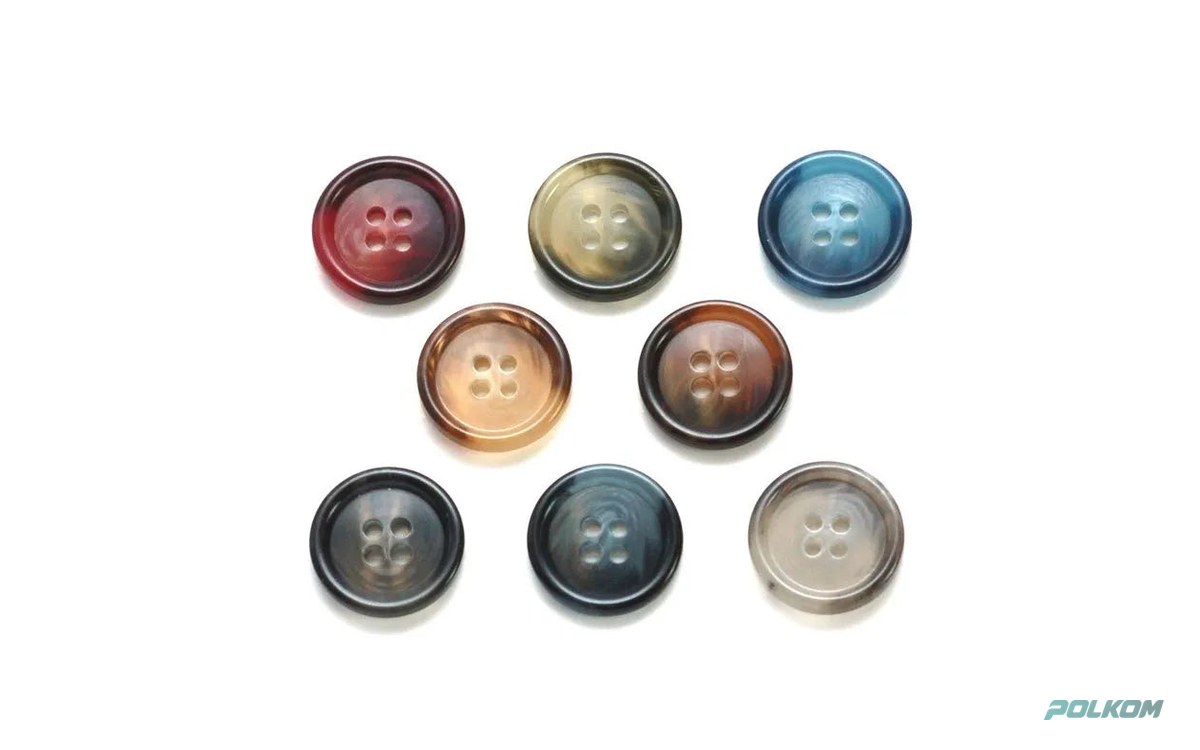
On a suit the trims are seen and felt: men's buttons for jackets and trousers, metal buttons for blazers, hooks and bars for the trouser waistband, concealed zips, inside labels and hang tags. Well-chosen buttons – corozo, imitation horn, metal with a logo – often make the difference between a mass-market and a premium suit.
Knitwear: knitted garments
Knitwear (sweaters, cardigans, tops, dresses, underwear and sportswear) is the other large segment. Knitting and knitwear companies operate throughout the country, with a particularly high number of small and medium-sized workshops in south-western Bulgaria – Petrich, Sandanski, Gotse Delchev and Blagoevgrad – as well as in Sliven, Gabrovo, Haskovo, Kardzhali, Dimitrovgrad, Asenovgrad and Ruse. Some of them use flat knitting machines for sweaters and cardigans, others circular knitting machines for jersey fabrics and underwear.
Knitwear needs light, flexible trims: cardigan buttons, elastics, labels that do not irritate the skin and sew-in labels with the brand's logo.
Garment manufacturing regions in Bulgaria
| Region | Typical products |
|---|---|
| South-western Bulgaria – Blagoevgrad, Gotse Delchev, Petrich, Sandanski | Knitwear, women's and men's clothing, suits and jackets |
| Central and Northern Bulgaria – Pleven, Gabrovo, Ruse | Men's suits and coats, textiles, ready-to-wear |
| South-eastern Bulgaria – Sliven | Wool textiles, ready-to-wear and knitwear |
| South-central Bulgaria – Plovdiv, Asenovgrad, Haskovo, Dimitrovgrad, Kardzhali | Menswear, ready-to-wear and knitwear |
The table shows the general profile of each region; every factory has its own specialisation, so the choice should always be made on the basis of samples and a visit.
Sustainability and compliance
European brands increasingly have to prove where their materials come from and what they contain. Producing in the EU makes this easier: a short, traceable supply chain, manufacturers that work under REACH and lower transport emissions. Certificates for trims – for example OEKO-TEX® for harmful substances and GRS for recycled content – go straight into the collection's technical file. Preparing for future EU requirements, such as the digital product passport for textiles, is also easier when suppliers are close by and respond quickly.
Trims: buttons, zips, labels and packaging made locally
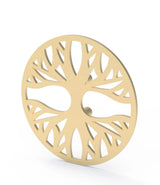
One of the most underrated advantages is that Bulgaria can produce not only the garment but also its trims. When buttons, zips, labels, cardboard hang tags, metal plates and packaging come from a manufacturer in the same country:
- samples reach the factory in days, not weeks;
- colours are matched to Pantone directly against the fabric on site;
- missing quantities can be reordered quickly and sewing does not stop;
- certificates and documentation are gathered under the same legal framework.
Polkom is a Bulgarian manufacturer of accessories for fashion, footwear and bags, perfume and cosmetics, packaging and furniture accessories, with over 30 years of experience. We manufacture buttons, metal accessories, labels, hang tags and packaging to order with the brand's logo. All Polkom products are OEKO-TEX® certified, we also hold a GRS certificate, and recycled versions are available on request. All metal products are nickel free. You can find more about our certificates on the Certificates page.
How to start apparel manufacturing in Bulgaria
- Choose the model – CMT or full package, and who is responsible for trims.
- Prepare a tech pack – styles, sizes, materials, trims with positions and colours.
- Choose a factory by specialisation – suits, knitwear, dresses, sportswear or workwear.
- Request trim samples and approve them together with the prototype.
- Agree quantities and lead times in writing, including reorders.
- Check the first production run on site before increasing volume.
If you are preparing a collection in Bulgaria and need buttons, labels, metal accessories or packaging with your logo, send us an inquiry – we will offer samples and a solution for your styles.