 Manufacturer · Fashion & Home Accessories











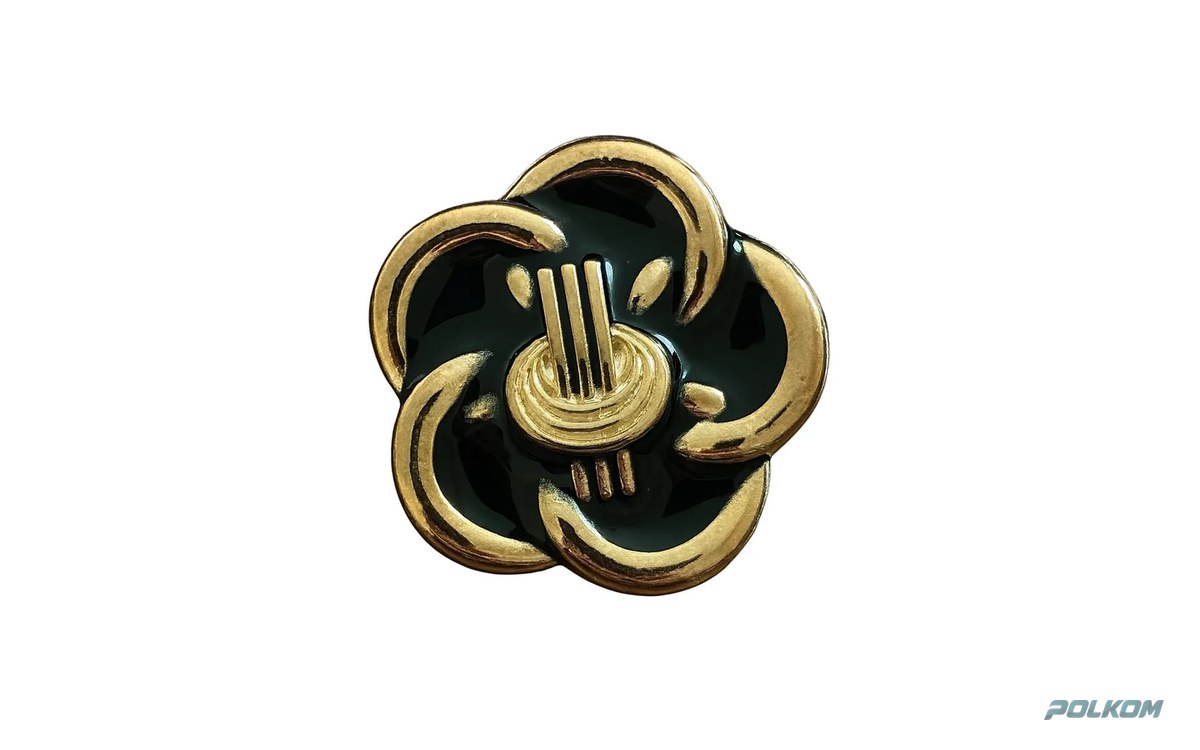
Metal buttons for clothing are made mainly from four materials: brass, zinc alloy, aluminium and steel. Brass is stamped from sheet and is corrosion resistant, zinc alloy is pressure die cast and gives the deepest relief, aluminium is the lightest, and steel the strongest and most economical. The right choice depends on the design, the weight of the fabric and the conditions of use.
Brass – the classic material
Brass is an alloy of copper and zinc. For buttons it is used in the form of thin sheet, from which the cap and base are cut and shaped with stamping tools. The two parts are assembled, often with a filling between them, so the button is hollow and relatively light.
- Advantages: good corrosion resistance, takes electroplated finishes easily, a light button even at a large diameter, sharp and clean edges.
- Limitations: the relief is shallower, because thin sheets are stamped; complex three-dimensional shapes are difficult.
- Suitable for: blazers, shirts, jeans buttons and rivets, uniforms, light knitwear.
Zinc alloy – freedom of shape
Zinc alloy is pressure die cast in a metal mould. This allows solid buttons with deep relief, fine details, engravings, texture and non-standard silhouettes – shields, squares, asymmetric shapes.
- Advantages: the greatest detail in the logo and relief, a rich feeling of weight, any shape possible.
- Limitations: heavier; corrosion protection depends entirely on the quality of the finish; requires a separate casting mould for each new model.
- Suitable for: coats, jackets, designer styles, buttons with a logo or crest.
Aluminium – when weight matters
Aluminium buttons are very light and can be anodised in various colours. They are used for large decorative designs where brass or alloy would be too heavy, as well as for sportswear and children’s clothing. The surface is softer and scratches more easily, so it is not suitable for areas with a lot of friction.
Steel – strength under load
Steel is found mainly in jeans buttons, tacks and parts of press-on fasteners. It withstands the heaviest loads and is economical, but without a good finish it rusts, especially with frequent washing. With stainless steel this risk is minimal, but the material is harder to work.
Comparison of materials for metal clothing buttons
| Criterion | Brass | Zinc alloy | Aluminium | Steel |
|---|---|---|---|---|
| Production | stamping | pressure die casting | stamping, turning | stamping |
| Weight | light to medium | heavy | very light | medium |
| Relief detail | medium | very high | medium | low to medium |
| Corrosion resistance | high | depends on the finish | high | depends on the finish |
| Typical use | blazers, denim | coats, logo buttons | large decorative | jeans tacks |
Finishes on the different metals
The visible colour of a button is almost never the natural colour of the metal. Brass, zinc alloy and steel receive an electroplated finish – in nickel colour, copper, gold, silver or black nickel colour (at Polkom all nickel free) – and then often patination, lacquer or brushing. Aluminium is anodised and can be coloured in almost any colour. This means that two buttons with the same look can have a completely different base. So when comparing quotes, ask not only about the finish but also about the metal underneath, and whether the finish is multi-layered. For items in direct contact with the skin, such as buttons on sleeves and belts, also bear in mind the restrictions on nickel release under the REACH regulation – all Polkom metal buttons are nickel free.
How the material affects the price
The price of a metal button is not determined by the metal alone. The main factors are:
- whether a new stamping tool or casting mould is needed for your design;
- size and weight of the button;
- type and number of finishes – for example, antique with hand patination costs more than gloss nickel colour;
- additional operations – enamel, laser engraving, combination with another material;
- batch quantity.
An exact price is given after a request for a quote with a description of the model. It is also useful to state the approximate annual quantity if you plan repeat orders, because the one-off investment in a stamping tool or mould is spread across all future batches.
Do metal buttons rust
Brass and aluminium practically do not rust, but they can darken. Zinc alloy and steel are protected by the electroplated finish; if it is damaged or not thick enough, stains appear, especially after repeated washing. That is why, for items that are washed often, it is important to choose a suitable material and test the sample under real conditions of use. For denim, where the buttons are washed with the garment, it is sensible to check compatibility with the rivets as well.
Which material to choose
- You want deep relief or a complex shape with a logo – zinc alloy.
- Low weight and resistance to washing are important – brass.
- The button is large and decorative – aluminium.
- The button is part of a jeans fitting with a tack – brass or finished steel.
- You need a button for direct skin contact – our finishes are nickel free; specify the finish in advance and ask for a sample.
You will find more options with a logo and engraving in engraved buttons, and the full range in the metal buttons category.
Advice from the manufacturer
Polkom works with all the main materials for metal buttons and can recommend the most suitable one for your design, fabric and budget. We produce to order with a logo, make samples quickly and deliver throughout the EU. Send a sketch or reference photo via the contact page and you will receive a proposal.


