Manufacturer · Fashion & Home Accessories












Quality tests for accessories are laboratory examinations that check whether buttons, zips, labels and metal accessories will withstand real garment use. The most common tests are for colourfastness to washing, rubbing and sweat; corrosion resistance in salt spray; nickel release from metal parts; tear strength of buttons and snap fasteners; and mechanical durability of zips. Not every test is necessary for every collection – the choice depends on garment type, market and retailer requirements.
Why test accessories if they have a certificate?
The OEKO-TEX® Standard 100 certificate confirms that the accessory has been tested for harmful substances. It does not indicate whether a button will tear off, metal will tarnish after sea exposure, or a label will bleed colour at 60 °C. These questions are addressed by functional and physical tests. Both types of documents complement each other: one ensures safety, the other quality and durability.
Colourfastness
| Test | Standard | Purpose |
|---|---|---|
| Washing | ISO 105-C06 | Coloured labels, ribbons, zip tapes, dyed buttons |
| Rubbing | ISO 105-X12 | Dark ribbons and labels rubbing against skin or fabric |
| Sweat | ISO 105-E04 | Neck labels, lingerie elastics, tapes in contact with skin |
| Light | ISO 105-B02 | Outdoor clothing, awnings, display items |
Results are rated on a grey scale from 1 to 5 – higher means less change. Retailers usually specify minimum ratings in their supplier manuals.
Metal accessories for garments: corrosion and nickel
Salt spray
The neutral salt spray test according to ISO 9227 simulates accelerated exposure to moisture and salt from sweat, sea air or winter street salt. Metal buttons, snap fasteners, eyelets, zips and buckles are placed in a chamber for a specified number of hours, then evaluated for rust, stains and coating changes. The duration is set in the brand’s specification depending on the product type.
Nickel release
Metal accessories in prolonged skin contact must comply with REACH nickel limits. Release is measured by EN 1811, and coated items undergo simulated wear according to EN 12472 first. If you require nickel-free accessories, specify either a nickel-free alloy and plating or a test report confirming release below the limit – this is the key REACH nickel issue.
Mechanical tests
Tear strength of buttons and snap fasteners
This test measures the force at which a button, snap fastener or eyelet detaches from the fabric. It is especially important for children’s clothing, where a detached small button poses a choking hazard. A guideline around 90 N is often cited for kidswear, but the exact value and method depend on client requirements and the applied standard. The result depends not only on the button but also on the fabric, reinforcement and correct press matrix.
Zips
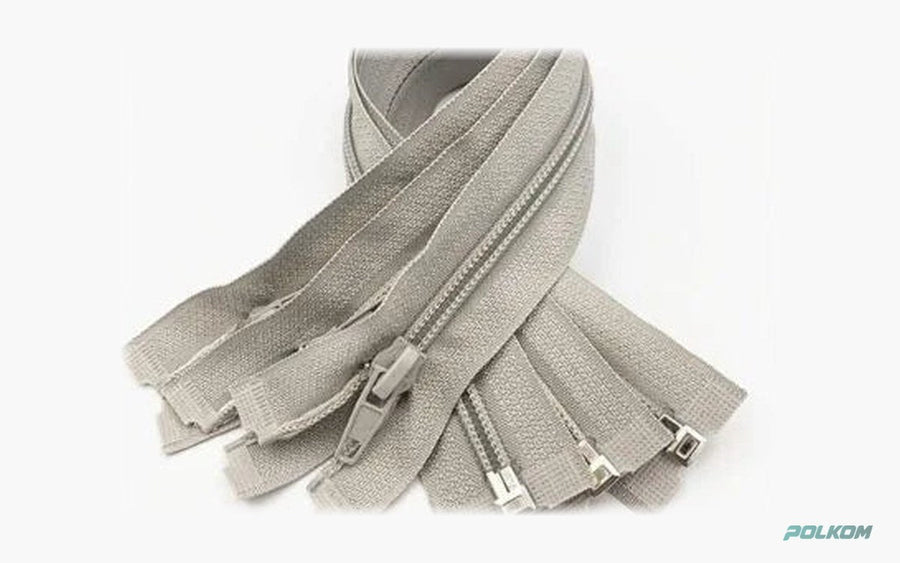
The European standard EN 16732 describes requirements and test methods for zips: chain side strength, stopper strength, puller pull force, slider lock and durability under repeated opening and closing. Tests are performed according to zip size and intended use.
Snap force
For snap buttons, the force to open is also measured. Too low leads to accidental opening, too high causes fabric tearing when unfastening.
Care tests
- Ironing – polyester buttons may deform at high temperature; urea and natural materials tolerate more.
- Dry cleaning – per ISO 3175; some coatings and dyes react to solvents.
- High-temperature washing – for workwear and medical clothing with industrial laundering.
- Tumble drying – soft plastics and some coatings react to heat and drum impact.
When tests are worth it
- Children’s clothing – tear strength and safety are mandatory priorities.
- Workwear – high-temperature washing, chemicals, mechanical stress.
- Outdoor and marine clothing – salt spray, light, cold.
- New material or supplier – one-time validation before collection launch.
- Retailer requirement – usually provides a test list and minimum results.
For standard items used for years without complaints, repeat testing for every order is rarely needed – unless material, coating or process changes.
What the brand should require
- A list of tests and minimum results in the article specification.
- Reports from an accredited laboratory for new items.
- Clear link between report and specific article, colour and coating.
- OEKO-TEX® certificate for substance safety.
- Retesting if material or process changes.
How to read a test report
A report is only useful if it clearly states what it refers to. Check that it includes article code, colour, coating and batch, test date, standard and method, conditions (temperature, cycles, hours) and result versus requirement. A report for “metal button, gold colour” without code and coating is hard to use as proof. If the result is only “pass”, ask for the numerical value and the requirement it was measured against.
Internal checks that do not require a lab
Before sending accessories to a lab, perform simple in-house tests: wash sewn-on buttons and labels with fabric, iron them, open and close the zip repeatedly, leave metal parts in a humid environment. These tests do not replace standardized tests but quickly filter out clearly unsuitable options and save lab costs.
Accessories ready for your requirements
Polkom is a Bulgarian manufacturer and wholesaler of accessories for fashion, furniture, footwear and bags from Sofia with over 30 years of experience. All products have OEKO-TEX® certification, and materials are selected according to REACH requirements. Browse our metal buttons, zips and other accessories and send your test requirements via the contact form.